Miso Rosół (Polish-Japanese Chicken Broth)
Every culture has a healing chicken soup. I combined Poland’s and Japan’s into one super-soup. Rosol — Poland’s golden chicken broth — is what babcia made when anyone was sick, sad, or just cold. Miso ramen serves the same healing purpose in Japan. Both are chicken-based, aromatic, served with noodles. Both are medicine disguised as dinner. So I asked the question that defines Polish Mom: what if I combined them?
Ingredients
- 6 cups homemade chicken broth rosol-style is best — see rosol recipe
- 2 tablespoons white miso paste
- 1 tablespoon fresh ginger, grated
- 1 tablespoon soy sauce
- 1 teaspoon sesame oil
- 2 cups shredded cooked chicken
- 2 medium carrots, thinly sliced
- 2 nests of egg noodles or ramen noodles
- Fresh dill AND sliced green onions both traditions represented
- Nori strips, sesame seeds
- Optional: soft-boiled egg
Method
Heat the Broth
-
Bring chicken broth to a simmer with sliced carrots. Cook 5 minutes until carrots are tender. Add ginger and soy sauce. Ladle out 1/2 cup of hot broth and whisk in the miso paste until dissolved — never add miso to boiling liquid. Pour the miso mixture back in. Add sesame oil. The broth should be golden with a slightly cloudy quality from the miso — it looks like rosol that spent a semester in Tokyo.
Add Protein and Noodles
-
Cook noodles separately (keep the broth clear). Add shredded chicken to the broth to heat through.
Serve
-
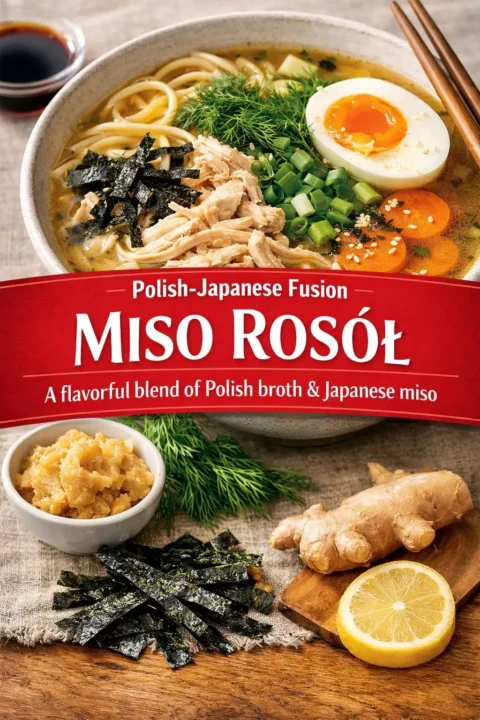
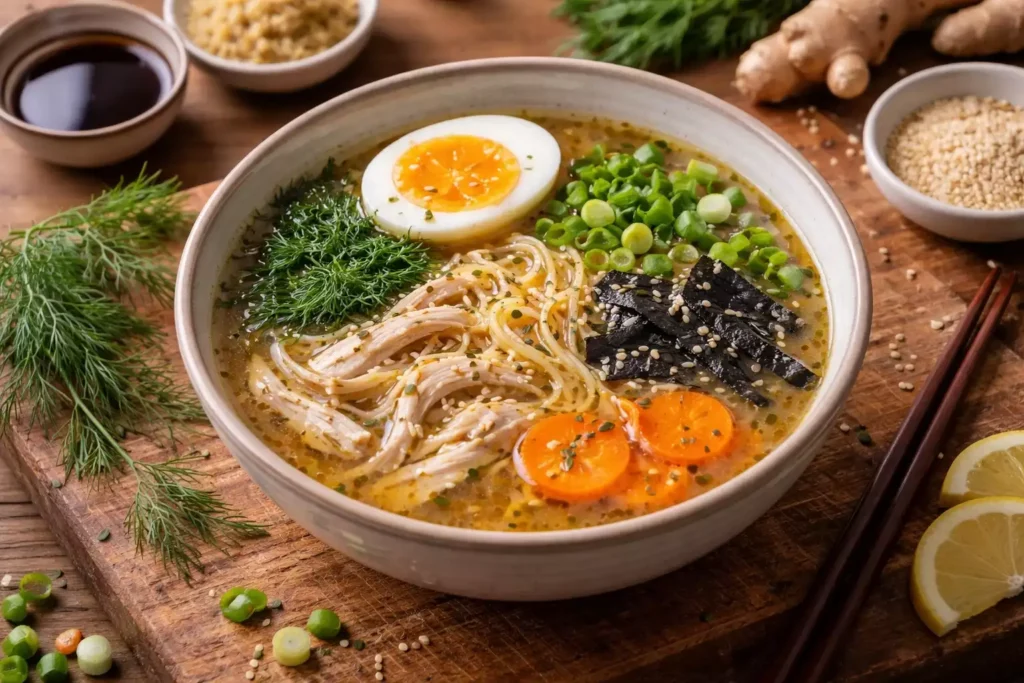
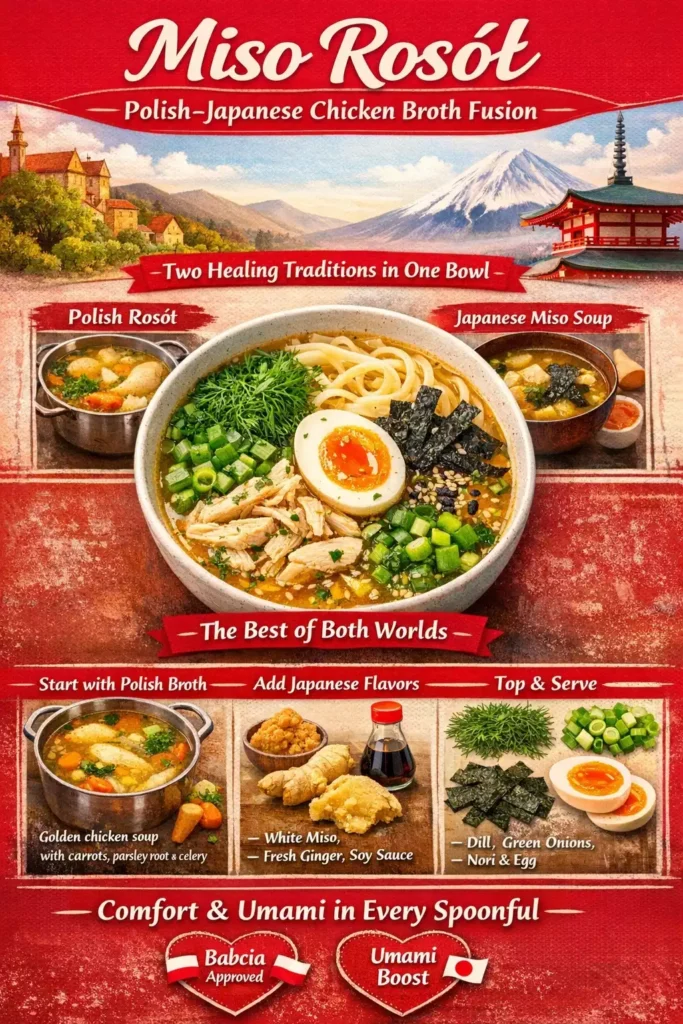
Noodles in the bowl first. Ladle broth and chicken over. Top with fresh dill (the Polish element), sliced green onions (the Japanese element), nori strips, and sesame seeds. Add a halved soft-boiled egg if you want the full ramen treatment. The bowl should have both dill and green onion floating on the surface — two herbs from two traditions, coexisting in one broth. This visual is the whole philosophy of the recipe.


Kasia Polish Mom
Polish-born, Chicago-raised, feeding a family of six with babcia’s recipes and a global pantry. I grew up folding pierogi at my grandmother’s kitchen table and never stopped — 15+ years of cooking from scratch, one Sunday dinner at a time. Everything here is tested on four kids, a hungry husband, and the memory of a woman who never measured anything but always got it right.
Miso Rosół — Polish-Japanese Chicken Broth
Every culture has a healing chicken soup. I combined Poland’s and Japan’s into one super-soup. Rosol — Poland’s golden chicken broth — is what babcia made when anyone was sick, sad, or just cold. Miso ramen serves the same healing purpose in Japan. Both are chicken-based, aromatic, served with noodles. Both are medicine disguised as dinner. So I asked the question that defines Polish Mom: what if I combined them?
Miso chicken soup fusion starts with a rosol-style chicken broth — made the Polish way with whole chicken, parsley root, carrots, and celery. Then it takes a Japanese turn: miso paste stirred in for umami depth, fresh ginger for warmth, a splash of soy sauce, and nori and sesame seeds as garnish. The result is a soup that’s more healing than either original — the clean, golden depth of rosol amplified by miso’s fermented complexity, with ginger adding a warmth that dill can’t provide.
Ingredients
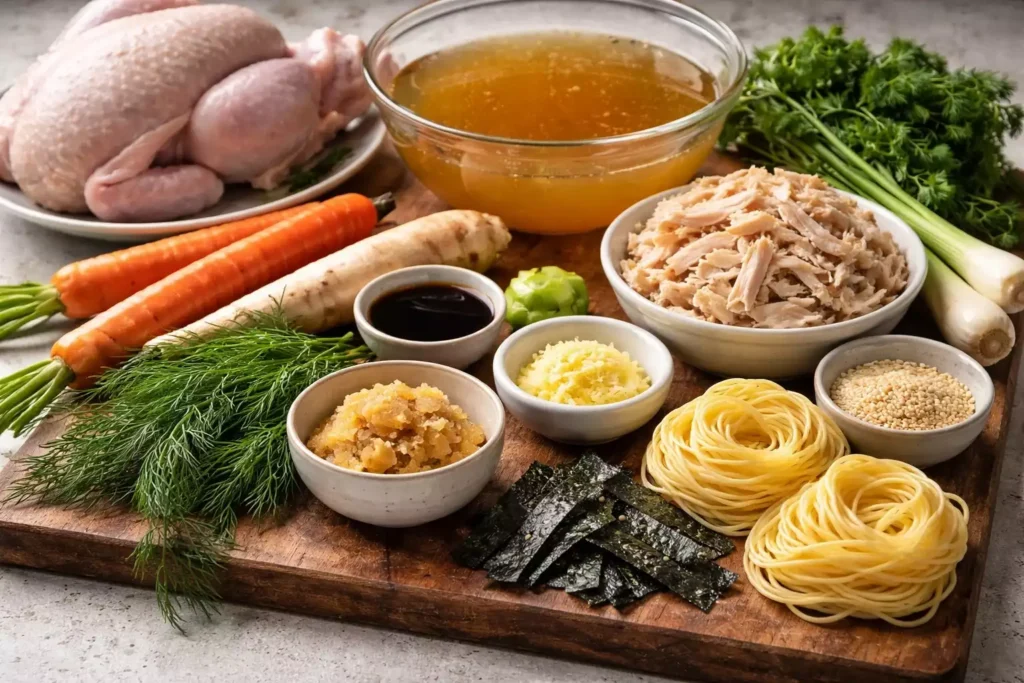
- • 6 cups homemade chicken broth (rosol-style is best — see rosol recipe)
- • 2 tablespoons white miso paste
- • 1 tablespoon fresh ginger, grated
- • 1 tablespoon soy sauce
- • 1 teaspoon sesame oil
- • 2 cups shredded cooked chicken
- • 2 medium carrots, thinly sliced
- • 2 nests of egg noodles or ramen noodles
- • Fresh dill AND sliced green onions (both traditions represented)
- • Nori strips, sesame seeds
- • Optional: soft-boiled egg
How to Make It
Heat the Broth
Bring chicken broth to a simmer with sliced carrots. Cook 5 minutes until carrots are tender. Add ginger and soy sauce. Ladle out 1/2 cup of hot broth and whisk in the miso paste until dissolved — never add miso to boiling liquid. Pour the miso mixture back in. Add sesame oil. The broth should be golden with a slightly cloudy quality from the miso — it looks like rosol that spent a semester in Tokyo.
Add Protein and Noodles
Cook noodles separately (keep the broth clear). Add shredded chicken to the broth to heat through.
Serve
Noodles in the bowl first. Ladle broth and chicken over. Top with fresh dill (the Polish element), sliced green onions (the Japanese element), nori strips, and sesame seeds. Add a halved soft-boiled egg if you want the full ramen treatment. The bowl should have both dill and green onion floating on the surface — two herbs from two traditions, coexisting in one broth. This visual is the whole philosophy of the recipe.
Why Rosol + Miso Works
Rosol is clean, pure, chicken-forward — its beauty is in simplicity. Miso adds a fermented depth that doesn’t compete with the chicken flavour but deepens it. Think of miso as a flavour amplifier — it makes everything taste MORE. The parsley root and carrot notes of rosol become more pronounced. The chicken becomes more savoury. The ginger adds a warm layer that dill never could. You don’t lose rosol’s soul. You expand it.
When I’m sick, I still make straight rosol. Babcia’s recipe is sacred and shouldn’t be modified when comfort is the primary goal. But when I want something that’s healing AND exciting — when I want a soup that makes my taste buds feel alive while also warming me from the inside — the fusion version is what I reach for. Two healing traditions, amplified.
Tips
💡 Pro Tips
✓ Use homemade broth if possible. The rosol-style broth with parsley root is what gives this soup its Polish foundation. Store-bought works but lacks the depth.
✓ Miso off heat. Always dissolve miso in warm (not boiling) broth to preserve its complex flavour.
✓ Both herbs. Dill AND green onion. Choosing one over the other defeats the fusion purpose. Both. Always both.
✓ Ginger is the bridge. Neither rosol nor basic miso soup typically uses ginger, but it connects both traditions — warm, aromatic, healing.
How to Store
Broth keeps 5 days (without noodles or miso — add miso when reheating). Freezes for 3 months as base broth. Add fresh noodles, miso, and herbs each time you serve.
Frequently Asked Questions
Can I just add miso to regular rosol?
Yes — that’s essentially what this recipe is, plus ginger and soy sauce. If you have leftover rosol, warm it, dissolve 1 tablespoon miso per 2 cups broth, add grated ginger, and you have the fusion version in 5 minutes. It’s the easiest fusion recipe on the blog.
The Two-Herb Bowl
The moment I love most about this soup is the topping: fresh dill on one side of the bowl, sliced green onions on the other. Two herbs from two continents floating together in one golden broth. Dill is babcia’s herb — it means home, rosol, Sunday lunch, everything Polish. Green onion is the ramen garnish — it means weeknight comfort, steaming bowls, chopsticks at the kitchen counter. Together in one soup, they’re a visual thesis statement for everything Polish Mom represents. I photograph every bowl before eating. Not for Instagram. For myself. Because seeing dill and green onion share the same broth reminds me that my cooking identity — Polish roots, global branches — makes sense. It always has.
Variations
• With ramen noodles: Use ramen noodles instead of egg noodles for a more Japanese lean. The wavy noodles catch more broth.
• With lane kluski: Use babcia’s lane kluski (Polish drop noodles) for a more Polish lean. The irregular little noodle drops absorb the miso-enriched broth beautifully.
• Vegetarian: Use mushroom broth as the base. Add dried shiitake for umami depth. The miso carries enough complexity to make a vegetarian version genuinely satisfying.
• Extra healing: Add turmeric (1/2 teaspoon) and a pinch of black pepper. The turmeric turns the broth even more golden and adds anti-inflammatory properties. Babcia’s rosol with Japanese miso and Indian turmeric — three healing traditions in one bowl. Peak Polish Mom energy.
Can I use store-bought broth?
Yes — use the best quality chicken broth you can find. The miso, ginger, and soy sauce add enough complexity to elevate even a basic boxed broth. But if you have homemade rosol in the freezer, this is the perfect use for it. Homemade broth + miso = extraordinary. Store-bought + miso = very good. Both are worth making.
The Super-Soup Theory
I’ve started thinking about fusion soups as “super-soups” — combinations where the healing properties of two traditions compound. Rosol provides clean, golden chicken broth with mineral-rich vegetables. Miso adds probiotics from fermentation and glutamate for umami satisfaction. Ginger adds anti-inflammatory compounds and warming energy. Together, the soup isn’t just comforting — it’s actively doing more for your body than either soup alone. Whether the science fully supports this theory or it’s just a Polish mom placebo effect, my family gets better faster when I serve the fusion version. That might be the miso. It might be the extra love that goes into making something special instead of something routine. Either way, I’m counting it as a win.
Can I make this with instant miso soup packets?
Technically yes — dissolve an instant miso packet into your rosol. But instant miso has less depth and more sodium than real miso paste. A tub of white miso paste costs $5, lasts months in the fridge, and gives you dramatically better results. If you’re already making rosol from scratch (which takes hours), don’t shortcut the 30-second miso step. Babcia wouldn’t cut corners on the final seasoning and neither should you.
Variations
• With ramen noodles: Use fresh ramen noodles instead of egg noodles for a more Japanese-leaning version. The chewier texture works beautifully with the miso broth.
• With lane kluski: Use babcia’s thin egg noodles from traditional rosol. Keeps the Polish soul intact with Japanese flavour enhancements.
• Spicy version: Add chilli garlic sauce or chilli crisp to individual bowls. The heat cuts through the rich broth and adds another dimension.
More From Polish Mom
Żurek (Sour Rye Soup) · Rosół (Polish Chicken Noodle Soup) · Zupa Pomidorowa (Polish Tomato Soup) · Lasagna Soup (Crockpot)
Kasia Polish Mom
Polish-born, Chicago-raised, feeding a family of six with babcia’s recipes and a global pantry. I grew up folding pierogi at my grandmother’s kitchen table and never stopped — 15+ years of cooking from scratch, one Sunday dinner at a time. Everything here is tested on four kids, a hungry husband, and the memory of a woman who never measured anything but always got it right.