
Kasia Polish Mom
Polish-born, Chicago-raised, feeding a family of six with babcia’s recipes and a global pantry. I grew up folding pierogi at my grandmother’s kitchen table and never stopped — 15+ years of cooking from scratch, one Sunday dinner at a time. Everything here is tested on four kids, a hungry husband, and the memory of a woman who never measured anything but always got it right.
Mongolian Beef — Sweet, Savory, and Dangerously Addictive
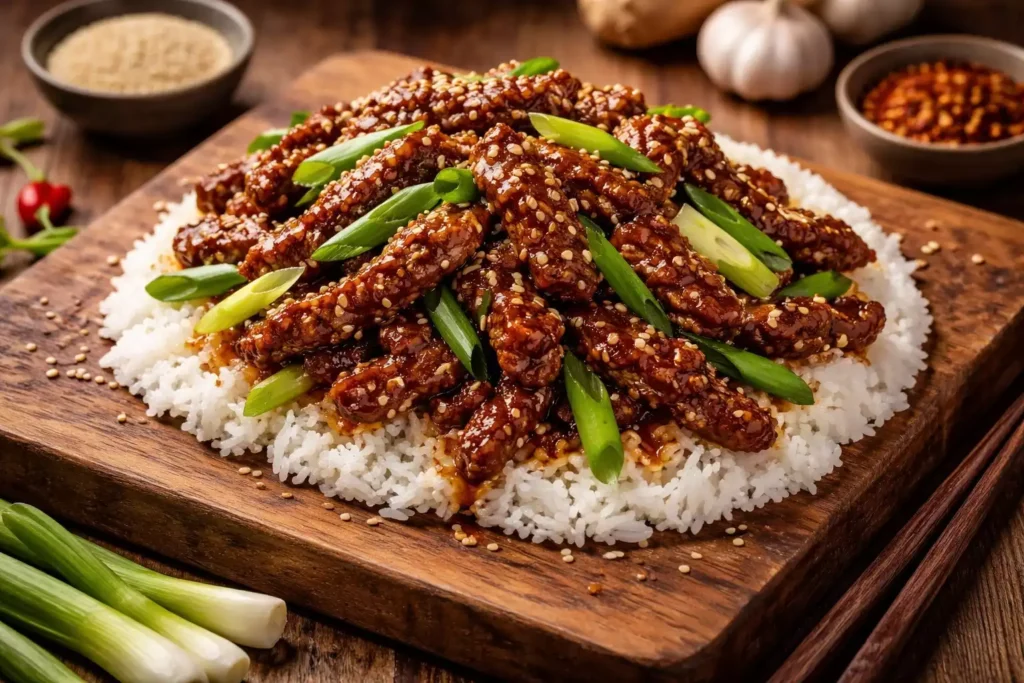
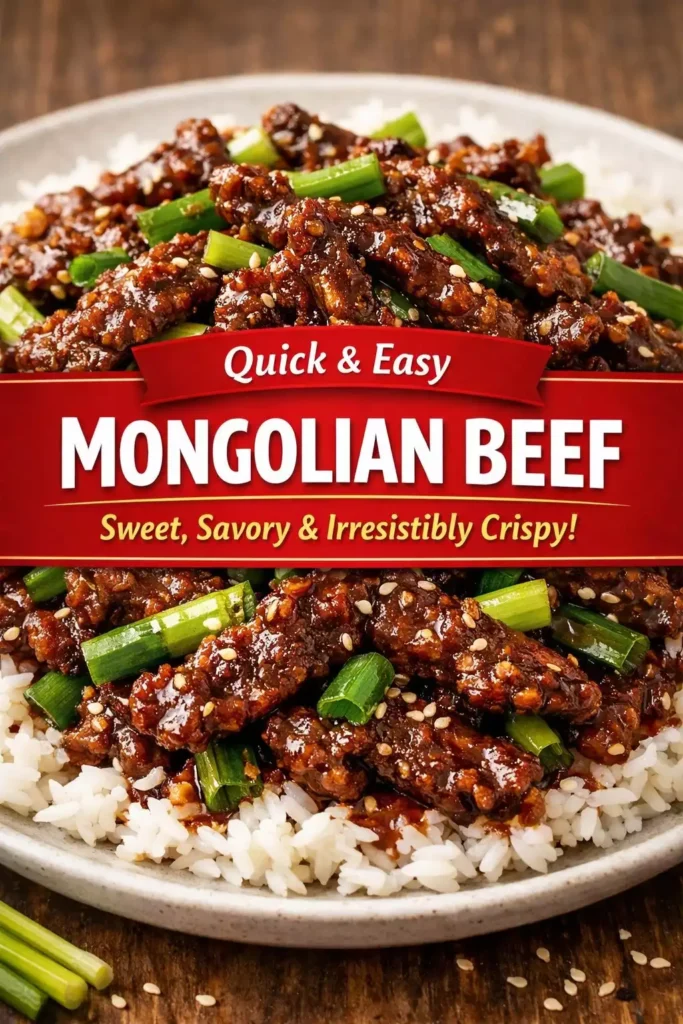
I made this once for a dinner party and three people asked for the recipe before dessert. This is the actual account of how Mongolian beef entered my standard dinner party repertoire and has stayed there ever since. Crispy-edged beef strips in a sticky, sweet-savory soy and ginger sauce, piled high over fluffy white rice and heaped with green onions. It disappears. It always disappears.
Despite the name, Mongolian beef has no particular connection to Mongolia. It is a Chinese-American restaurant staple that emerged in Taiwan and spread globally. The name is marketing, not geography. What it is, definitively, is one of the most successful flavor combinations in Chinese-American cooking: very thin, cornstarch-coated beef fried until crispy at the edges, tossed in a sauce that is deeply savory from soy sauce, sweet from brown sugar, aromatic from ginger and garlic, and sticky from the reduction. Over rice. With spring onions. Done.
This recipe produces better-than-PF-Chang’s results in 25 minutes. I have made this calculation and it holds.
The Cornstarch Coating Is the Secret
Mongolian beef uses a generous cornstarch coating on the beef before frying — much more than a light dusting. The thick cornstarch coating absorbs the sauce while maintaining some crispness at the edges, creating a texture that is simultaneously chewy, crispy, and saucy. This is different from the velveting technique used in beef and broccoli; here the cornstarch is a visible coating that creates texture rather than a protective marinade that keeps the beef tender inside.
Ingredients
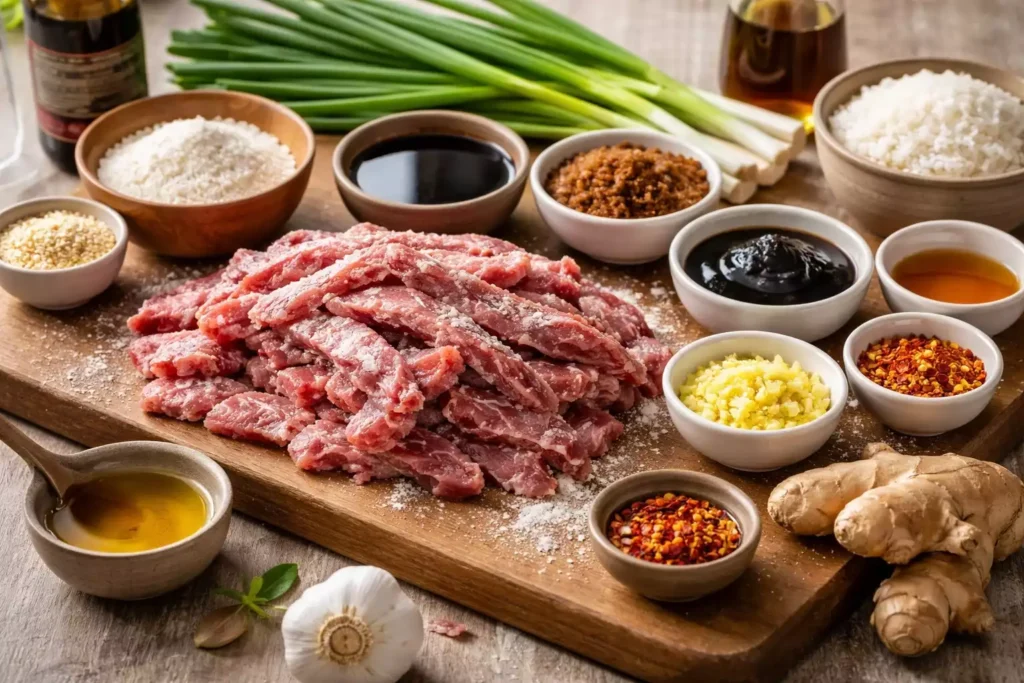
For the Crispy Beef
- 500g (1.1 lbs) flank steak or sirloin, very thinly sliced against the grain
- 4 tbsp cornstarch
- 1 tsp soy sauce
- Oil for shallow frying
For the Mongolian Sauce
- 3 tbsp soy sauce
- 2 tbsp brown sugar
- 1 tbsp Shaoxing rice wine
- 1 tbsp oyster sauce
- 4 cloves garlic, minced
- 1 tbsp fresh ginger, grated
- 100ml (6 tbsp) water or beef stock
- 1 tsp sesame oil (added at end)
- Pinch of chili flakes (optional)
- 1 tsp cornstarch dissolved in 1 tbsp water
To Serve
- 5–6 spring onions, cut diagonally into 5cm pieces
- Sesame seeds for garnish
- Steamed rice
How to Make It
1
1Coat and Fry the Beef
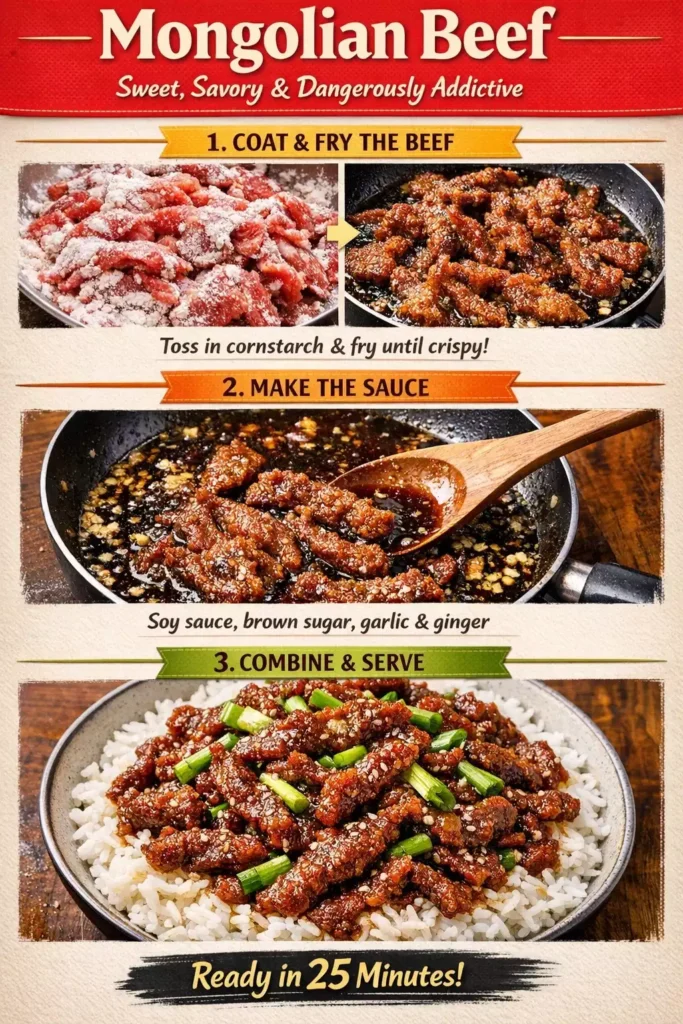
Toss the thinly sliced beef with soy sauce, then coat thoroughly in cornstarch. The cornstarch should be more than a light dusting — each piece should be visibly coated. Heat about 5mm of oil in a wok or heavy pan over high heat. Fry the beef in batches without crowding, for 2–3 minutes per batch, until crispy at the edges and golden. Remove and drain on a wire rack. Do not crowd — crowded beef steams instead of frying.
2
2Make the Sauce
Discard most of the frying oil, leaving about 1 tablespoon in the pan. Add garlic and ginger and stir over medium heat for 30 seconds. Add soy sauce, brown sugar, Shaoxing wine, oyster sauce, and water. Bring to a simmer and cook for 2 minutes until the sugar dissolves and the sauce reduces slightly. Add the cornstarch slurry and stir until glossy and thickened. Finish with sesame oil.
3
3Combine and Serve
Add the crispy beef and most of the spring onions to the sauce. Toss quickly to coat — work fast to preserve the crispy texture. Plate over steamed rice. Scatter remaining spring onions and sesame seeds on top. Serve immediately.
Mongolian Beef Tips
Very thin slices. The beef must be very thin — 3–4mm — for it to cook quickly and develop crispy edges. Partially freeze the beef for 20 minutes before slicing for easier, more precise thin cuts. Cut against the grain.
Do not crowd the pan. Fry in two or three batches rather than one. Crowded beef releases moisture and steams rather than developing the crispy cornstarch coating. Give each piece space to fry rather than steam.
Spring onions go in at the very end. The spring onion pieces should retain their fresh character and slight crunch. Cooking them too long in the sauce makes them limp and their flavor fades. Add them in the last 30 seconds and toss just to wilt slightly.
Brown sugar, not white. Brown sugar has the molasses depth that gives Mongolian sauce its characteristic richness and produces a darker, slightly more complex sweetness. White sugar produces a lighter, thinner-tasting sauce. Brown sugar is the right choice here.
Serving Mongolian Beef
Over steamed white rice with plenty of spring onions and sesame seeds. Excellent alongside beef and broccoli for a beef-forward Chinese dinner. For a complete spread, add egg drop soup and fried rice. This dish consistently wins dinner parties and impresses anyone who did not think they cared about Chinese food.
Variations Worth Trying
With chili. Add a tablespoon of chili garlic sauce or dried chilies to the sauce for a version with heat. The sweet-savory base handles chili very well and the resulting spicy Mongolian beef is excellent.
Crispy Mongolian chicken. Use chicken thigh, sliced and coated the same way. The cornstarch-coating and sauce technique is identical; only the protein changes. Mongolian chicken is slightly lighter in flavor than beef and equally delicious.
Mongolian lamb. Thinly sliced lamb loin is exceptional in this sauce. The gamier, more assertive flavor of lamb stands up to the bold Mongolian sauce and creates a richer, more complex dish than the beef version. A dinner party version that surprises everyone.
Storage
Refrigerate for up to 3 days. The crispy coating will soften overnight in the sauce. Reheat in a hot pan and the coating becomes slightly crispy again at the edges. Best eaten fresh, but leftovers are still excellent the next day. The sauce deepens in flavor as it sits.
FAQ
Is Mongolian beef actually Mongolian?
No. Mongolian beef originated in Taiwan and became popular in Chinese-American restaurants. It has no documented connection to Mongolian cuisine, which is quite different (heavy on lamb and dairy, minimal stir frying). The name is generally attributed to the Mongolian barbecue restaurant style that popularized it in Taiwan and subsequently in the United States. Regardless of etymology, it is delicious.
What is the best cut of beef for Mongolian beef?
Flank steak is the classic choice: flavorful, affordable, and slices thin cleanly. Sirloin is slightly more tender and works very well. Skirt steak is also good. Whatever you use, slice against the grain and keep slices thin. The cornstarch coating and crispy frying compensate for some toughness in the beef, but thin slicing is the most important factor.
Kasia Polish Mom
Polish-born, Chicago-raised, feeding a family of six with babcia’s recipes and a global pantry. I grew up folding pierogi at my grandmother’s kitchen table and never stopped — 15+ years of cooking from scratch, one Sunday dinner at a time. Everything here is tested on four kids, a hungry husband, and the memory of a woman who never measured anything but always got it right.