
Kasia Polish Mom
Polish-born, Chicago-raised, feeding a family of six with babcia’s recipes and a global pantry. I grew up folding pierogi at my grandmother’s kitchen table and never stopped — 15+ years of cooking from scratch, one Sunday dinner at a time. Everything here is tested on four kids, a hungry husband, and the memory of a woman who never measured anything but always got it right.
Pierogi z Kapustą i Grzybami — The Meatless Classic
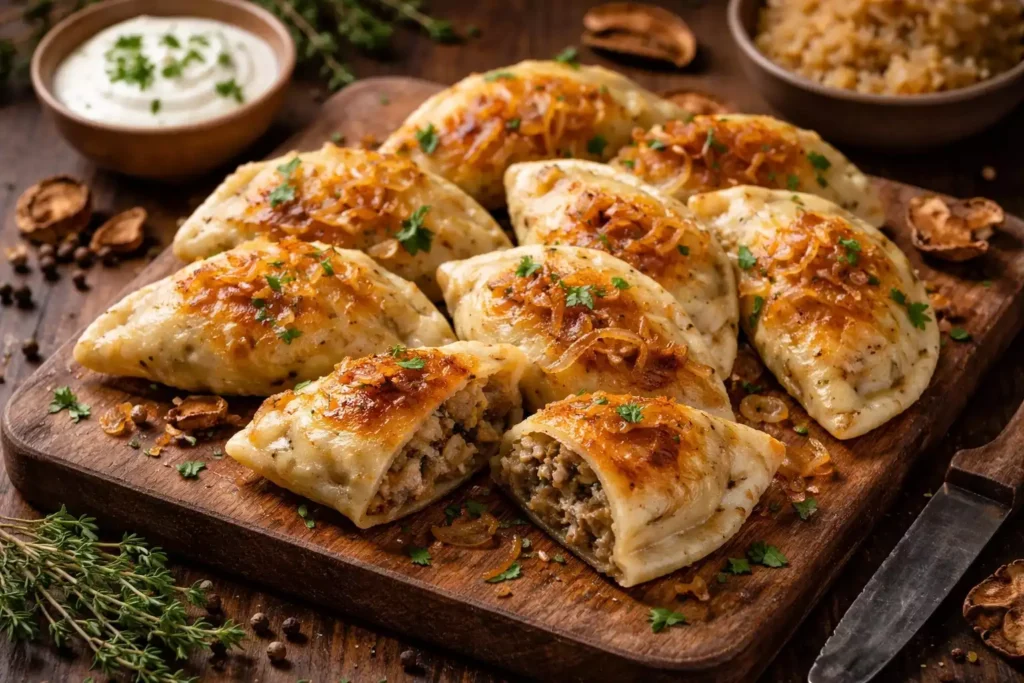
There is a pierogi for every season and every occasion in Poland, but there is one pierogi that carries three of the most important meals of the year on its doughy shoulders: Lent, Christmas Eve, and Good Friday. Pierogi z kapustą i grzybami — sauerkraut and mushroom pierogi — is the meatless classic, the Wigilia staple, the Lenten Friday dinner that has been on Polish tables for as long as anyone can remember.
My babcia made these in enormous batches before both Christmas Eve and Lent. The kitchen would be filled with the smell of sauerkraut and dried porcini and onion for an entire afternoon. Every family member who appeared was handed a small rolling pin and assigned a section of dough. This was not optional. Pierogi making was a communal activity, and the family assembly line was what made the quantity achievable. We would end up with two hundred pierogi and eat them for a week.
The filling — finely chopped sauerkraut and reconstituted dried mushrooms, sautéed with onion until dark and deeply fragrant — is one of the most complex-tasting things in Polish cooking despite having no meat in it whatsoever. The mushrooms provide umami that rivals any meat stock. The sauerkraut provides acidity. The onion provides sweetness. Together they fill a pillow of soft dough that when pan-fried in butter produces one of the most satisfying bites in the Polish culinary canon.
Why These Pierogi Work
The filling must be completely dry before going into the dough. Wet filling makes the dough soggy, causes the pierogi to split during boiling, and produces a watery result. Squeezing the sauerkraut, draining the mushrooms, and cooking everything until all excess moisture has evaporated are the technical foundations of a good filling. This sounds fussy. It takes seven minutes. Do it.
The dough should be soft and extensible but not sticky — tacky enough to seal easily when pressed, firm enough to hold the filling without stretching thin. A well-rested dough (minimum 30 minutes, ideally an hour) is dramatically easier to roll and seal than a freshly made dough. Rest it. Your hands will thank you.
Ingredients
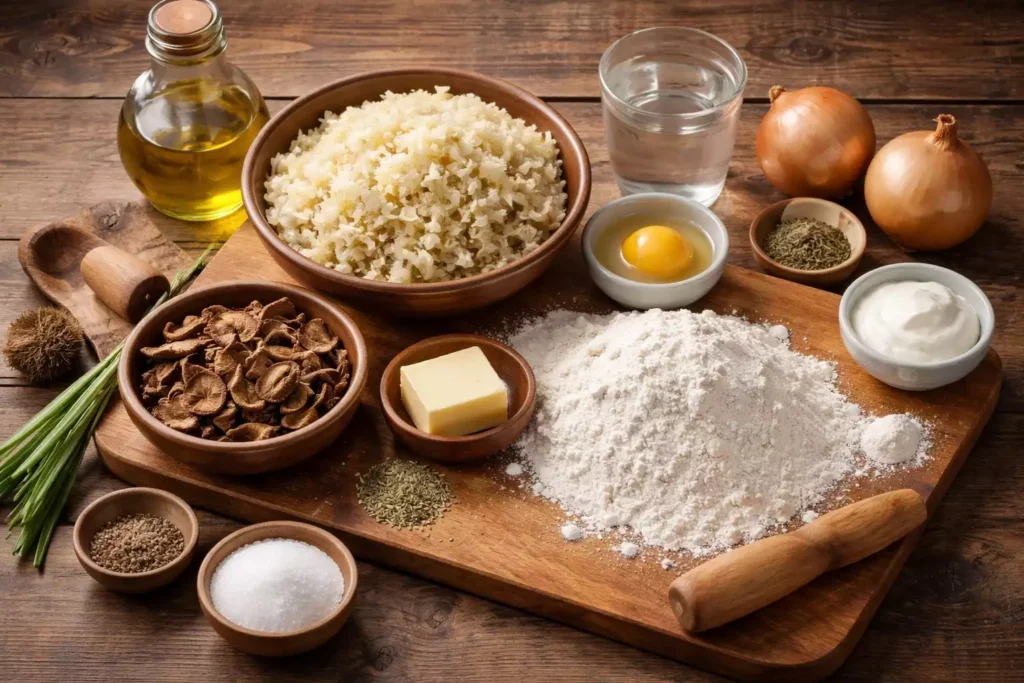
For the Pierogi Dough (makes about 40 pierogi)
- 400g (3.2 cups) plain flour, plus extra for dusting
- 1 tsp salt
- 200ml (¾ cup) warm water (adjust as needed)
- 1 egg
- 1 tbsp sour cream or neutral oil
For the Sauerkraut-Mushroom Filling
- 500g (1.1 lbs) sauerkraut, well drained and finely chopped
- 30g (1oz) dried porcini mushrooms (suszone prawdziwki)
- 300ml (1.25 cups) boiling water (for mushroom soaking)
- 2 medium onions, finely diced
- 3 tbsp butter or neutral oil
- Salt, white pepper to taste
- 1 tsp dried marjoram (optional but traditional)
For Serving
- 3 tbsp butter (for pan-frying)
- 1 large onion, sliced (for caramelizing to serve alongside)
- Sour cream, to serve
How to Make It

1
1Make the Filling (Start First, It Must Cool)
Pour boiling water over the dried mushrooms and soak for 30 minutes. Drain, reserving the soaking liquid (use it in soup — it is too good to discard). Finely chop the soaked mushrooms. Squeeze the sauerkraut in your hands to remove all possible moisture, then chop finely. Melt butter in a large skillet over medium heat. Add the onion and cook for 15 minutes until deeply golden. Add the sauerkraut and cook for 10 minutes, stirring frequently, until it begins to brown slightly. Add the mushrooms and marjoram. Cook for another 8–10 minutes until all moisture has evaporated. Season with salt and pepper. Cool completely before filling.
2
2Make the Dough
Combine flour and salt in a large bowl. Make a well in the center, add the egg and sour cream, and add most of the warm water. Mix with a fork until it begins to come together, then turn onto a floured surface and knead for 8–10 minutes until smooth, soft, and slightly elastic. The dough should not stick to your hands but should yield easily when pressed. Add water a tablespoon at a time if too dry; add flour if too sticky. Wrap in cling film and rest at room temperature for 30–60 minutes.
3
3Roll and Cut
Divide the dough into 4 portions. Working with one portion at a time (keep the rest covered), roll to approximately 3mm thickness on a lightly floured surface. Cut circles using a 7–8cm round cutter or a glass. Place a heaped teaspoon of filling in the center of each circle. Fold the dough over the filling to create a half-moon shape. Pinch the edge firmly together, pressing out any air pockets. Crimp the edge decoratively or simply press firmly — the seal must be complete or the pierogi will open during boiling.
4
4Boil
Bring a large pot of salted water to a full boil. Cook pierogi in batches of 10–12 — do not overcrowd. They are done when they float to the surface, plus an additional 2 minutes of gentle simmering after floating (about 4–5 minutes total). Remove with a slotted spoon. If serving later, toss with a small amount of oil to prevent sticking.
5
5Pan-Fry for Best Results
For the classic Polish finish: melt butter in a wide pan over medium heat. Add the boiled pierogi in a single layer and fry for 2–3 minutes per side until golden and slightly crisp. The outside becomes golden and slightly chewy; the inside stays pillowy and hot. Serve with caramelized onions on top and sour cream on the side. This is the definitive serving method.
Pierogi Tips That Matter
Dry filling is non-negotiable. The filling must be completely dry before it goes in the dough. Test it: take a tablespoon and press it between your palms over the sink. No liquid should drip out. Wet filling = split pierogi. This is inviolable.
Do not roll the dough too thin. 3mm is the target. Thinner than 2mm and the pierogi will tear under the weight of the filling. Thicker than 4mm and the dough ratio is off and the pierogi become bready and heavy. 3mm is the sweet spot that gives a dough that is present but not dominant.
Polish sauerkraut from a barrel is worth sourcing. Live-fermented barrel sauerkraut from a Polish deli has a complexity and crunch that pasteurized canned versions simply do not match. The flavor in the finished filling will be noticeably better. If you must use canned, rinse it and cook it even longer to remove excess sharpness.
Freeze a batch. Pierogi z kapustą i grzybami freeze beautifully. Arrange uncooked filled pierogi on a floured tray and freeze solid, then transfer to bags. Cook directly from frozen, adding 2 minutes to the boiling time. Having a supply of frozen homemade pierogi in the freezer is one of the great resources for any Polish kitchen.
Pierogi z Kapustą i Grzybami at the Lenten and Christmas Table
These pierogi are, among all Polish pierogis, the most ceremonially significant. At Wigilia (Christmas Eve), they are one of the twelve traditional dishes — always present, always in a large quantity, always pan-fried in butter and served with caramelized onion. During Lent, they are the Friday dinner that requires no justification. And on Good Friday, they are often the main dish of the only full meal eaten that day.
They appear alongside potato and cheese pierogi at the holiday table, the two varieties representing the range of Polish pierogi tradition. Serve them with generous sour cream and caramelized onions as the only accompaniments they need.
For the full Lenten spread, pair with other Polish Lenten dishes.
Variations Worth Trying
With fresh mushrooms added. Add 200g of finely chopped fresh cremini or button mushrooms to the filling along with the dried porcini for a more mushroom-forward, less sauerkraut-dominant flavor. Still Lenten and meatless, but with a deeper, earthier mushroom character.
Fried onion and sauerkraut without mushrooms. Purist versions in some Polish regions use sauerkraut and onion only, with no dried mushrooms. The result is sharper, more acidic, and less complex — some families prefer this cleaner flavor. Both versions are authentic depending on the region.
With buckwheat (kasza gryczana). Mix 50g of cooked buckwheat groats into the filling for extra texture and a slightly nutty note. This is a regional variation from eastern Poland where buckwheat is a staple grain and appears in many traditional fillings.
Storage and Freezing
Cooked pierogi keep in the refrigerator for up to 3 days — store tossed in a little oil or butter to prevent sticking. Reheat in a pan with butter for best results. Uncooked filled pierogi freeze for up to 3 months. The filling alone keeps refrigerated for 4–5 days and can be used for other applications: as a baked potato filling, stirred into scrambled eggs, or tossed with cooked pasta for an improvised weeknight dinner that is better than it has any right to be.
FAQ
My pierogi keep bursting open while boiling. What am I doing wrong?
Three possible causes: the filling is too wet (moisture steam creates pressure), the seal is not tight enough (press firmly and completely, pressing out all air), or the boiling water is too vigorously boiling (reduce to a gentle simmer after the pierogi go in). All three factors together is the worst case; addressing any one of them usually solves the problem.
Can I use fresh sauerkraut instead of jarred or canned?
If you mean freshly made barrel sauerkraut from a Polish deli, yes — this is actually the best option. If you mean fresh raw cabbage, no — that is a completely different ingredient that requires its own preparation. Fresh cabbage pierogi (pierogi z młodą kapustą) exist as a variation but use a different technique and seasoning.
How many pierogi per person for a main course?
8–12 pierogi per person as a main course, depending on appetite and what else is being served. 5–6 as a side dish. Polish portions tend toward the generous end of this range. When in doubt, make more — leftover pierogi pan-fried in butter the next morning, topped with an egg, is one of the great breakfasts of Lenten cooking.

Kasia Polish Mom
Polish-born, Chicago-raised, feeding a family of six with babcia’s recipes and a global pantry. I grew up folding pierogi at my grandmother’s kitchen table and never stopped — 15+ years of cooking from scratch, one Sunday dinner at a time. Everything here is tested on four kids, a hungry husband, and the memory of a woman who never measured anything but always got it right.