
Kasia Polish Mom
Polish-born, Chicago-raised, feeding a family of six with babcia’s recipes and a global pantry. I grew up folding pierogi at my grandmother’s kitchen table and never stopped — 15+ years of cooking from scratch, one Sunday dinner at a time. Everything here is tested on four kids, a hungry husband, and the memory of a woman who never measured anything but always got it right.
Jajka Faszerowane — Polish Deviled Eggs With Attitude
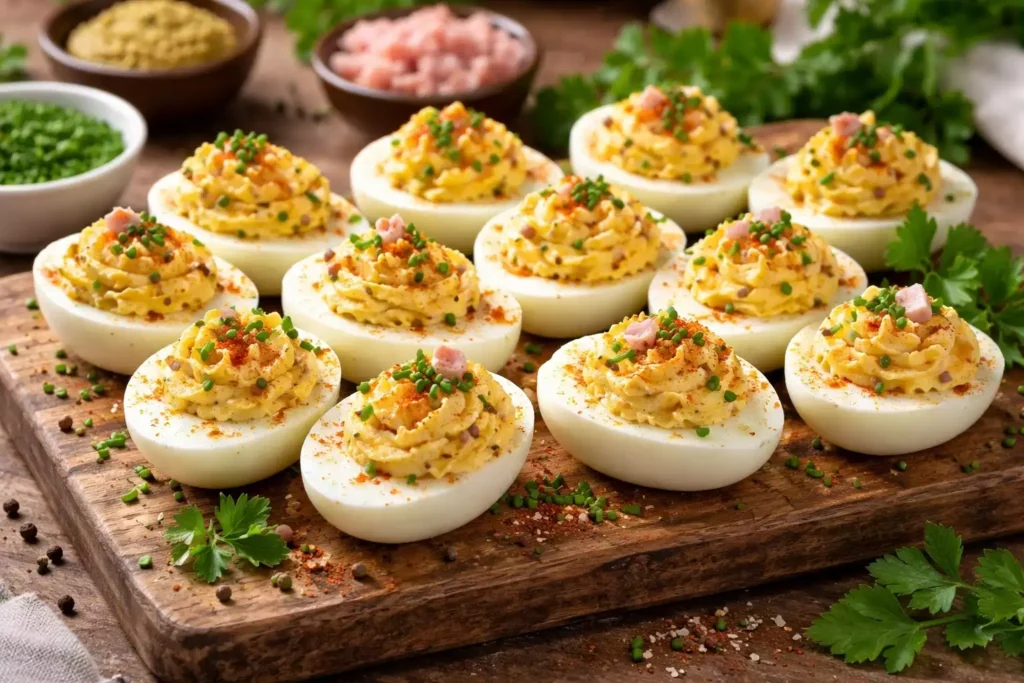
Deviled eggs but with a Polish accent and significantly more mustard. That is the shortest description I can give of jajka faszerowane, and it will have to do until you make them and taste the difference. The American deviled egg is gentle, creamy, mild. The Polish jajka faszerowane has opinions. It puts mustard in places that make people stop and wonder what they are eating and then eat four more before asking.
Eggs are the symbol of Easter in Poland — rebirth, renewal, the whole tradition. They are blessed in the święconka basket on Holy Saturday. They are cooked in quantities that would alarm a reasonable person. Hard-boiled eggs appear in the żurek, on the cold platter, as decoration. And a significant number of them get halved, hollowed out, and refilled as jajka faszerowane — because blessing twelve eggs and just eating them plain seems like a missed opportunity.
My version uses mustard (Polish or Dijon), a little mayo, fresh chives, and sometimes a small amount of ham when I want to make them more substantial. The filling should be creamy but not bland, and slightly too much mustard is always the right amount.
Why These Jajka Faszerowane Work
The filling balance is everything. Too much mayo and the filling is rich but boring. Not enough mayo and it will not pipe smoothly or hold its shape. The mustard is the flavor driver — it adds sharpness, a little heat, and depth that makes the yolk filling taste like something you chose deliberately rather than something that just happened.
Pressing the yolks through a fine sieve rather than simply mashing them gives a smoother, lighter filling without lumps. This one extra step takes ninety seconds and produces a visibly more elegant result. For an Easter table, it is worth it.
Ingredients
For Classic Jajka Faszerowane
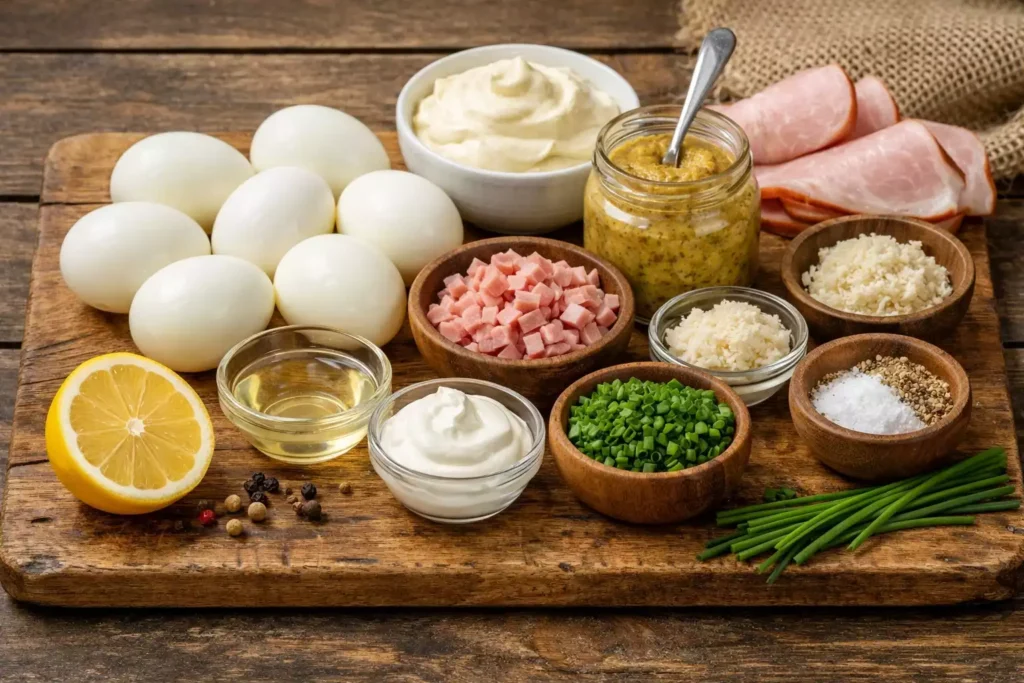
- 8 large eggs, hard-boiled and peeled
- 3 tbsp good quality full-fat mayonnaise
- 2 tsp Polish or Dijon mustard
- 1 tsp white wine vinegar or lemon juice
- Salt and white pepper to taste
- 3 tbsp fresh chives, finely chopped
- Paprika or chives to garnish
Optional Add-Ins
- 40g (1.5oz) cooked ham, very finely diced
- 1 tsp fresh horseradish or prepared horseradish
- 1 tbsp sour cream (to lighten the filling)
How to Make It
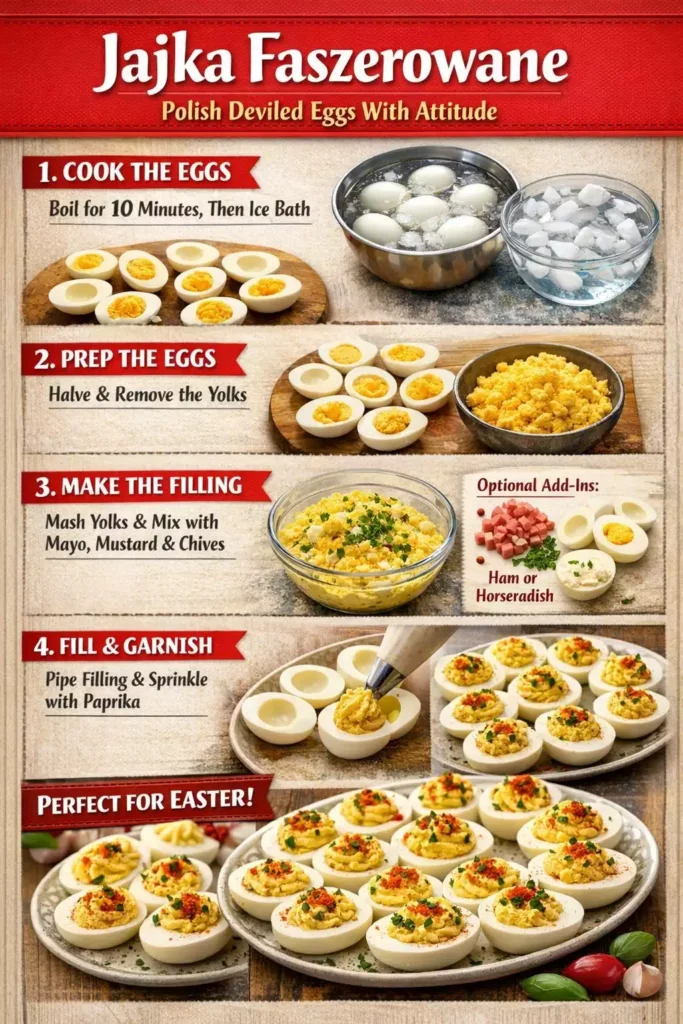
1
1Cook Perfect Hard-Boiled Eggs
Place eggs in a single layer in a pot. Cover with cold water by 3cm. Bring to a full boil, then reduce to a low simmer for exactly 10 minutes. Transfer immediately to a bowl of ice water for 10 minutes. The ice bath stops the cooking and makes peeling dramatically easier — skip it and you will spend twenty minutes peeling and your eggs will have those grey-green rings around the yolk, which is not ideal.
2
2Halve and Remove Yolks
Slice each egg in half lengthwise with a sharp knife wiped clean between cuts (a dirty blade drags and tears the whites). Pop the yolks into a small bowl. Place the egg white halves on a serving platter or tray. If any whites have a thin spot or tear, do not discard them — they can be filled and the filling will hold them together.
3
3Make the Filling
Press the yolks through a fine-mesh sieve into a bowl — this gives a smooth, lump-free filling. Add the mayonnaise, mustard, vinegar, salt, and white pepper. Mix until very smooth and creamy. Fold in most of the chives (save some for garnish). Taste and adjust — the filling should be creamy, punchy, and slightly sharp. If you are adding ham or horseradish, fold it in now.
4
4Fill and Garnish
Transfer the filling to a piping bag with a star tip (or a zip-lock bag with a corner snipped) for the most attractive result, or use a small spoon for a more rustic look. Fill each egg white generously — the filling should mound above the rim. Dust lightly with paprika, and scatter the reserved chives over the top. Refrigerate until serving.
Jajka Faszerowane Tips Worth Knowing
The ice bath is mandatory. Not optional. Not suggested. Mandatory. Eggs that do not go into ice water immediately after cooking will have grey-green yolk rings and will be significantly harder to peel. Two minutes of ice bath effort saves embarrassing results.
Slightly older eggs peel better. Fresh eggs are notoriously difficult to peel. Eggs that have been in the fridge for a week or more peel much more cleanly. If you have the luxury of planning, buy your Easter eggs a week early and let them age slightly in the fridge.
Season aggressively. Cold food suppresses flavor, so the filling that tastes perfectly seasoned at room temperature will taste slightly flat from the fridge. Season the filling to the point where it tastes just barely too salty at room temperature — it will be perfect when cold.
Make them the day before. Jajka faszerowane improve with a few hours of refrigeration. The filling firms up slightly and the flavors develop. Cover with cling film (touching the surface to prevent drying) and refrigerate until the moment before serving.
Serving Jajka Faszerowane at Easter
Jajka faszerowane live on the Easter cold platter alongside pasztet, sliced meats, and the various condiments. They are finger food, essentially — one half is one bite, or at most two. They should be the first thing that disappears from the table, which is exactly what happens every Easter in my house.
Arrange them in concentric circles on a round plate, filling-side up, with the paprika and chives giving each one a tiny crown of color. For maximum visual impact, use a star piping tip and really pile the filling high. Beautiful on the table and genuinely delicious to eat.
Follow up with a bowl of Polish Easter egg salad made from the remaining blessed eggs.
Variations Worth Trying
With smoked salmon. Replace the ham with very finely chopped smoked salmon and add a touch of fresh dill. A more elegant, mildly Scandinavian-influenced version that is excellent for guests who want something slightly less traditional.
With horseradish. Add a teaspoon of freshly grated horseradish or prepared horseradish to the yolk filling. This gives the eggs real heat and makes them significantly more Polish in character. Pairs beautifully with a small piece of ćwikła on top.
With mushroom filling. For a Lenten version or a vegetarian option, replace the ham with very finely sautéed mushrooms mixed into the yolk filling. Earthy, rich, and elegant. Also excellent with a tiny dot of sour cream on top.
Storage and Reheating
Filled jajka faszerowane keep in the refrigerator, covered tightly, for up to 2 days. After that the egg whites begin to dry out at the edges and the filling loses its freshness. Hard-boiled eggs in the shell last up to a week in the fridge — fill them the day before or the morning of serving for best results. Do not freeze deviled eggs. The mayonnaise filling will separate completely on thawing.
FAQ
How long should I boil eggs for deviled eggs?
Ten minutes of simmering (not rolling boil) after the water comes to a boil, followed immediately by ten minutes in ice water. This gives a fully set yolk that is still bright yellow with no grey ring. A full boil toughens the whites and a longer cook time gives you the grey-green rings that signal overcooked yolk. Eleven minutes is fine. Fifteen is too long.
My filling is too runny to hold its shape. What do I do?
Two options: refrigerate the filling for 20–30 minutes to firm it up, or add another egg yolk (pressed through the sieve) to absorb some of the excess moisture. Too much mayo is the most common cause of runny filling. Start with less mayo than you think you need and add more gradually.
Can I make jajka faszerowane without a piping bag?
Absolutely. A small teaspoon gives a perfectly rustic, homestyle result. For a slightly neater look, use two teaspoons in a quenelle motion to shape the filling into an oval mound. The filled eggs will taste identical regardless of presentation method.

Kasia Polish Mom
Polish-born, Chicago-raised, feeding a family of six with babcia’s recipes and a global pantry. I grew up folding pierogi at my grandmother’s kitchen table and never stopped — 15+ years of cooking from scratch, one Sunday dinner at a time. Everything here is tested on four kids, a hungry husband, and the memory of a woman who never measured anything but always got it right.