Kasia Polish Mom
Polish-born, Chicago-raised, feeding a family of six with babcia’s recipes and a global pantry. I grew up folding pierogi at my grandmother’s kitchen table and never stopped — 15+ years of cooking from scratch, one Sunday dinner at a time. Everything here is tested on four kids, a hungry husband, and the memory of a woman who never measured anything but always got it right.
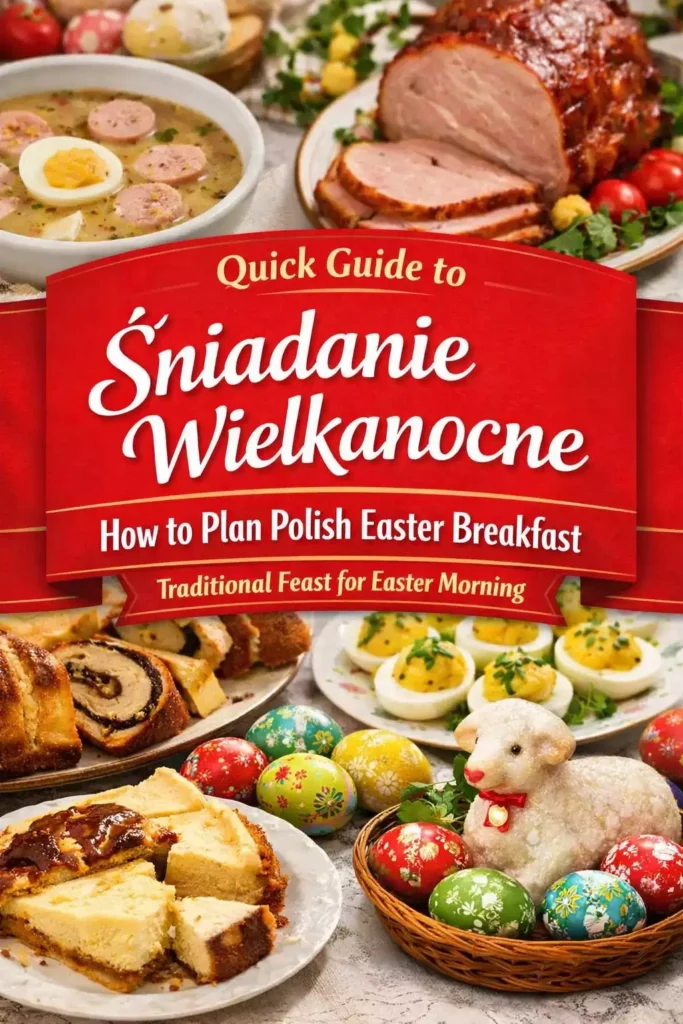
Śniadanie Wielkanocne — How to Plan Polish Easter Breakfast
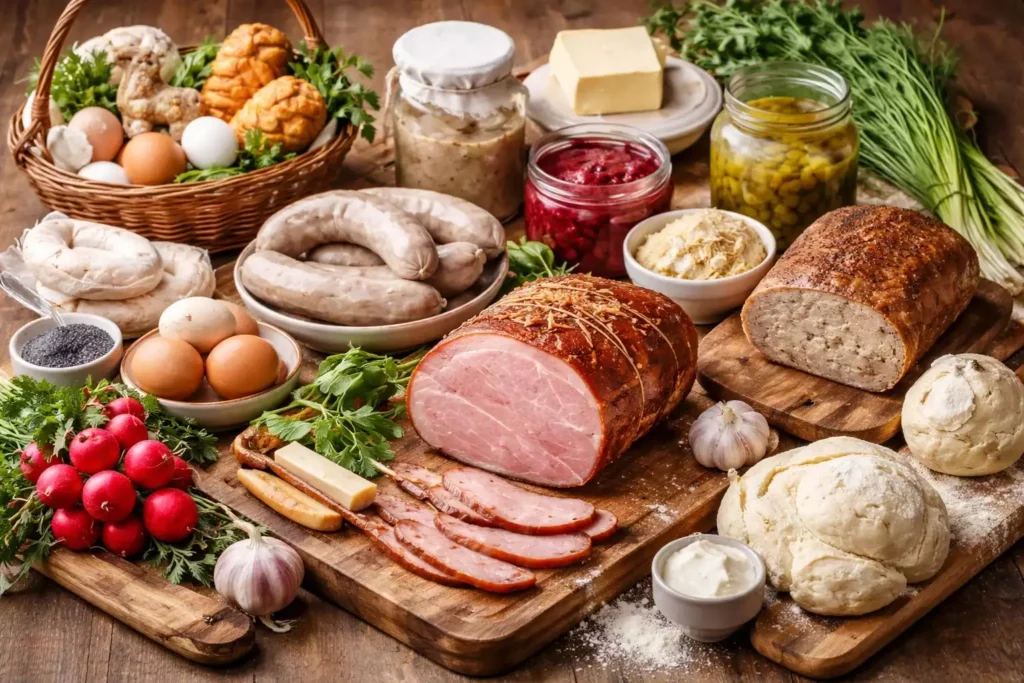
Easter breakfast in Poland is not breakfast. It is a three-hour feast that happens to take place in the morning. Śniadanie wielkanocne — the Polish Easter breakfast — is the meal that every Polish person spends the entire Lenten season anticipating. After forty days of relative fasting, simplified meals, and no meat on Fridays, the Easter breakfast arrives like a reward: laden with cold meats, soups, eggs prepared six different ways, cheesecake, poppy seed roll, glazed ham, and more horseradish than any reasonable person needs.
Planning this feast requires actual planning. It cannot be assembled at the last minute because almost every element of it was made the day before, the day before that, or the week before. The żurek starter has been fermenting since Monday. The pasztet has been in the fridge since Thursday. The baba went in the oven Saturday afternoon. The święconka basket came home from church Saturday evening. By Easter Sunday morning, the kitchen is simply a staging area for things that are already made.
This menu guide covers the full traditional Polish Easter breakfast — what to make, when to make it, how to sequence everything on the table, and what the whole thing is supposed to feel like.
Why Polish Easter Breakfast Is Different
Put ingredients on wooden board, don’t put ready food just ingredients. Don’t include any text over the image[/aiccp-img]
The śniadanie wielkanocne occupies a unique position in Polish food culture — it is a morning meal with the ambition of a dinner party. Unlike Christmas Eve, where the menu is fixed and specific, Easter breakfast has more flexibility. Every family has its own version. But the categories are consistent: soups, cold meats and charcuterie, egg dishes, condiments, bread, and cakes. All of these must be present for the table to qualify as properly Easter.
The Complete Easter Breakfast Menu
The Hot Soups (Pick One or Both)
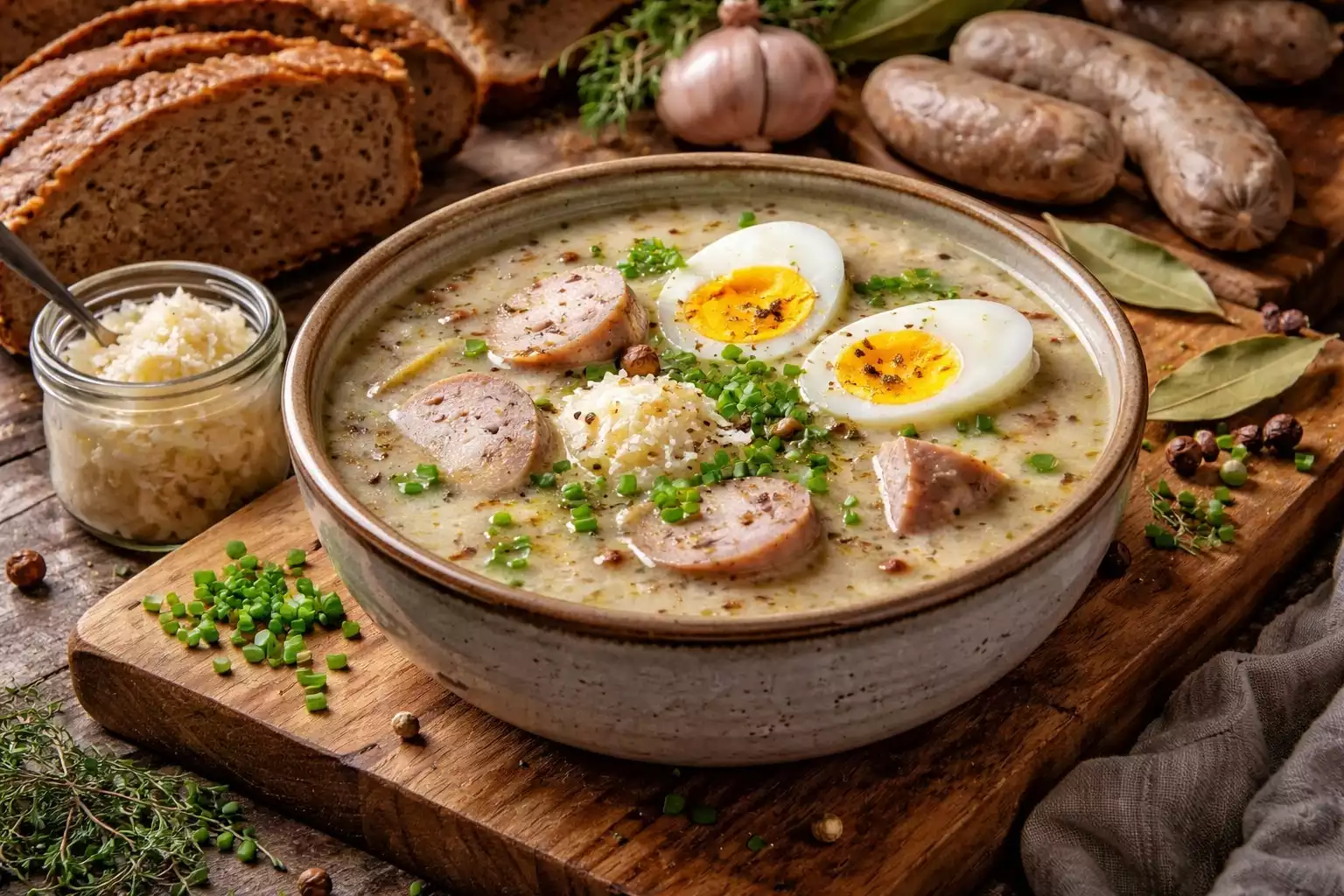
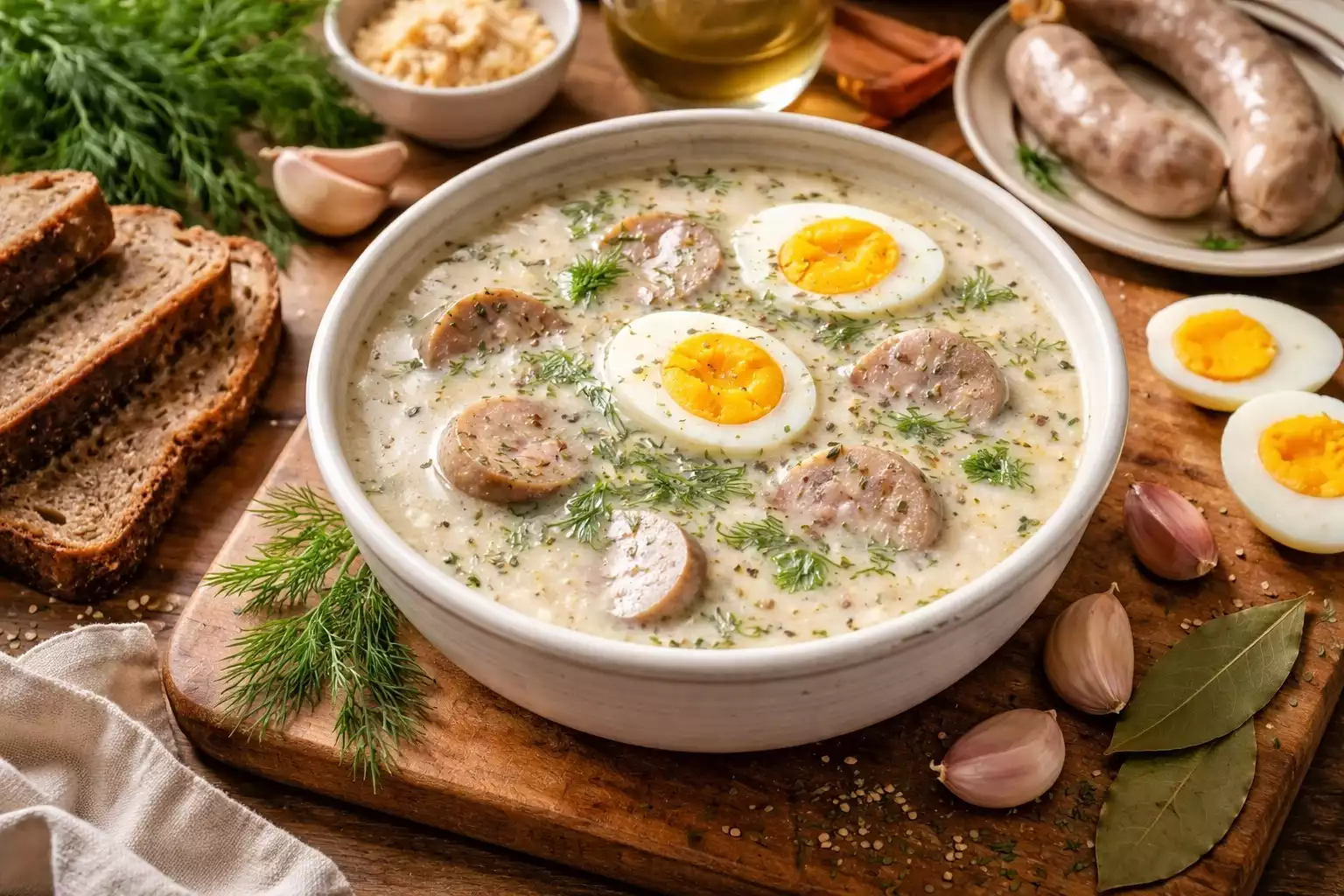
- Żurek wielkanocny — the fermented rye soup with white sausage and eggs (the essential Easter soup)
- Biały barszcz — the milder, cream-based alternative for those who find żurek too sour
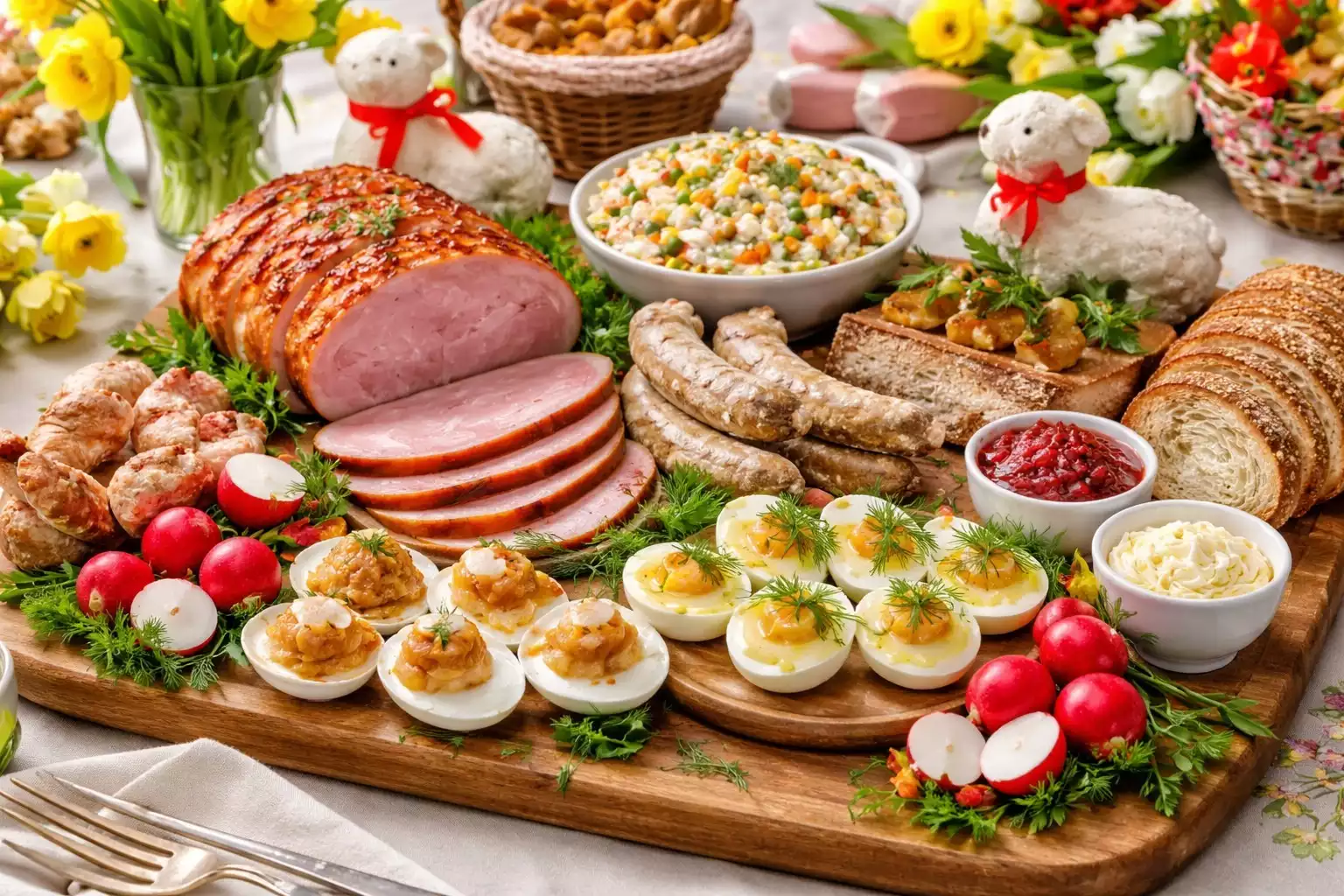
The Cold Meats Platter
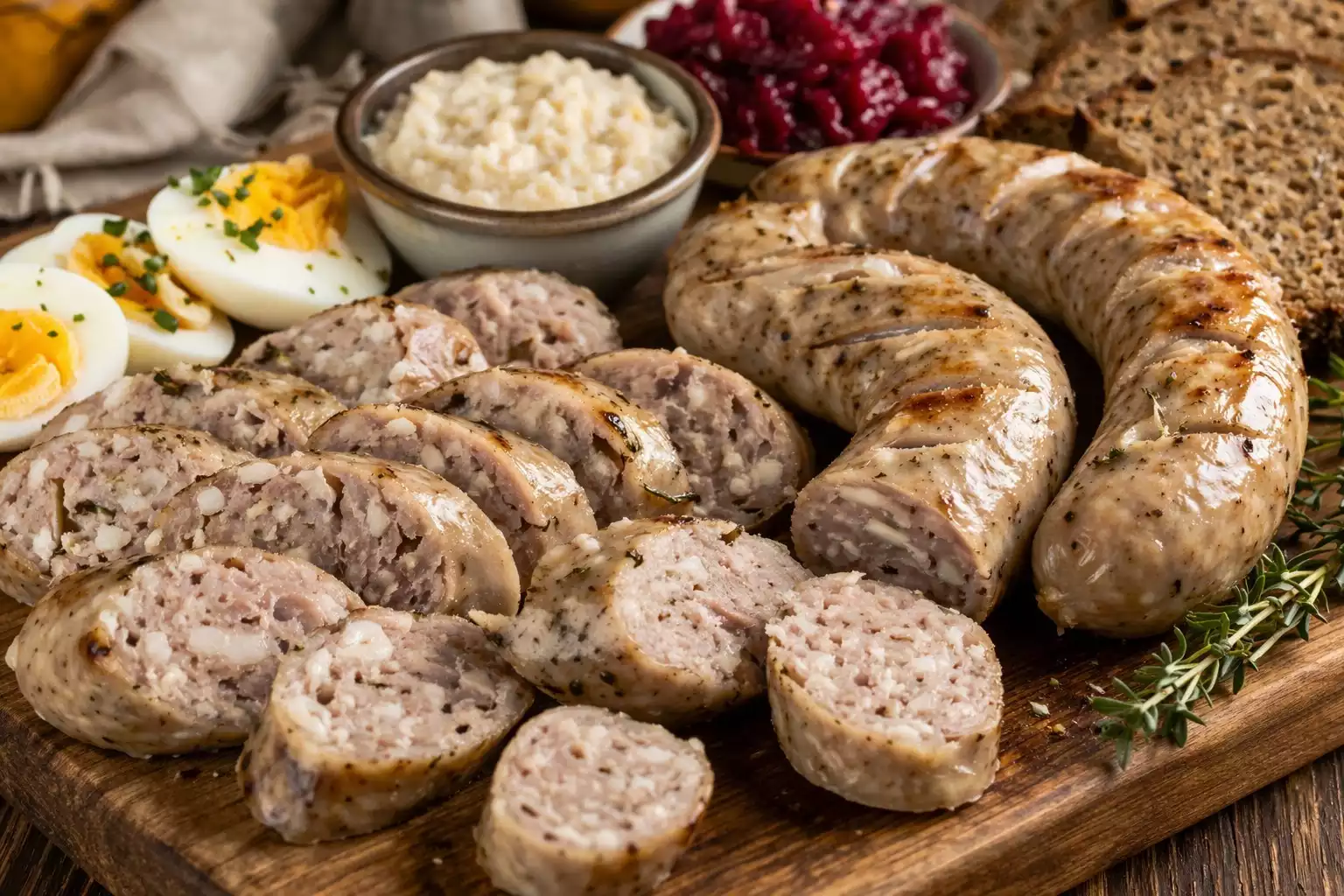
- Biała kiełbasa — boiled or baked, sliced thickly
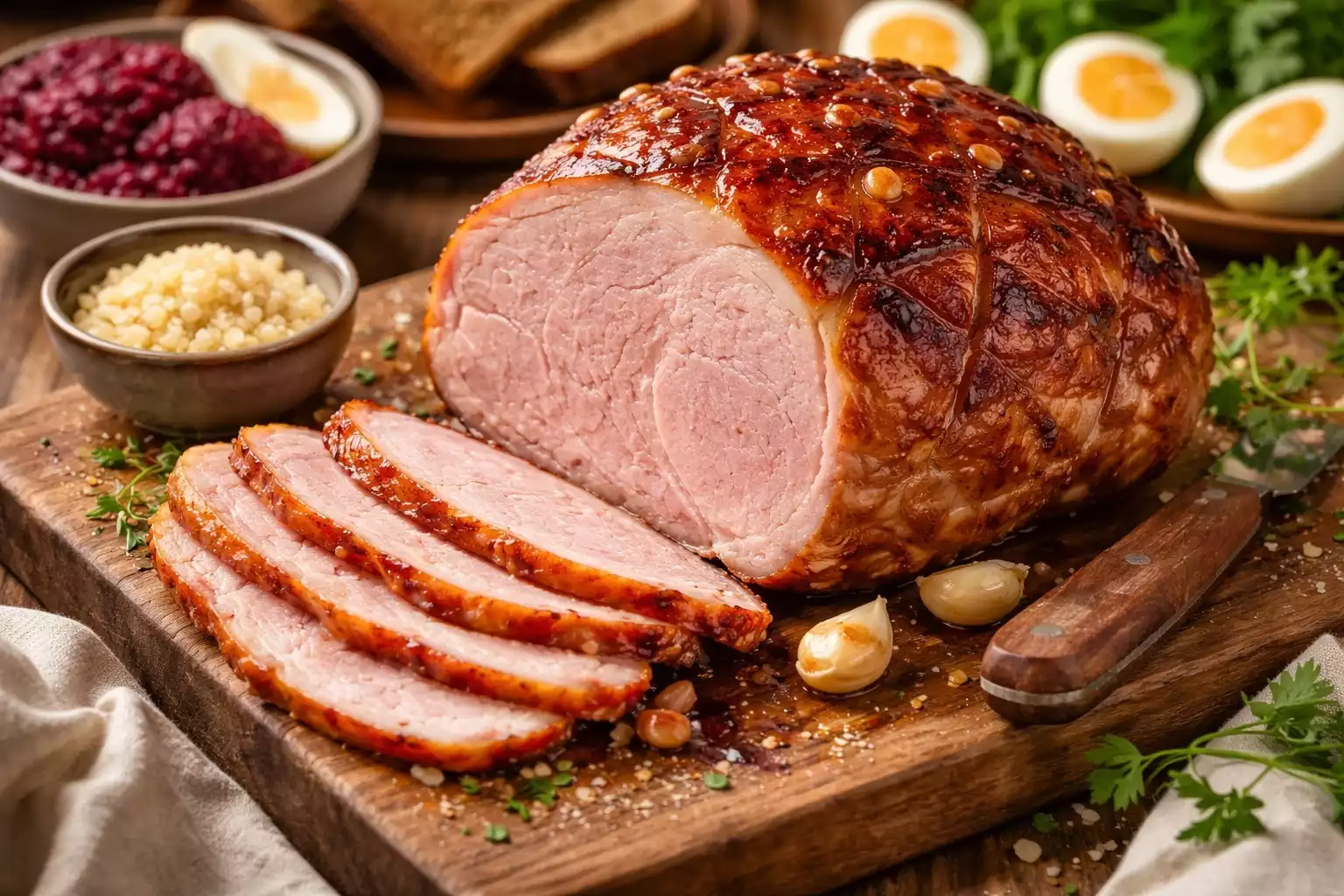
- Szynka wielkanocna — glazed ham, the table centerpiece
- Pasztet wielkanocny — cold sliced Easter pâté
The Egg Dishes
- Hard-boiled eggs from the święconka basket (first shared ceremonially)
- Jajka faszerowane — deviled eggs with mustard and chives
- Sałatka jajeczna — egg salad for dark bread
The Condiments and Salads
- Chrzan — fresh horseradish sauce, always on the table
- Ćwikła — beetroot with horseradish relish
- Sałatka jarzynowa — Polish vegetable salad
The Bread and Butter
- Dark rye bread — sliced, for everything
- Chałka wielkanocna — braided Easter bread from the basket
- Cold salted butter, in a dish
- Rzodkiewka z masłem — spring radishes with butter on dark bread
The Easter Cakes
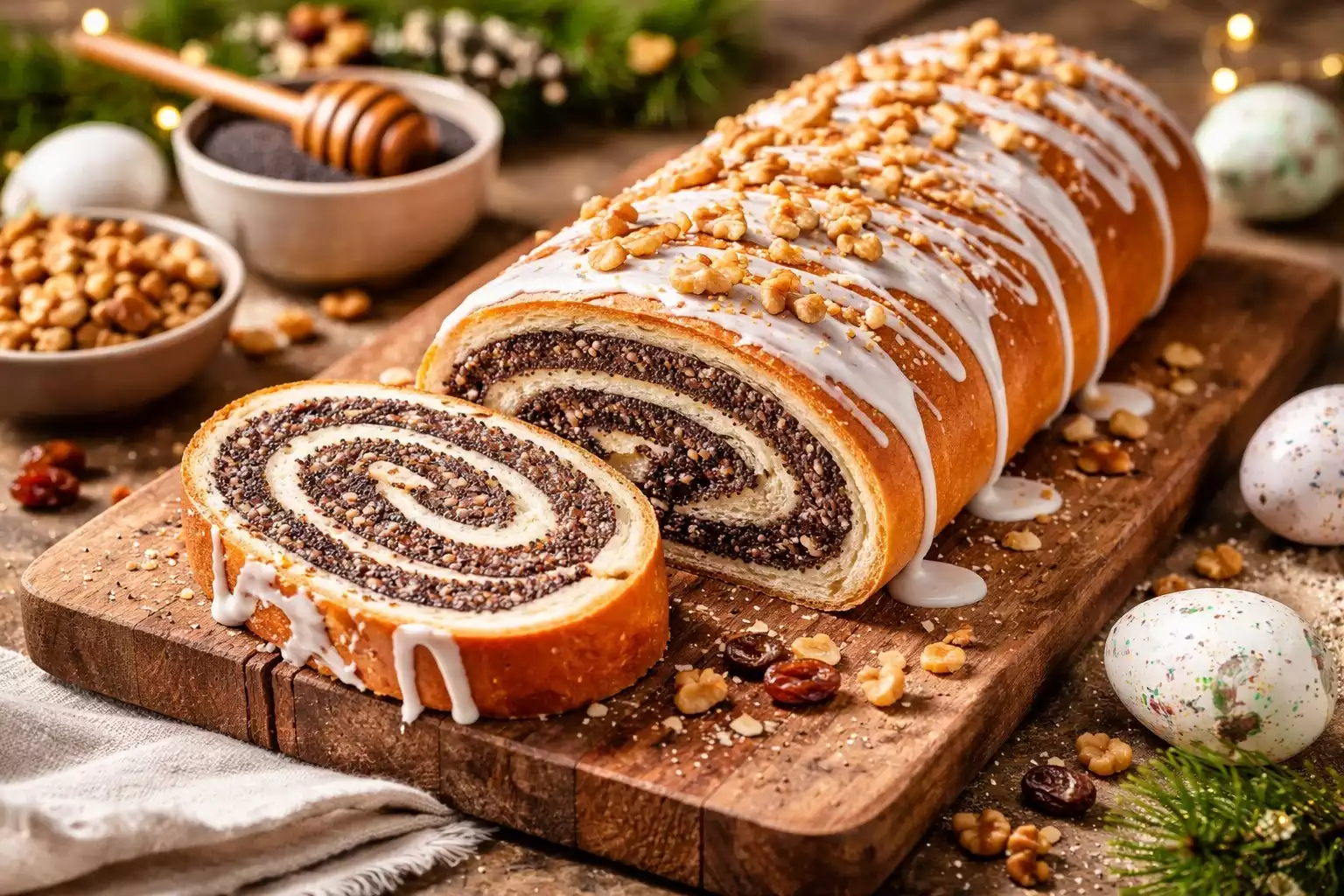
- Baba wielkanocna — the tall yeast Easter cake
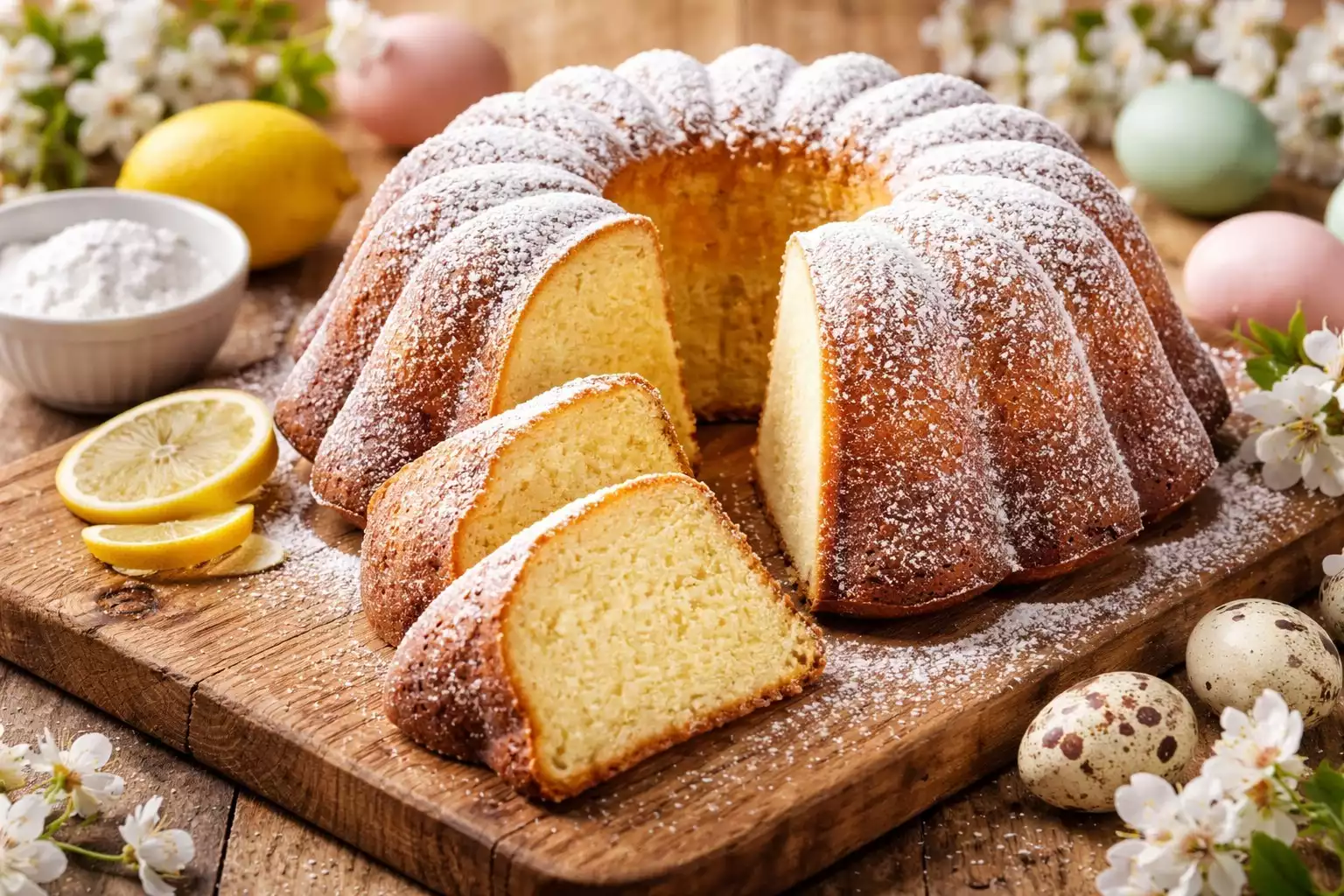
- Babka piaskowa — the reliable butter cake everyone actually finishes
- Mazurek wielkanocny — the decorated shortcrust flatcake
- Sernik wielkanocny — the baked Polish cheesecake
- Baranek z cukru — the ceremonial lamb cake from the basket
How to Sequence and Time the Easter Breakfast
1
1The Ceremonial First Bites (7:30–8:00am)
Before any food is served from the kitchen, the święconka basket is opened at the table. The person of honor — traditionally the father or eldest family member, but in practice whoever is most awake — cuts the blessed egg and shares a piece with each person. Everyone exchanges Easter greetings. This is the official beginning of Easter. Then the basket items are distributed: the bread is sliced and set on the table, the sausage goes to the kitchen to be heated, the eggs go to the egg dish platter. This ceremony takes ten minutes and sets the entire emotional tone of the day.
2
2Set the Cold Dishes While Soup Heats (8:00–8:30am)
While the żurek or biały barszcz heats on the stove, set the cold dishes table. The cold platter of szynka and pasztet goes out. The jajka faszerowane come out of the fridge. Sałatka jarzynowa goes into its bowl. Chrzan and ćwikła go into their small serving dishes. The bread gets sliced. This is the moment the table goes from a flat surface to an Easter table and it happens remarkably fast when everything was prepared the day before.
3
3Serve the Soup (8:30am)
The żurek or biały barszcz is served hot, with the sausage and eggs already in the bowls. This is the warm course — the only truly hot element of the Easter breakfast in most Polish households. Everyone gets a bowl, the bread and condiments are already on the table, and the first serious eating of the Easter weekend begins. The soup course takes 20–30 minutes and is the heart of the meal.
4
4The Cold Feast Continues (9:00–10:30am)
After the soup, the cold platter becomes the main event. Everyone grazes — ham with horseradish, deviled eggs, sałatka jarzynowa, pasztet on dark bread, radishes with butter. This is not a seated, served meal. It is communal grazing with family conversation, with no obligation to finish and move on. This is the three-hour part. Nobody goes anywhere. More tea is made. Second portions happen.
5
5The Cake Table (10:30am onward)
At some point, when the cold plates are being cleared, someone brings out the cakes. The baba, the mazurek, the sernik, the babka piaskowa. Coffee is brewed or more tea appears. Slices are cut. The table conversation shifts from family news to comparisons of this year’s baba versus previous years. This continues until everyone runs out of things to say or energy to eat, whichever comes first.
Easter Breakfast Planning Tips
Make a timeline, not just a menu. Write down what needs to be done on Monday (start żurek starter), Tuesday (shop), Wednesday (shop again for fresh items), Thursday (make pasztet), Friday (bake cakes — mazurek and babka piaskowa), Saturday (bake baba, make chrzan, make ćwikła, prepare sałatka jarzynowa, assemble basket). Sunday morning requires almost no cooking.
The week-before prep is what makes Easter morning relaxed. Polish Easter breakfast looks and tastes spectacular because most of it was made days in advance. A śniadanie wielkanocne that is mostly assembled on Sunday morning is a very stressful, inferior version. Spread the work across the week.
More food than you think you need. A Polish Easter breakfast should look like you made too much. This is not an accident — it is the aesthetic. The table should be laden. Abundance is the visual and gustatory point. If you are worried about waste, remember that nearly everything on the Easter table keeps well and becomes excellent next-day leftovers.
Non-negotiable items. If the schedule is tight and concessions must be made, these four items are the minimum Polish Easter breakfast: żurek, szynka, hard-boiled eggs, and one cake. Everything else is wonderful but optional if genuinely pressed for time.
The Feeling of Śniadanie Wielkanocne
What makes Polish Easter breakfast different from other holiday meals is its pace and its atmosphere. Christmas Eve (Wigilia) is solemn and specific. Christmas Day is festive and formal. Easter breakfast is joyful and unhurried. The fast is over. The Lenten discipline is finished. The family is together. The table is full. There is nowhere to be and nothing to rush toward. This is the meal you eat at the speed of contentment, and every Polish person who grew up in a Polish household knows exactly what that feels like.
I try to recreate this every Easter in my Chicago kitchen. It is never exactly like my babcia’s table — the house is different, some of the people are different, and my żurek is not quite her żurek. But the feel is the same. The food is the same. The ceremony is the same. That is what matters.
Adapting for Different Household Sizes
For a small family (2–4 people). Make half portions of everything. The full menu still works — just scale down. For the cakes, make one or two rather than the full suite. A single excellent babka piaskowa and one mazurek is a perfectly respectable Easter baking outcome.
For a large gathering (12+). Make double portions of the soups and cold meats. Scale the salads accordingly. For cakes, the full five-cake suite is appropriate and expected. Assign family members to specific dishes in advance and use a shared spreadsheet to prevent three people showing up with three pasztets and no sałatka jarzynowa. This has happened.
For hosting non-Polish guests. Explain everything as you serve it. This is genuinely one of the great pleasures of a Polish Easter breakfast — watching someone encounter żurek or ćwikła or a blessed Easter lamb for the first time is delightful. Give context, give food, watch people become instant fans of Polish Easter.
Easter Breakfast Leftovers
Almost everything from the Polish Easter breakfast makes excellent leftovers and continues to be eaten through Easter Monday. Cold pasztet on dark bread, leftover żurek reheated for lunch, ham sandwiches, cake for breakfast, sałatka jarzynowa throughout the day — Easter leftovers are their own category of excellent eating. In Polish tradition, Easter Monday (Śmigus-Dyngus) is a continuation of the holiday, and the leftover spread is part of its celebration.
FAQ
What time should we start Easter breakfast?
Traditionally, after returning from Easter Sunday morning Mass, which ends the Easter Vigil celebrated Saturday evening in some communities and Sunday morning in others. In practice, most Polish-American families start the breakfast between 9am and 11am. The earlier the basket ceremony, the earlier the feast begins. There is no wrong time for Easter breakfast as long as it is before noon.
Do we have to serve all of these dishes?
No. The list represents the full traditional Polish Easter breakfast. A realistic modern version might include żurek, ham, deviled eggs, one salad, and two cakes, and that is still unmistakably a Polish Easter. The principle is abundance and variety — more dishes are more festive, but the meaning comes from the ceremony and the gathering, not the specific number of dishes.
Can children participate in the basket ceremony?
Yes — children participating in the święconka ceremony is part of how the tradition is transmitted from one generation to the next. Children carry their own small baskets in Poland, receiving their own blessed food. The ceremony is specifically designed to be intergenerational — accessible, meaningful, and centered around food that children love to eat. Start the tradition early.
Kasia Polish Mom
Polish-born, Chicago-raised, feeding a family of six with babcia’s recipes and a global pantry. I grew up folding pierogi at my grandmother’s kitchen table and never stopped — 15+ years of cooking from scratch, one Sunday dinner at a time. Everything here is tested on four kids, a hungry husband, and the memory of a woman who never measured anything but always got it right.