
Kasia Polish Mom
Polish-born, Chicago-raised, feeding a family of six with babcia’s recipes and a global pantry. I grew up folding pierogi at my grandmother’s kitchen table and never stopped — 15+ years of cooking from scratch, one Sunday dinner at a time. Everything here is tested on four kids, a hungry husband, and the memory of a woman who never measured anything but always got it right.
Baranek z Cukru — The Polish Easter Lamb Cake
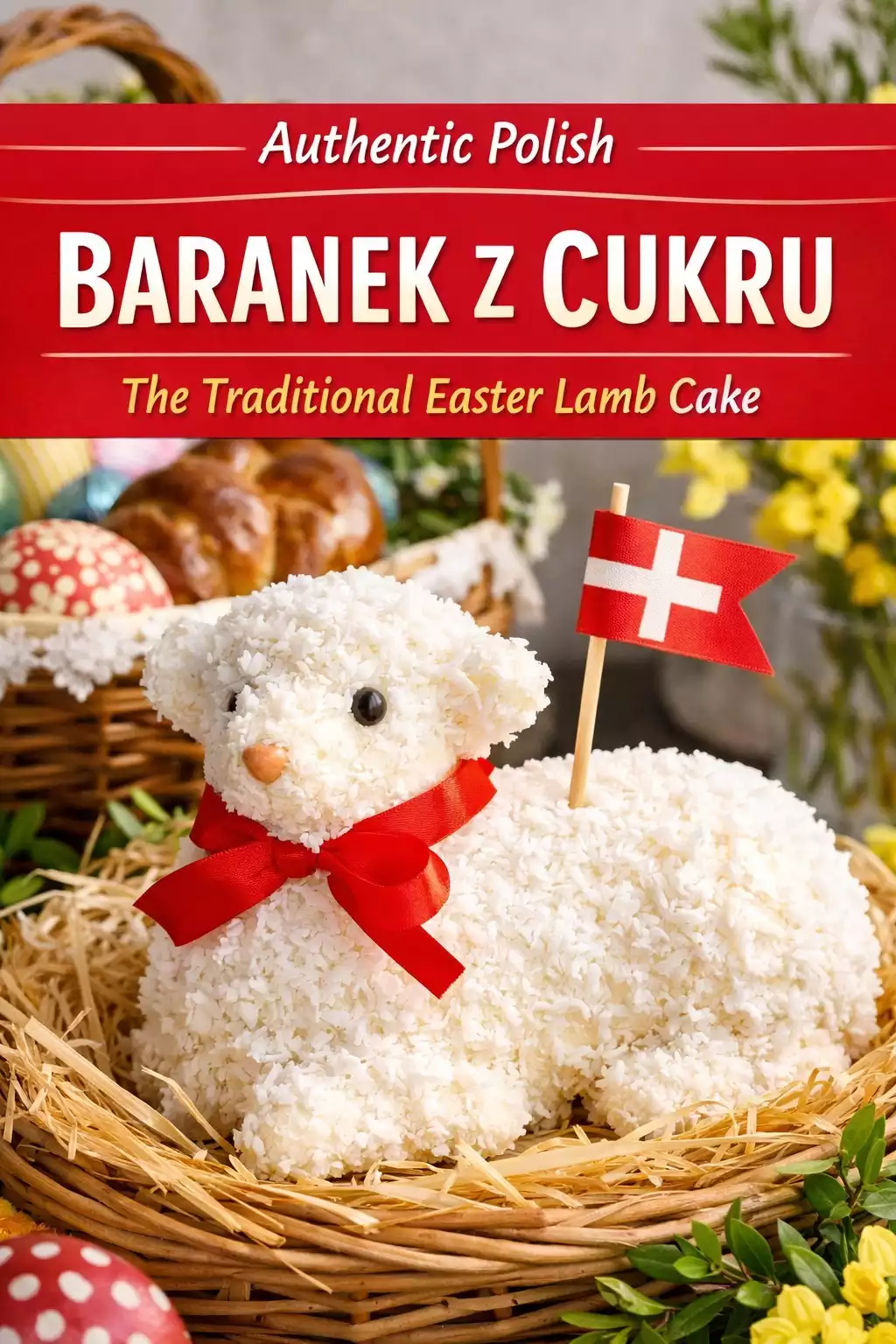
The sugar lamb sits in the Easter basket. It is small, white, and carries a little red flag. It is the symbol of Easter itself — the Lamb of God, the paschal symbol, present at every Polish Easter blessing since anyone can remember. Eating it feels like betrayal. Every year, every Easter, someone at the table says we should not eat the lamb because it is too cute and too symbolic. Every year, the lamb gets eaten anyway. Usually by the youngest person at the table, who has no such compunctions.
Baranek wielkanocny — the Easter lamb — is made from a rich butter cake batter baked in a special lamb-shaped mold, then decorated with white icing or coconut to suggest wool, and a small ribbon or flag to complete the effect. It is not complicated. It is not supposed to be complicated. It is supposed to be charming and slightly ceremonial and delicious when the ceremony is over.
The mold is specific — a hinged metal lamb mold that every Polish kitchen supply store sells in the weeks before Easter — and the batter is a simple, reliable butter cake that holds its shape cleanly when unmolded. Get the mold. Make the lamb. Put it in the basket. Eat it on Sunday.
Why This Baranek Recipe Works
A lamb mold has significantly more surface area in contact with the metal than a standard cake tin, which means it transfers heat faster and can overcook the exterior while the center is still wet. The batter needs to be moderately dense — not too airy or it will not hold fine facial and wool details when unmolded. A simple pound cake-style batter with enough structure to maintain the mold’s shape is exactly right.
The baking powder proportion is deliberately modest here — the lamb should not rise dramatically inside the mold or it will push against the top and lose definition. A gentle, steady rise that fills the mold without overwhelming it gives the cleanest final shape.
Ingredients
For the Lamb Cake Batter (fills one lamb mold)
- 180g (1.5 cups) plain flour
- 1 tsp baking powder
- Pinch of salt
- 150g (10.5 tbsp) unsalted butter, at room temperature
- 150g (¾ cup) caster sugar
- 3 large eggs
- 3 tbsp whole milk
- 1 tsp vanilla extract
- Zest of half a lemon
For Decoration
- 150g (1.25 cups) powdered sugar
- 2–3 tbsp lemon juice or water (for icing)
- Desiccated coconut (for woolly texture, optional)
- Small ribbon or dowel with paper flag
- Dried cranberry or small candy for the eye (optional)
How to Make It
1
1Prepare the Lamb Mold Meticulously
Butter every surface of both halves of the lamb mold, getting into every depression and curve. Dust with flour and tap out the excess. Repeat — butter and flour again. The lamb shape is complex and any ungreased area will cause the cake to stick and lose detail on unmolding. This is the most important step in the entire recipe and most failures are caused by insufficient greasing.
2
2Make the Batter
Beat the butter and sugar until pale and creamy — 5–6 minutes. Add the eggs one at a time, beating after each. Add the vanilla and lemon zest. Sift in the flour, baking powder, and salt, and fold gently. Add the milk and fold until just combined. The batter should be thick and smooth and drop slowly from a spoon.
3
3Fill and Close the Mold
Spoon the batter into the bottom half of the mold — the body of the lamb. Fill to about 80% capacity, not completely full. Place the top half of the mold over it and secure the clips or hooks. Place the mold on its base, standing the lamb upright or lying on its side according to the mold’s design.
4
4Bake Low and Steady
Bake at 165°C / 330°F for 45–55 minutes. Do not turn up the heat to speed it along — the enclosed mold holds heat and the exterior of the cake is already cooking faster than the center. When a thin skewer inserted through the steam hole or seam comes out clean, it is done. Cool in the mold for 20 minutes, then carefully open and unmold onto a wire rack. Cool completely before decorating.
5
5Decorate the Lamb
Mix powdered sugar with lemon juice until thick but pourable. Drizzle or brush over the entire lamb. While the icing is wet, press desiccated coconut over the body for a woolly texture. The head and legs can be left with just icing if you prefer a smoother look. Add a small cranberry eye if desired. Insert a ribbon or paper flag. Place in the Easter basket or on the holiday table.
Lamb Cake Tips for a Perfect Baranek
Grease the mold obsessively. Butter, flour, chill in the freezer for 5 minutes, then butter and flour again. This is not excessive. This is the difference between a beautiful lamb and a damaged lamb that needed reconstructive icing surgery. (I have performed this surgery. Multiple times. Grease the mold better.)
Do not overfill the mold. 80% full is right. The batter needs space to expand during baking. Overfilling pushes batter out through the mold seam and creates ugly ridges on the finished lamb that are difficult to hide with icing.
The steam hole is important. Many lamb molds have a small steam hole in the back. Do not cover this. Steam must escape during baking or the cake will be soggy inside. If your mold has no hole, leave a tiny gap at the seam to allow steam to escape.
Decorate at the last moment. Coconut decoration and icing look best freshly applied. If you bake the lamb the day before (which is perfectly fine), store it plain and decorate the morning of Easter. Fresh decoration is dramatically more attractive than day-old icing that has dried and cracked.
Baranek in the Święconka Basket and at the Easter Table
The lamb is one of the most symbolically important elements of the święconka basket. It represents the Agnus Dei — the Lamb of God — and Easter morning itself. In traditional Polish households, the lamb is placed in the center of the blessed basket and treated with a ceremony that is part reverence, part anticipation of eating it.
After the blessing, the lamb moves to the Easter breakfast table where it is displayed prominently. No one wants to be the person who takes the first slice. But someone always does, and after that first slice everyone else follows rapidly, and the lamb disappears as quickly as everything else on the Easter table.
Pair it on the baking table alongside baba wielkanocna for the complete Polish Easter baking presentation.
Variations Worth Trying
Butter lamb. A traditional alternative: sculpt butter (fresh, unsalted, very cold) by hand or in a mold into a lamb shape. Chill until firm and place in the basket. No baking involved, and 100% edible at the Easter table when spread on bread. This is the traditional symbolic lamb in some Polish regions rather than the baked cake version.
Lemon-glazed lamb. Use a lemon glaze rather than plain sugar icing — the tartness gives the sweet butter cake a more adult flavor profile. Omit the coconut for a sleeker look.
Chocolate lamb. Add 2 tablespoons of good cocoa powder to the batter for a chocolate lamb. Decorate with dark chocolate ganache for the glaze and white coconut for the wool. Visually striking and delicious.
Storage
Baked, undecorated lamb keeps at room temperature wrapped loosely for 3–4 days. A decorated lamb is best eaten on the day or next day — the coconut can pick up moisture from the air and the icing may crack after 48 hours. If the lamb will be displayed for the full Easter weekend, bake it Saturday and decorate Sunday morning for optimal appearance.
FAQ
Where can I find a Polish lamb mold?
Polish grocery stores and Catholic supply shops carry them in the weeks before Easter. Online — search for “Polish Easter lamb cake mold” or “baranek wielkanocny foremka.” Some general baking supply stores also carry decorative lamb molds. They are not expensive and last indefinitely if washed and dried properly after use.
My lamb cracked open at the seam during baking. What happened?
Overfilling is the most common cause — the expanding batter pushed out through the mold’s closure. Use 80% filling maximum and ensure the mold is properly secured. If the batter is very airy (over-beaten), reduce the baking powder by half for the mold version. Cracks at the seam are invisible after icing.
Can I use a different cake batter — like a vanilla sponge?
A standard sponge cake batter (genoise style, whisked eggs) is too airy and fragile for a shaped mold — it will not hold fine details after unmolding. A pound cake or madeira cake style batter (creamed butter method) is the correct approach: denser, more cohesive, maintains shape. Do not substitute a sponge cake recipe for this application.
Kasia Polish Mom
Polish-born, Chicago-raised, feeding a family of six with babcia’s recipes and a global pantry. I grew up folding pierogi at my grandmother’s kitchen table and never stopped — 15+ years of cooking from scratch, one Sunday dinner at a time. Everything here is tested on four kids, a hungry husband, and the memory of a woman who never measured anything but always got it right.