


Kasia Polish Mom
Polish-born, Chicago-raised, feeding a family of six with babcia’s recipes and a global pantry. I grew up folding pierogi at my grandmother’s kitchen table and never stopped — 15+ years of cooking from scratch, one Sunday dinner at a time. Everything here is tested on four kids, a hungry husband, and the memory of a woman who never measured anything but always got it right.
Polish Lent Recipes — What We Eat During Wielki Post
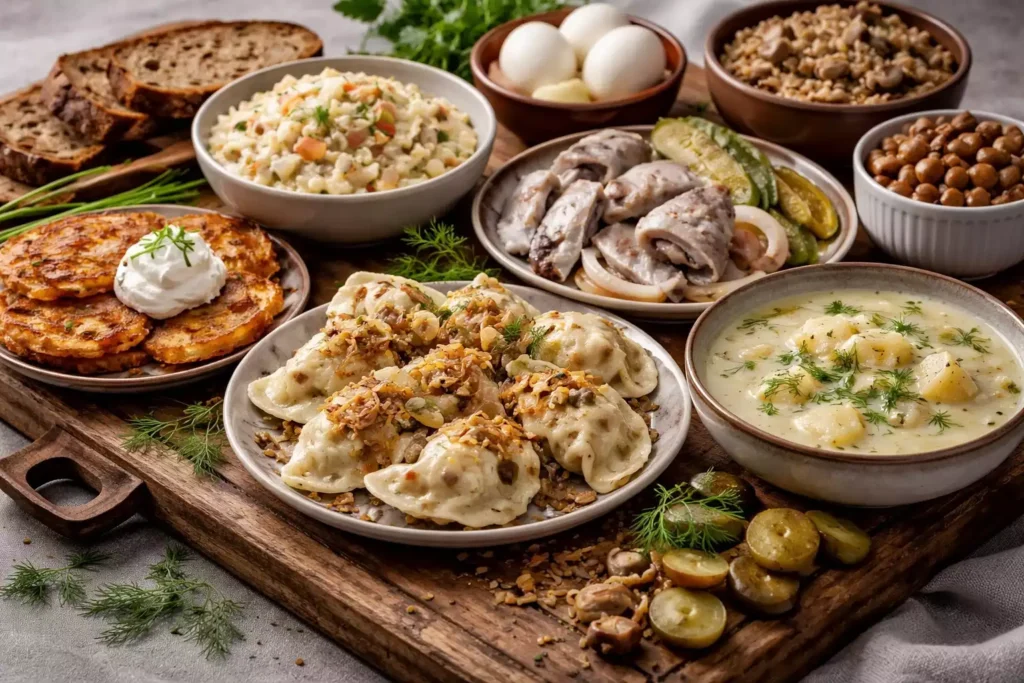
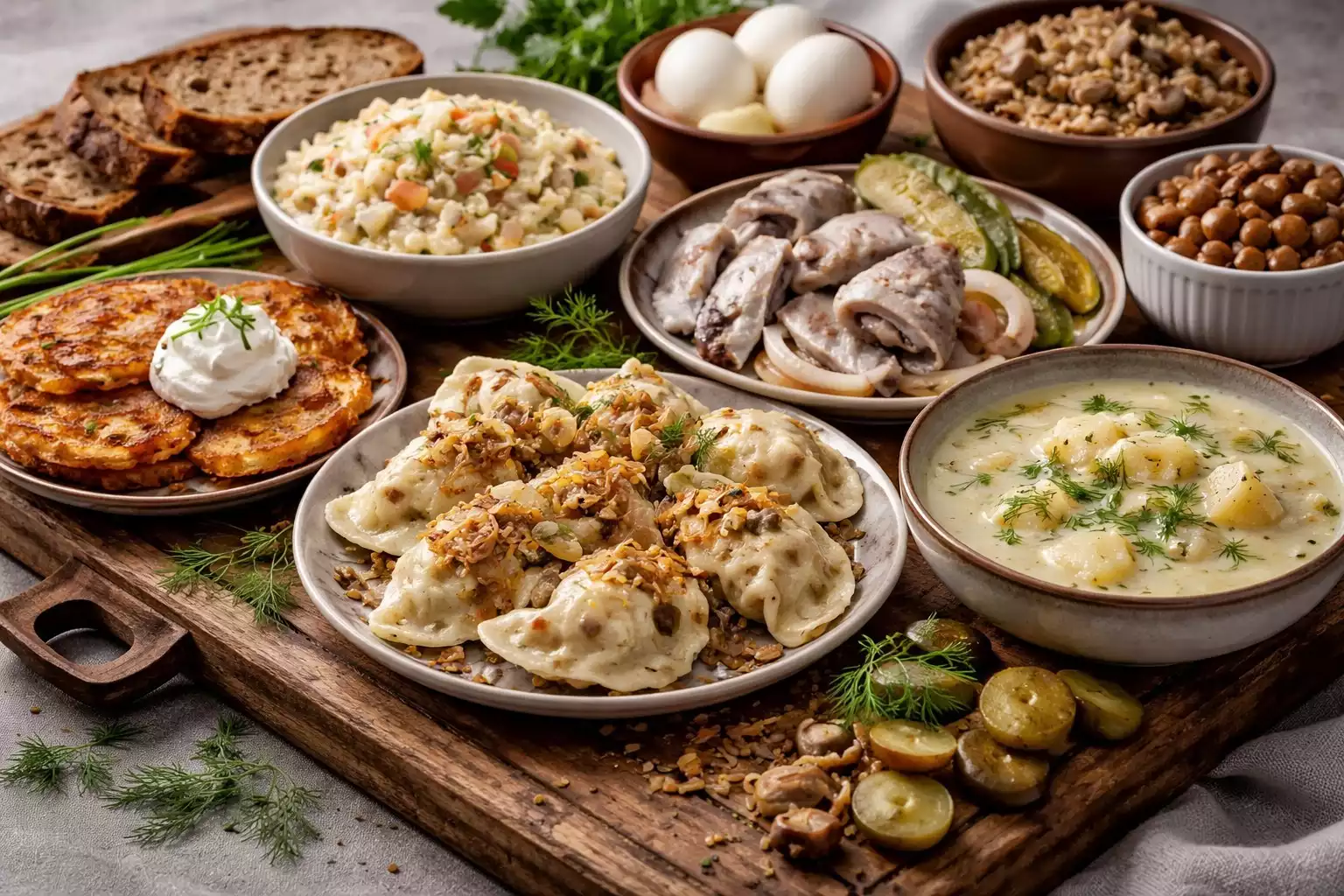
Lent in Poland means herring, pierogi, and pretending you do not miss meat. The pretending is the hardest part. The herring and the pierogi are, actually, excellent. Polish Lenten cooking — wielki post food — is not austere, sad denial food. It is a category of genuinely good cooking that has been refined over centuries of Friday fasting and forty days of meatless creativity. The restraint imposed by Lent turns out to produce some of the most flavorful things in Polish cuisine.
Wielki post, the Great Lent, runs from Ash Wednesday to Holy Saturday — forty days. In traditional Polish Catholic practice, meat is avoided on Fridays year-round and throughout Lent more broadly. Fish, dairy, eggs, and vegetables form the foundation of Lenten cooking. The result is a whole cuisine of soups, pierogis, herring preparations, and vegetable dishes that most people outside Poland do not know exist.
Growing up, Lent was not a culinary hardship in my family’s kitchen. It was a flavor change — from the meat-centered cooking of the rest of the year to a fish and vegetable rotation that I genuinely looked forward to. Herring on Good Friday. Potato soup on cold March evenings. Pierogi z kapustą i grzybami on the Fridays leading up to Easter. And always, in the back of the mind, the knowledge that Easter breakfast was coming.
The Core of Polish Lenten Cooking
Put ingredients on wooden board, don’t put ready food just ingredients. Don’t include any text over the image[/aiccp-img]
Polish Lenten food relies on three protein sources: fish (especially herring), eggs, and dairy. Carbohydrates — potatoes, flour, buckwheat — provide bulk. Mushrooms, sauerkraut, and root vegetables add depth and flavor. The restricted ingredient list is not a limitation; it is a framework that has produced recipes that have been made for generations because they are simply too good to reserve for Lent alone.
Essential Polish Lenten Dishes
Herring Dishes (śledź)
- śledź w śmietanie — herring in cream sauce (the classic)
- śledź w oleju — herring in oil with onion
- Rollmöpsy — pickled herring rolls with onion and gherkins
- śledź z jabłkiem — herring with apple, onion, and cream
Pierogi and Dumplings
- Pierogi z kapustą i grzybami — sauerkraut and mushroom (the Lenten classic)
- Pierogi z serem — fresh cheese filling with potato
- Uszka — small mushroom ear dumplings for beet borscht
- Kopytka — Polish potato gnocchi, served with mushroom sauce
Soups
- Zupa ziemniaczana — simple potato soup with cream and dill
- Zupa grzybowa — dried mushroom soup, deeply savory and completely meatless
- Barszcz czerwony z uszkami — clear beet borscht with mushroom dumplings
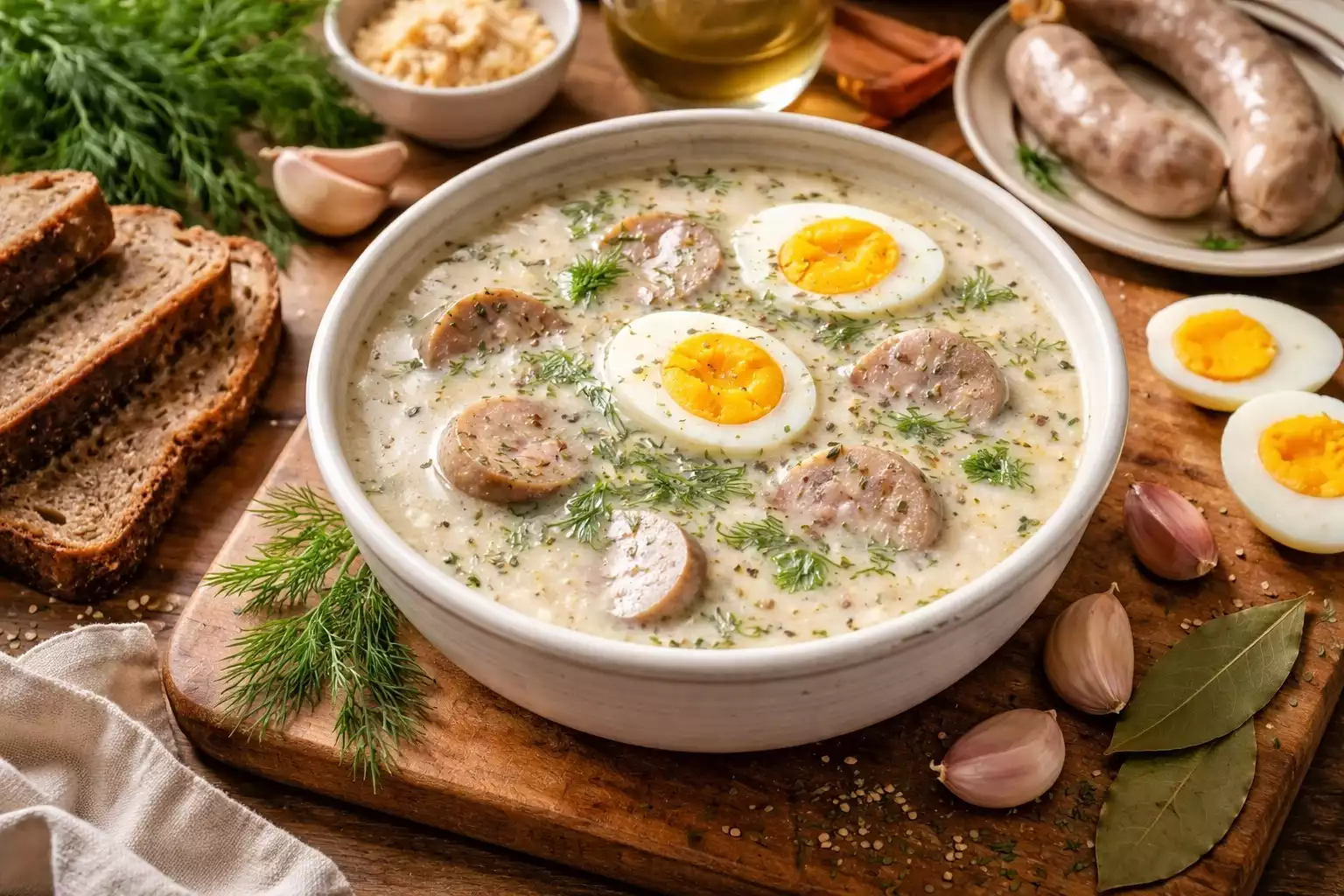
- Zupa szczawiowa — sorrel soup with hard-boiled egg and cream
Main Dishes
- Karp smażony — pan-fried carp, traditional in many regions
- Ryż z jabłkami — rice with sautéed apples, a simple sweet-savory dish
- Placki ziemniaczane — potato pancakes with sour cream
- Kasza gryczana z grzybami — buckwheat with mushrooms and onions
Key Lenten Cooking Techniques
1
1Mushroom Stock as Meat Stock Substitute
Dried mushrooms — particularly Polish dried porcini (prawdziwki) — produce a stock of extraordinary depth that serves as the umami foundation of Lenten cooking. Simmer a small handful of dried mushrooms in water for 30–45 minutes, strain, and use the liquid as stock for soups, pierogi fillings, and braised dishes. The reconstituted mushrooms go into the dish. This stock is, genuinely, not a compromise — it is excellent on its own terms.
2
2Sauerkraut Fermentation for Flavor Depth
Polish kiszona kapusta (sauerkraut) is not just a side dish — during Lent it is a flavor base. Its natural acidity replaces the savory depth that meat would normally provide in soups and stews. Good sauerkraut from a barrel or a Polish deli (not from a can) is completely different from supermarket sauerkraut — alive with fermentation, complexly sour, crunchy. Use it liberally in Lenten cooking.
3
3Herring Preparation and Desalting
Herring for Polish cooking comes salt-cured in barrels — matias herring from Scandinavian importers or Polish specialty stores. Before using, salt herring must be desalted: soak in cold water or milk for 8–12 hours, changing the liquid twice. This removes excess salt and softens the texture. Properly desalted herring is silky, mildly salty, and ready to absorb whatever dressing you apply. Skipping this step produces herring that is aggressively salty and unpleasant.
4
4Butter and Cream as Lenten Richness
In traditional Catholic Lenten practice, dairy is permitted (unlike in Eastern Orthodox Lent). Polish Lenten cooking makes liberal use of this permission: butter-fried potato pancakes, sour cream on everything, cream soups, butter-enriched pierogi dough. The richness that meat provides is replaced by dairy fat, and the result is comfort food that does not feel like deprivation.
Polish Lenten Cooking Tips
Infographic should have on top red ribbon in color #DC143C and below step by step prep. each step in new row. Make sure you don’t leave empty spaces if necessary you can fill it with finished dish.[/aiccp-img]
Source dried Polish mushrooms. Suszone prawdziwki (dried Polish porcini) are the single most important ingredient in Lenten cooking. They are sold at Polish delis in small bags. A handful goes a very long way and transforms any soup or filling from good to extraordinary. Worth having a stock of them throughout Lent and beyond.
Sauerkraut quality varies enormously. Buy barrel-fermented sauerkraut from a Polish deli rather than canned or jarred supermarket versions. The taste difference is significant — live fermented sauerkraut has complexity and crunch that pasteurized canned versions lack entirely. If you have access to Polish sauerkraut, use it for every Lenten recipe that calls for it.
Herring in cream is not hard. Many people are intimidated by herring preparation. It is simpler than it appears. The desalting is the main step; everything else is assembly. Polish herring in cream sauce (śledź w śmietanie) has approximately five ingredients and takes fifteen minutes after desalting. It is one of the most reliably impressive Lenten dishes.
Lenten desserts exist. Do not neglect the sweet end of Lenten cooking. Piernik (Polish spiced gingerbread), szarlotka (apple cake), and various nut and fruit dishes are all traditionally Lenten. The sweet course does not have to disappear with the meat.
Lenten Menus by Week
A week of Lenten Polish cooking for a family does not require daily creative effort. Most Lenten dishes last multiple days and improve with reheating, which means two or three cooking sessions a week can feed a household well throughout Lent.
Monday/Tuesday: Make a large pot of mushroom and sauerkraut soup. Serve with dark bread. Lasts three days.
Wednesday: Pierogi z kapustą i grzybami — make a large batch, freeze half.
Thursday/Friday: śledź on dark bread, prepared from the desalted herring you started on Wednesday. Good Friday: herring and eggs only in very traditional households.
Weekend: Kasza gryczana (buckwheat) with mushroom sauce. Potato pancakes with sour cream. Simple, warm, filling.
Modern Polish Lenten Adaptations
For non-fish-eaters. Polish Lenten cooking has plenty without fish: pierogi, mushroom soups, potato dishes, egg dishes, buckwheat, and dairy-based foods. The herring is optional for non-Catholics or those who genuinely cannot eat fish — the rest of the Lenten repertoire stands completely on its own.
Vegan Lenten Polish cooking. Traditional Lenten food relies on dairy, but if you remove it, you still have: mushroom and sauerkraut pierogi (made with oil-based dough), mushroom soups, buckwheat dishes, potato dishes, and beet preparations. Eastern Orthodox Lent is fully vegan and has a Polish repertoire of its own.
Contemporary weeknight adaptations. The traditional Lenten dishes scale to fast weeknight cooking with a few modern shortcuts: canned or jarred good-quality sauerkraut, pre-ground frozen pierogi dough, excellent prepared herring from Polish delis. Lenten cooking does not require all-day kitchen work.
Lenten Pantry Essentials
A well-stocked Lenten Polish pantry requires: dried porcini mushrooms (suszone prawdziwki), good sauerkraut (fresh, barrel-fermented), salt-cured herring (matias, available at Polish delis), buckwheat groats (kasza gryczana), sour cream (thick, full-fat śmietana if available), rye bread (dark, dense, sliced), and eggs (lots). With these in the kitchen, Lenten weeknight cooking takes 30 minutes and tastes like something worth making twice.
FAQ
What is the difference between Catholic Lent and Orthodox Lent food rules?
Catholic Lenten practice in Poland typically restricts meat (but not fish or dairy) on Fridays, with some families abstaining more broadly throughout Lent. Eastern Orthodox Lent is significantly stricter: no meat, no dairy, no eggs on most days. Polish Orthodox communities (mostly in the eastern Borderlands) have a more austere Lenten cooking tradition as a result. Polish Catholic Lenten cooking is relatively generous by comparison.
Can I eat eggs during Polish Lent?
In traditional Polish Catholic practice, eggs are permitted throughout Lent. Abstinence is from meat (flesh of warm-blooded animals) and, for stricter observers, from warm-blooded animal products broadly. Eggs, dairy, and fish are all generally permitted. Individual observance varies — some families abstain more strictly, others less so.
What makes Good Friday different from other Lenten Fridays?
Good Friday is the most austere day of the Catholic liturgical calendar. Many Polish Catholic families eat nothing or only bread and water until the evening, then have a simple meal of herring, boiled potatoes, and perhaps eggs. No celebration foods, no dessert. The contrast with Easter Sunday morning is intentional — the fullness of the Easter feast is preceded by the emptiness of Good Friday.

Kasia Polish Mom
Polish-born, Chicago-raised, feeding a family of six with babcia’s recipes and a global pantry. I grew up folding pierogi at my grandmother’s kitchen table and never stopped — 15+ years of cooking from scratch, one Sunday dinner at a time. Everything here is tested on four kids, a hungry husband, and the memory of a woman who never measured anything but always got it right.