

Kasia Polish Mom
Polish-born, Chicago-raised, feeding a family of six with babcia’s recipes and a global pantry. I grew up folding pierogi at my grandmother’s kitchen table and never stopped — 15+ years of cooking from scratch, one Sunday dinner at a time. Everything here is tested on four kids, a hungry husband, and the memory of a woman who never measured anything but always got it right.
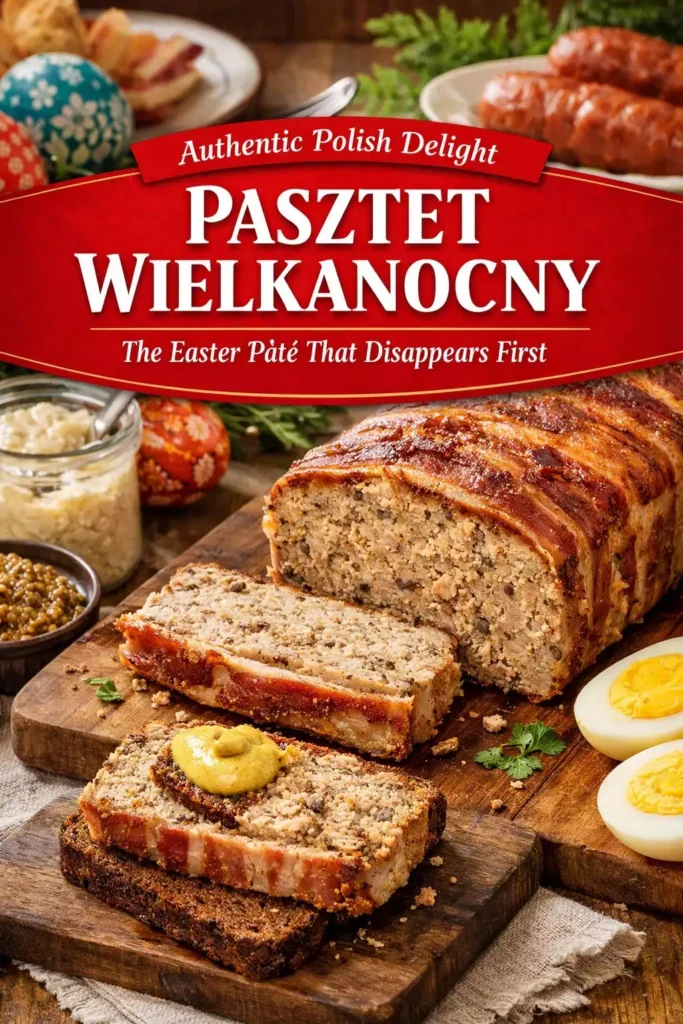
Pasztet Wielkanocny — The Easter Pâté That Disappears First
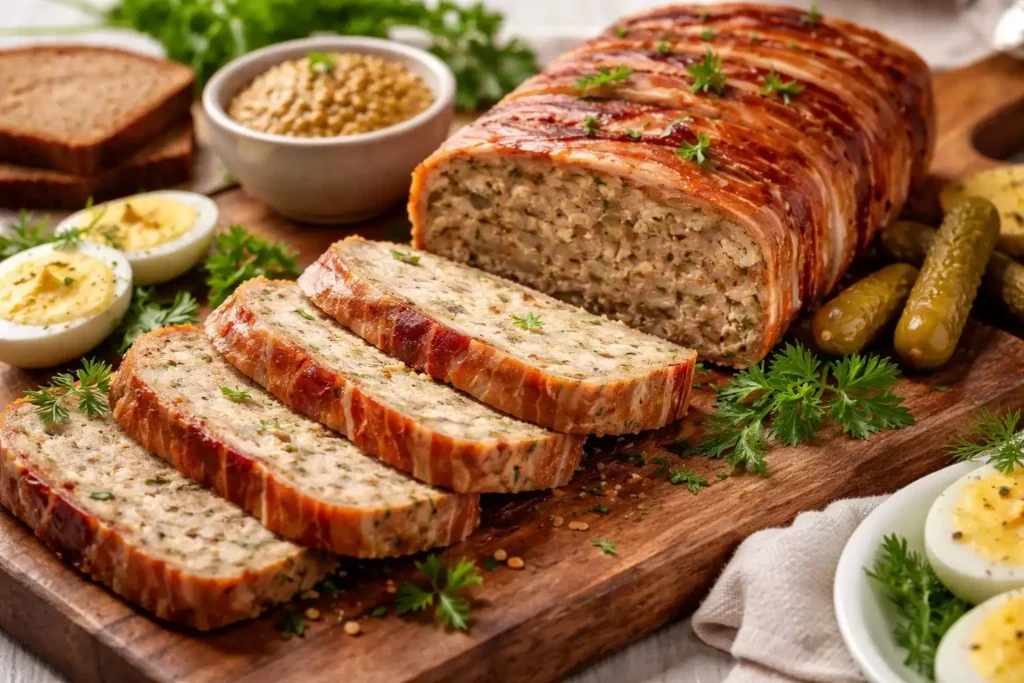
There is a cold platter moment at every Polish Easter table where someone quietly disappears into the kitchen and comes back holding the pasztet — and suddenly everything else on the table becomes slightly less important. Pasztet wielkanocny — Easter pâté — is one of those Polish dishes that looks like a simple, rustic terrine and tastes like someone spent an entire Saturday making it. Which is, in fact, exactly what happened.
My babcia’s pasztet was a poultry-based loaf, always baked in a white bread tin, always wrapped in a thin layer of lean pork to help it hold its shape. It was sliced cold, served with dark rye bread and a swoosh of mustard, and it was gone — completely, totally gone — before the main soup course finished. My family would stand at the counter eating slices directly off the serving board while żurek was still simmering. This is the truth.
Good pasztet is not fancy. It is practical, deeply savory, and built for slicing. It improves overnight. It freezes beautifully. And it is the kind of thing that, once you make it, you will wonder why you were ever intimidated by it.
Why This Pasztet Works
The key to good pasztet is fat and moisture management. A terrine that is too lean will be dry and crumbly. Too much moisture and it will not hold its slice. The combination of chicken liver and poultry thigh with a little bacon or pork provides the fat content that keeps every slice moist and cohesive. Softened bread soaked in cream is the traditional binder — it absorbs and redistributes moisture through the loaf during baking.
Caramelized onions and sautéed mushrooms bring sweetness and umami. The marjoram and allspice give it that unmistakably Polish flavor fingerprint. Baked in a water bath (bain marie), the gentle indirect heat ensures the pasztet stays creamy rather than tough or grainy.
Ingredients
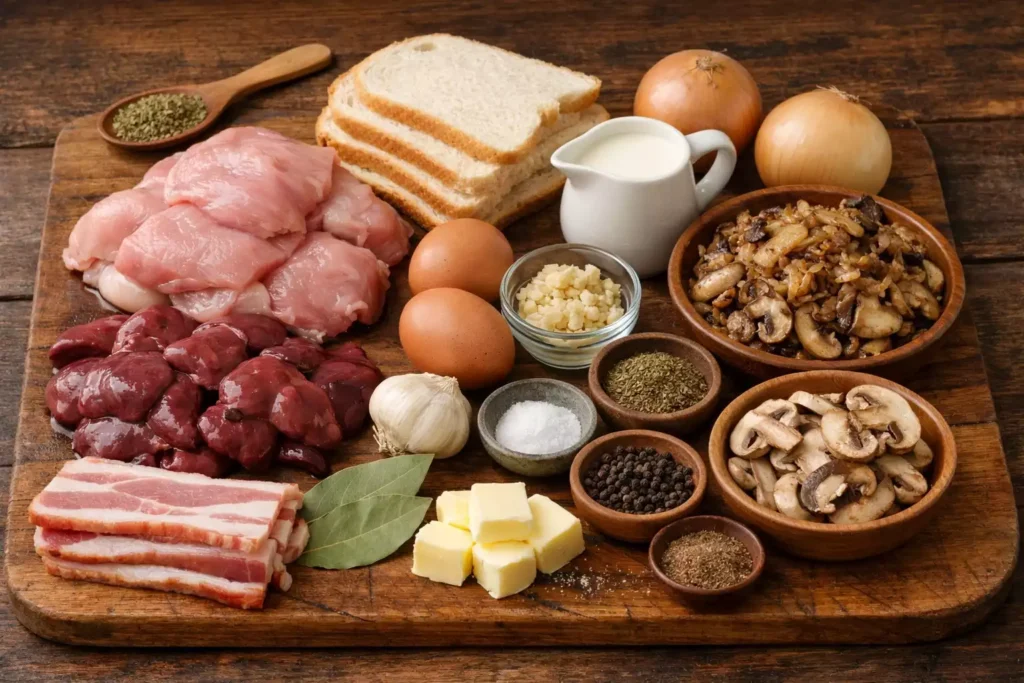
For the Pâté
- 400g (14oz) chicken thigh, boneless and skinless
- 200g (7oz) chicken livers, cleaned
- 150g (5oz) streaky bacon or pork belly, roughly chopped
- 2 medium onions, diced
- 150g (5oz) mushrooms, sliced
- 2 slices stale white bread, crusts removed
- 100ml (½ cup) heavy cream
- 3 eggs
- 3 tbsp butter
- 2 cloves garlic, minced
- 1 tsp dried marjoram
- 1 tsp ground allspice
- 1 tsp ground black pepper
- 1.5 tsp salt
- 2 bay leaves (for lining the tin)
- Thin-sliced streaky bacon to line the tin (optional)
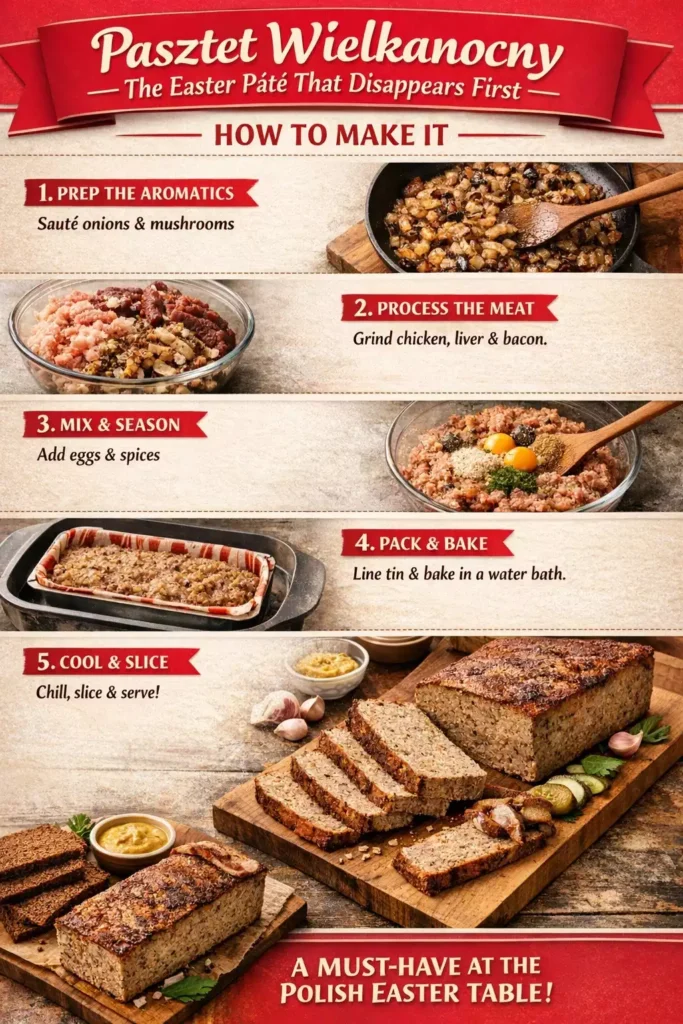
How to Make It
1
1Prepare the Aromatics
Melt the butter in a large skillet over medium heat. Add the diced onions and cook slowly for 20–25 minutes until deeply golden and sweet — this is not a step to rush. Add the mushrooms and garlic and cook for another 8 minutes until all the moisture has evaporated. Remove from heat and cool completely. Soak the bread in the cream for 10 minutes until fully saturated.
2
2Process the Meat
Roughly cut the chicken thigh, livers, and bacon into large chunks. Working in batches, pulse everything in a food processor until you have a coarse mince — not a smooth paste. You want texture, not baby food. Transfer to a large bowl. Add the cooled onion and mushroom mixture, the soaked bread (squeeze out excess cream first), and the eggs.
3
3Season and Mix
Add the marjoram, allspice, pepper, and salt to the meat mixture. Mix thoroughly with your hands until everything is evenly combined. Fry a teaspoon of the mixture in a hot pan to taste-test the seasoning. The pasztet should be well-seasoned and aromatic. Adjust salt and spices. This is the step people skip and then wonder why their pasztet tastes bland.
4
4Pack and Bake
Preheat the oven to 170°C / 340°F. Line a standard 900g bread tin with bacon strips if using — they give extra flavor and help with slicing. Place a bay leaf at the bottom. Pack the pasztet mixture firmly into the tin, pressing out air pockets. Cover tightly with foil. Place the tin in a larger roasting dish and pour hot water around it to come halfway up the sides (bain marie). Bake for 70–80 minutes until a skewer inserted in the center comes out clean and hot.
5
5Cool and Slice
Remove from the bain marie and allow to cool in the tin for 30 minutes. Then refrigerate for at least 4 hours, ideally overnight — pasztet slices cleanly only when fully cold. Run a knife around the edges, invert onto a board, and slice with a sharp, thin-bladed knife. Serve cold.
Pasztet Tips That Make the Difference
Overnight is mandatory. Freshly baked pasztet is warm, soft, and falls apart when sliced. After a night in the refrigerator it firms up, the flavors deepen, and it slices cleanly. Make it on Good Friday. Eat it on Easter Sunday. This is the correct timeline.
Keep some texture. Over-processing the meat gives you a smooth, paste-like result that lacks character. Pulse rather than blitz, and stop while there is still visible texture in the mixture. Good pasztet has bite.
The bain marie is not optional. Direct oven heat makes pasztet tough and grainy. The water bath keeps the temperature gentle and the moisture high. Use it.
Clean the livers properly. Chicken livers should have the connective tissue, green bile duct bits, and any discolored areas removed. A liver that is not properly cleaned can make the entire pasztet bitter. Two minutes of proper cleaning is worth it.
Serving Pasztet at Easter
Pasztet wielkanocny is a cold platter dish. It never appears hot at the Easter table — always sliced cold alongside jajka faszerowane and the cold cuts. Dark rye bread is the vehicle, mustard is the condiment, and a small glass of something cold is the accompaniment.
Thin slices of pasztet are placed on bread, topped with a curl of butter or a smear of horseradish, and eaten standing at the table while people are still arriving. This is not a sit-down dish. It is a grazing dish, and it is never eaten slowly enough for anyone to feel satisfied before it runs out.
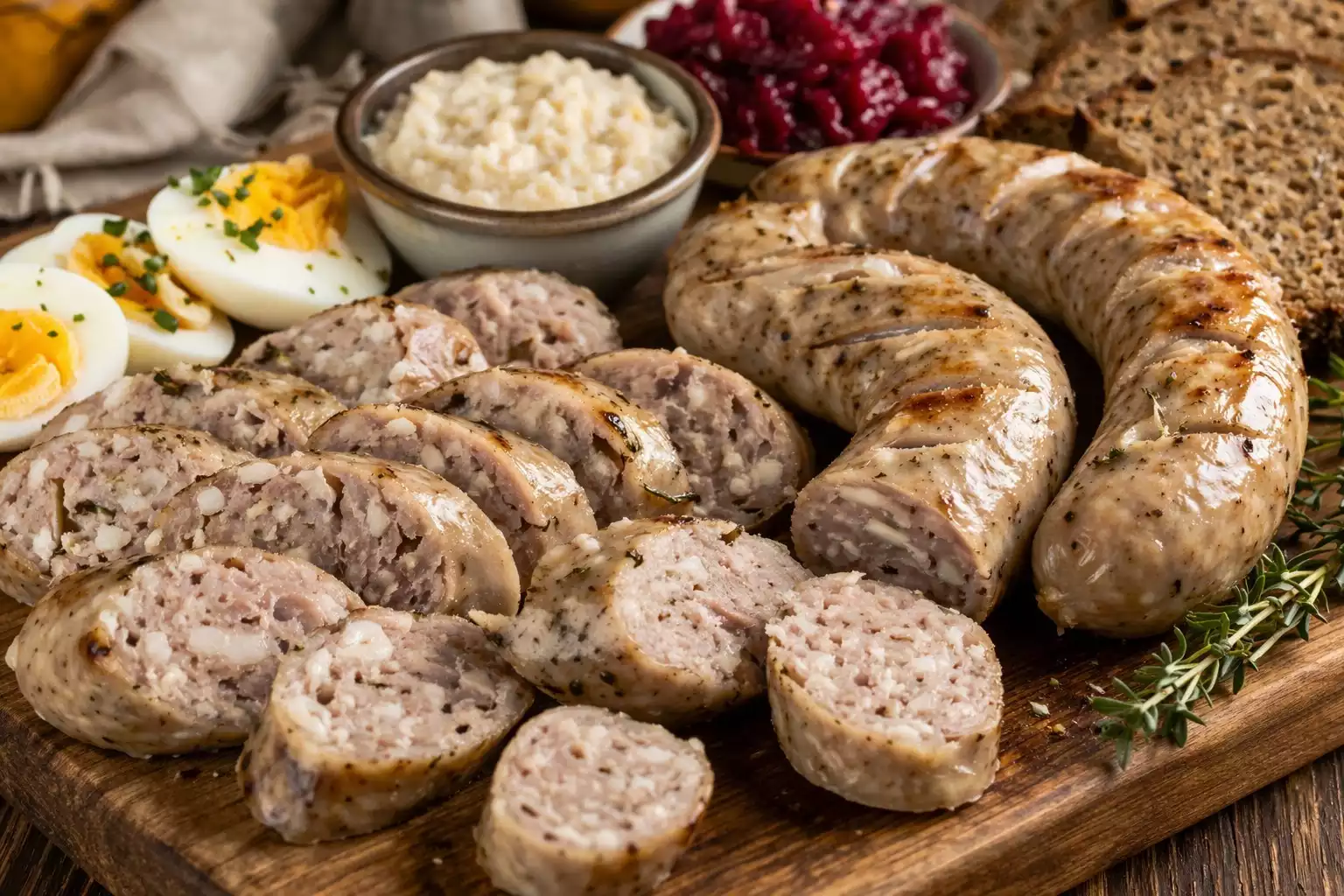
Pair it with biała kiełbasa on the cold meats platter.
Variations Worth Trying
Pork pasztet. Replace the chicken thigh with pork shoulder and add more bacon. A deeper, fattier, more robust result that is excellent with strong mustard. Some Polish families make exclusively pork pasztet and consider the poultry version a compromise.
With hard-boiled eggs. For a show-stopping presentation, press two whole hard-boiled eggs lengthwise into the center of the pasztet mixture before baking. When sliced, every piece reveals an egg in the middle. Dramatic, beautiful, and very Polish grandmother energy.
Lighter vegetable pasztet. For a vegetarian Easter option, make a lentil-mushroom-vegetable pasztet using the same baking method. It lacks the richness of the meat version but stands well on its own with good mustard.
Storage and Reheating
Pasztet keeps refrigerated for up to 5 days wrapped tightly in cling film. It freezes exceptionally well for up to 3 months — slice first for easy thawing of individual portions. Serve cold; pasztet is not a dish that is reheated. Bring it out of the fridge 15 minutes before serving for the best texture and flavor.
FAQ
Can I make pasztet without chicken livers?
You can, but you will lose the characteristic depth and slightly dark richness that liver provides. Substitute with more chicken thigh meat and add an extra egg for binding. The result will be milder and paler — it is still a good pasztet, just a different one. Start with a small amount of liver (100g) if you are liver-shy — properly cooked and blended, it is subtle.
Why did my pasztet crack on top during baking?
Cracking usually means the oven temperature was too high, the bain marie ran dry, or the foil was not tight enough. It is purely cosmetic — the pasztet will taste exactly the same. For a smooth top, ensure the foil is tightly sealed and check the water level halfway through baking.
My pasztet does not hold together when sliced. What went wrong?
Insufficient binding (not enough eggs or bread) or slicing before it is fully cold are the two most common causes. Ensure the pasztet is completely cold — at least 4 hours in the fridge — before attempting to slice. If the mixture seemed very wet before baking, reduce the cream in the bread soak next time.
Kasia Polish Mom
Polish-born, Chicago-raised, feeding a family of six with babcia’s recipes and a global pantry. I grew up folding pierogi at my grandmother’s kitchen table and never stopped — 15+ years of cooking from scratch, one Sunday dinner at a time. Everything here is tested on four kids, a hungry husband, and the memory of a woman who never measured anything but always got it right.