
Kasia Polish Mom
Polish-born, Chicago-raised, feeding a family of six with babcia’s recipes and a global pantry. I grew up folding pierogi at my grandmother’s kitchen table and never stopped — 15+ years of cooking from scratch, one Sunday dinner at a time. Everything here is tested on four kids, a hungry husband, and the memory of a woman who never measured anything but always got it right.
Sałatka Jarzynowa — The Polish Salad That Shows Up Everywhere
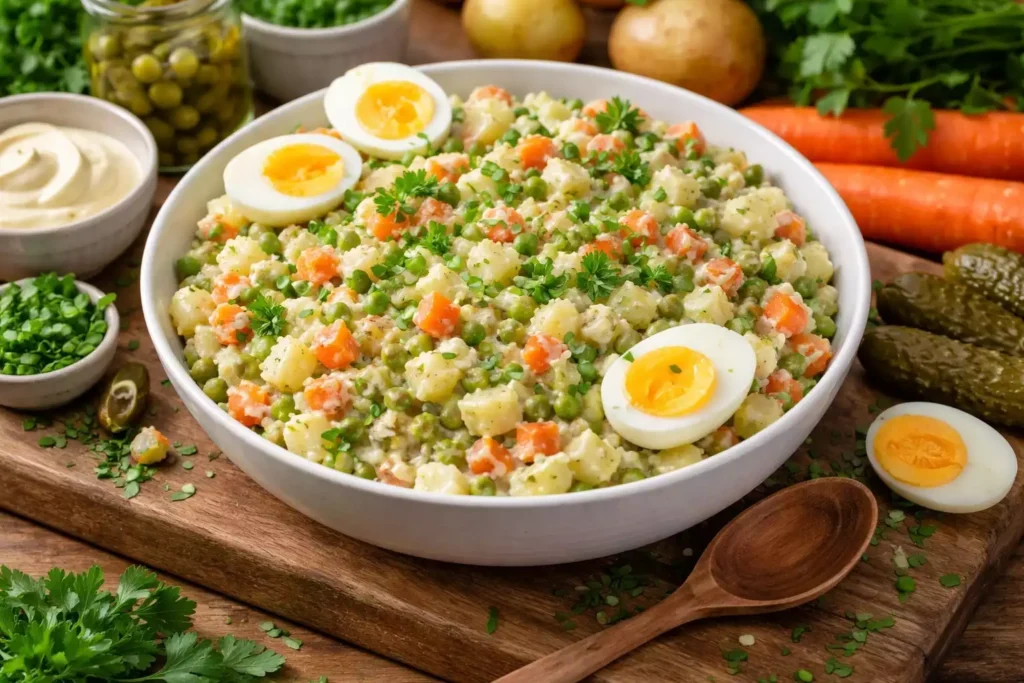
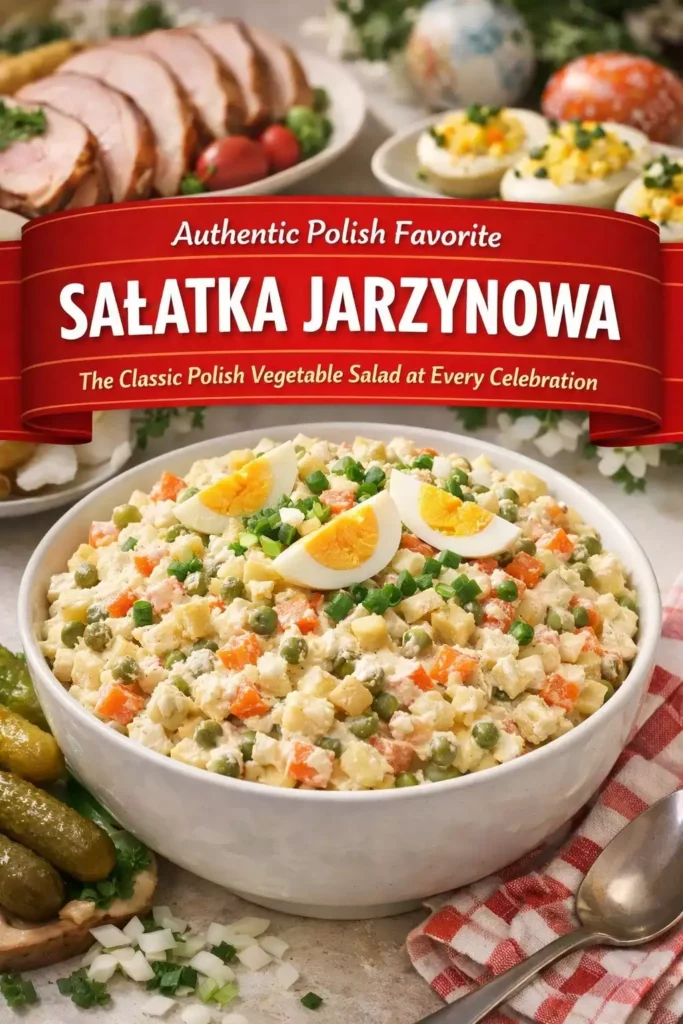
Sałatka jarzynowa is non-negotiable. I do not say this about many things, but I am saying it about this. You cannot have a Polish holiday table — Easter, Christmas, name day, family party — without sałatka jarzynowa. The Polish vegetable salad with mayonnaise. The one that is at every gathering. The one your babcia always brought in the biggest bowl available. The one that disappears first from the buffet while people are still pretending to care about the other dishes.
Growing up, sałatka jarzynowa was the salad. Not a salad, not one salad among many — the salad. It was there for every holiday without exception. I never thought about whether it was good. It just was. It existed as a category of food, the way air and water exist. You do not evaluate air. It is just there.
Then I made it as an adult for the first time for my own family and realized: this is genuinely delicious and also extremely simple, and the only reason I had taken it for granted was because it had always been there. My kids eat it directly from the bowl with a spoon. My middle one tries to claim it is not a vegetable, which — fair point, there is a lot of mayonnaise involved — but I am still counting the carrots and peas as parental victory.
Why This Sałatka Jarzynowa Works
The magic of sałatka jarzynowa is in the balance of textures and flavors. You need firm vegetables (potato, carrot, celeriac) to give the salad structure. You need soft vegetables (peas, cooked parsnip) to break up the firmness. You need acidity (pickled cucumber, pickle brine) to cut through the mayonnaise. And you need good mayonnaise — not the light, airy American kind, but thick, full-fat, slightly tangy Polish mayo.
The key technique is cooking each vegetable separately to its correct doneness and letting everything cool completely before combining. Mixing warm vegetables with mayonnaise gives you a warm, greasy salad instead of a cold, creamy one. This is the most common mistake. Let things cool. It is worth the wait.
Ingredients
Vegetables
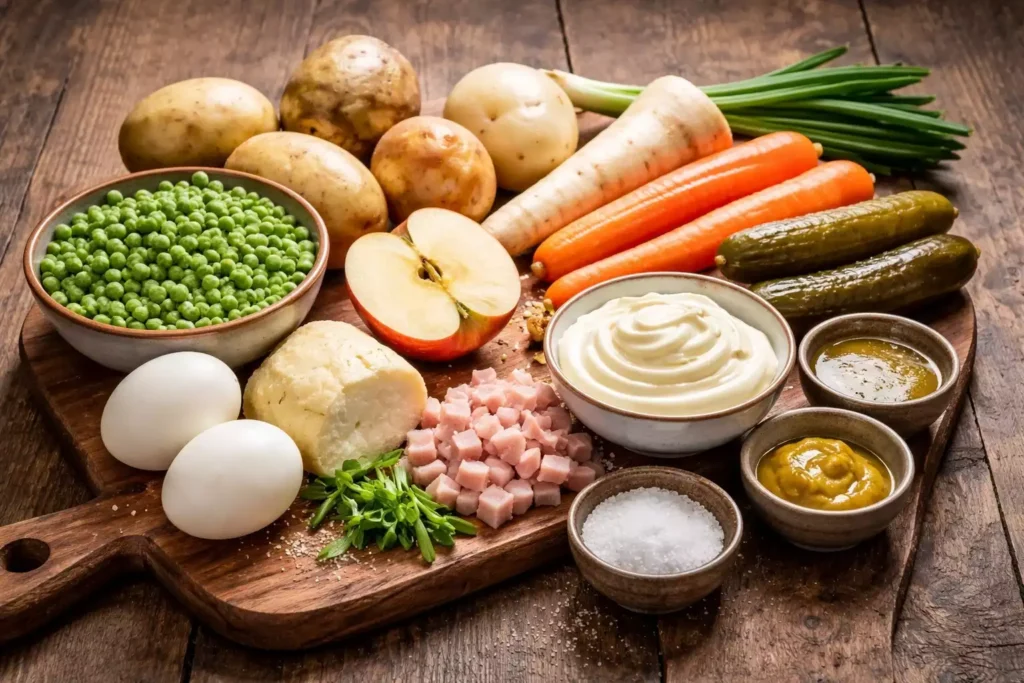
- 4 medium potatoes (waxy variety, about 500g), boiled in skins
- 3 medium carrots, boiled whole
- 1 small celeriac (celery root), peeled and diced, boiled
- 1 parsnip, peeled and diced, boiled
- 200g (7oz) frozen peas, boiled briefly
- 3 large pickled cucumbers (cornichon style), diced
- 1 small sweet apple, peeled and diced
Dressing
- 250g (1 cup) thick full-fat mayonnaise
- 2 tbsp pickle brine (from the cucumber jar)
- 1 tsp Dijon or Polish mustard
- Salt and white pepper to taste
Optional Additions (Classic Variations)
- 2 hard-boiled eggs, diced or halved for garnish
- 100g canned or boiled ham or chicken, diced
- 4–5 spring onions, sliced
How to Make It
1
1Cook the Vegetables
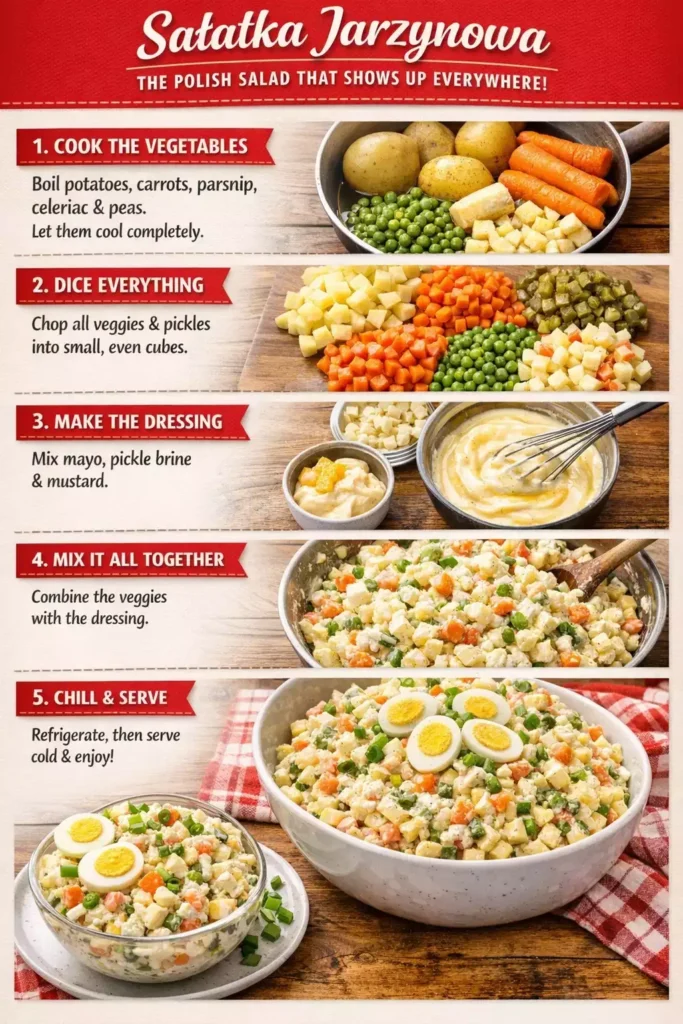
Boil potatoes in their skins until tender (about 20–25 minutes). Separately, boil the whole carrots, diced celeriac, and diced parsnip until just tender — test with a knife tip; they should yield without being mushy. Boil peas for 2 minutes only. Drain all vegetables and spread on a tray to cool completely. Do not refrigerate while hot. Let them reach room temperature naturally.
2
2Dice Everything Uniformly
This matters more than you might think. Peel and dice the cooled potatoes and carrots into roughly 1cm cubes — the same size as the already-diced celeriac and parsnip. Uniform pieces mean every forkful has a balanced mix. Dice the pickled cucumbers and apple to the same size. Place everything in the largest bowl you own.
3
3Make the Dressing
In a small bowl, whisk together the mayonnaise, pickle brine, and mustard. The brine loosens the mayo and adds the essential tang that makes this sałatka taste properly Polish rather than just vegetables in mayo. Taste and adjust — it should be rich, creamy, and noticeably acidic.
4
4Combine and Refrigerate
Pour about two-thirds of the dressing over the vegetables and fold gently — a spatula or your hands work better than a spoon for this. You want every piece coated without mashing the vegetables. Taste and add more dressing as needed. Cover with cling film and refrigerate for at least 4 hours, ideally overnight. The salad will absorb the dressing and the flavors will deepen significantly.
5
5Finish and Serve
Before serving, stir gently and taste for seasoning — cold food often needs more salt than you expect. Transfer to a serving bowl and garnish with hard-boiled egg halves or sliced spring onions if desired. Serve cold.
Sałatka Jarzynowa Tips That Actually Make a Difference
Do not use floury potatoes. Waxy potatoes (Charlotte, Jersey Royal, any waxy variety) hold their shape after cooking and dicing. Floury potatoes crumble and give you a mushy salad. Check the packet — waxy or salad potatoes only.
The apple is important. I know it sounds unexpected, but the small amount of apple in sałatka jarzynowa provides a subtle sweet crunch that counterbalances the richness of the mayo. Remove it and something feels missing, even if you cannot identify what. My babcia always added apple. She was right.
Make it the day before. Sałatka jarzynowa is always better after a night in the fridge. The flavors meld, the vegetables absorb the dressing, and the whole thing becomes more cohesive. Day-of sałatka is fine. Next-day sałatka is superior.
Polish mayo is different. Polish mayonnaise (brands like Winiary or Kielecki) is thicker and tangier than American mayo. If you can find it at a Polish deli, use it. Otherwise, use the highest quality full-fat mayo available, or make your own with a neutral oil and extra mustard.
Sałatka Jarzynowa at the Easter Table
On the Polish Easter table, sałatka jarzynowa usually sits in a large bowl somewhere prominent, looking reassuring and familiar in a spread of more dramatic dishes. It serves as the “calming middle ground” between the assertive horseradish of chrzan and the richness of szynka. People return to it throughout the meal. By the end of the feast, the bowl will be empty regardless of how much you made.
Pair it with jajka faszerowane on the cold dishes section of the Easter table.
Variations Worth Trying
With chicken. Adding diced cooked chicken makes sałatka jarzynowa more substantial and was how my babcia often stretched it for large gatherings. Poached or roast chicken both work. This version is often served at non-holiday family events where you need something filling for a crowd.
Without celeriac. If celeriac is unavailable, double the carrot and add a small amount of diced kohlrabi or turnip. Celeriac is the traditional ingredient but the salad survives without it. It just tastes slightly less distinctively Polish.
Half yogurt, half mayo. For a lighter version, replace half the mayonnaise with thick Greek yogurt. The result is tangier and fresher-tasting. Not traditional, but a genuine improvement for everyday eating outside of the holiday context.
Storage and Reheating
Sałatka jarzynowa keeps in the refrigerator for up to 4 days, though it is best in the first 2 days. Cover tightly to prevent the mayonnaise from absorbing other fridge smells. Do not freeze — mayonnaise separates on freezing and the vegetables become mushy. Make only as much as you will eat within a few days, or accept that you will be eating it for breakfast, lunch, and dinner, which is honestly not a bad outcome.
FAQ
Why is it called jarzynowa (vegetable) salad when it has so much mayo?
The name refers to the vegetable base — jarzynowa comes from jarzyny, meaning garden vegetables. The mayonnaise dressing is the binding element, not the defining one. In Polish culinary taxonomy, it is categorized by what it contains (vegetables), not how it is dressed. The mayo is assumed.
Can I add other vegetables?
Yes, within reason. Traditional sałatka jarzynowa is fairly standardized, but regional and family variations exist. Cooked beetroot (separate from the main mix, or it will turn everything pink), cooked turnip, and canned artichoke hearts all appear in various family versions. Avoid raw vegetables — everything should be cooked or pickled for the proper texture.
Is this the same as Russian salad (Olivier salad)?
Very similar. Olivier salad is the Russian-origin version of essentially the same dish, popular across Eastern Europe under different names. Polish sałatka jarzynowa, Russian Olivier, and Ukrainian m’yasnyy salat are all variations on the same theme: diced cooked vegetables and mayo. The proportions and specific vegetables vary slightly by country and family tradition, but they are absolutely culinary cousins.
Kasia Polish Mom
Polish-born, Chicago-raised, feeding a family of six with babcia’s recipes and a global pantry. I grew up folding pierogi at my grandmother’s kitchen table and never stopped — 15+ years of cooking from scratch, one Sunday dinner at a time. Everything here is tested on four kids, a hungry husband, and the memory of a woman who never measured anything but always got it right.