



Kasia Polish Mom
Polish-born, Chicago-raised, feeding a family of six with babcia’s recipes and a global pantry. I grew up folding pierogi at my grandmother’s kitchen table and never stopped — 15+ years of cooking from scratch, one Sunday dinner at a time. Everything here is tested on four kids, a hungry husband, and the memory of a woman who never measured anything but always got it right.
Rzodkiewka z Masłem — Spring Radishes the Polish Way
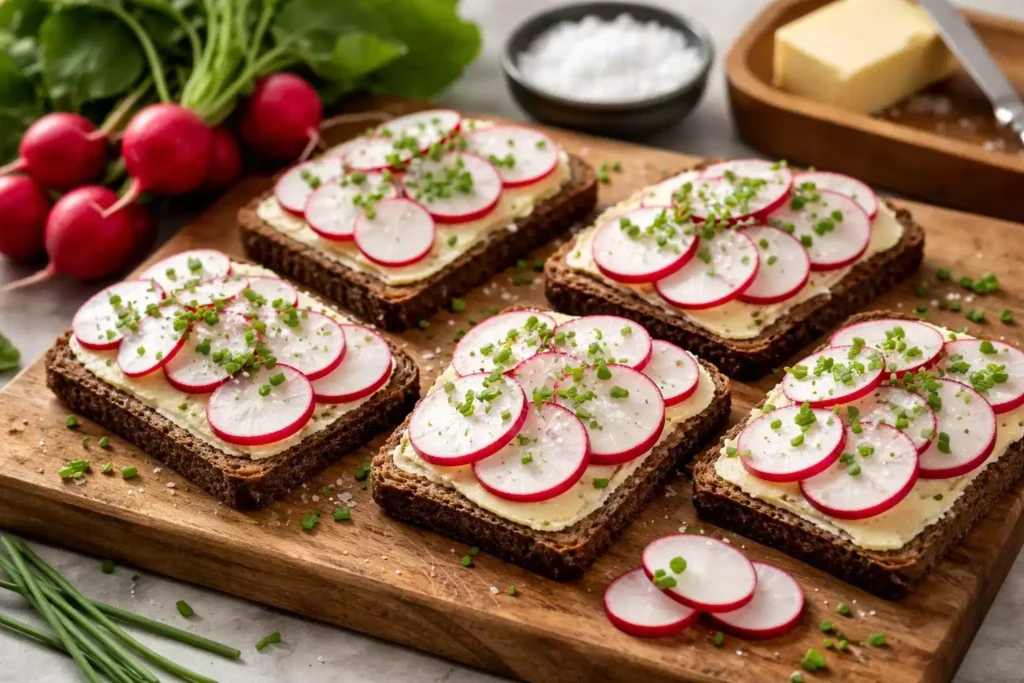
The simplest thing on the Easter table is often the best thing on the Easter table. Rzodkiewka z masłem — fresh spring radishes with good butter and dark bread — is a dish so unassuming that most people at the table walk past it on the way to the sausage and the soup. Then someone tries it, stops, and eats four more before the ham even gets served. I have watched this happen at my own Easter table. I watch it happen every year.
There is no recipe here in the traditional sense. This is ingredients chosen well and combined correctly. A fresh spring radish, properly cold, snapped from the bunch and sliced thin, pressed into a curl of cold butter on a piece of dark bread, with a pinch of good salt. That is all. That is the whole dish.
The reason it works is the contrast: the sharp, slightly peppery crunch of the radish against the rich, slightly sweet cream of cold butter. Dark rye bread adds an earthy, slightly sour note that ties everything together. You need three things and they all need to be good quality. There is nowhere to hide in a three-ingredient dish.
Why This Works
The radish in rzodkiewka z masłem is doing the work of a condiment as much as a vegetable. Its sharpness and pepper notes act like a palate cleanser between bites of rich Easter food. After a bite of ham or pasztet, a radish on buttered dark bread resets your palate completely and makes you want more of everything.
Cold butter — properly cold, not at room temperature — is essential. Room temperature butter is delicious in other contexts but makes a poor base for fresh radishes because it is too soft to provide resistance. The radish should rest on a firm, cold butter surface. The temperature contrast between the cold radish and cold butter is part of the experience.
Ingredients
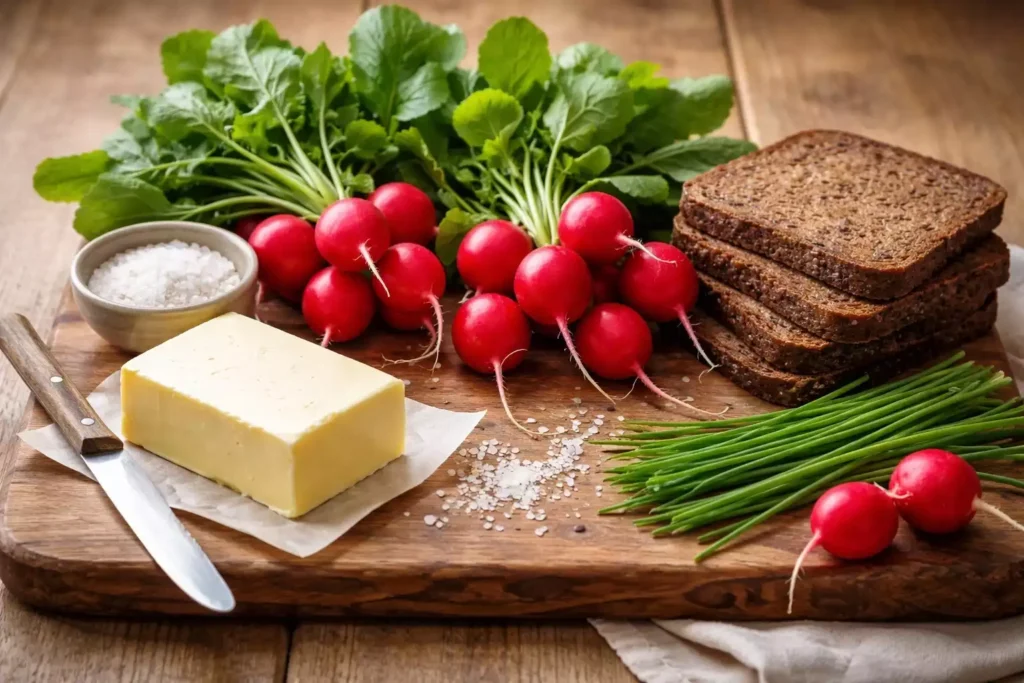
For Rzodkiewka z Masłem (serves 4 as part of an Easter table)
- 2 bunches fresh spring radishes (about 20–24 radishes)
- 100g (7 tbsp) cold unsalted or lightly salted butter
- 8 slices dark rye or pumpernickel bread
- Flaky sea salt (Maldon or similar)
- Fresh chives or dill, to garnish (optional)
How to Make It
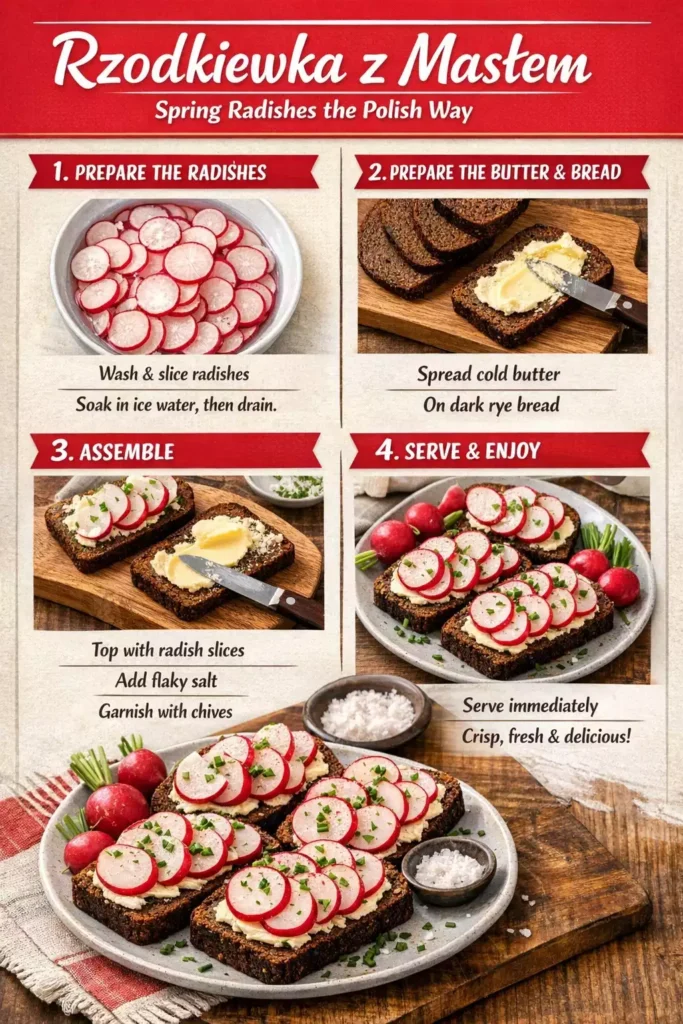
1
1Prepare the Radishes
Wash the radishes thoroughly and trim the roots and most of the tops, leaving a small green tail — it looks intentional and gives you something to hold. Slice thinly or cut into quarters lengthwise — both presentations work. For the Easter table, thin rounds look most elegant and allow the butter flavor to come through with every bite. Soak the sliced radishes in very cold water for 10 minutes to crisp them up. Drain and pat dry.
2
2Prepare the Butter and Bread
Slice the dark rye bread into neat pieces if it is not pre-sliced — about 1cm thick is ideal. Cold butter straight from the fridge will not spread easily. Let it sit out for 5 minutes — just enough to soften the very surface while staying firm inside. Spread thickly on each bread slice. Do not be modest with the butter. This is Easter and also Poland.
3
3Assemble
Layer the radish slices over the buttered bread, overlapping slightly. Finish with a very small pinch of flaky sea salt directly on the radishes — not on the bread, on the radishes. The salt on the radish changes the flavor in a way that salt on the butter or bread does not. Scatter a few chives or dill fronds over the top if using. Serve immediately, while the bread is still crisp and the radishes are still cold.
Radish Tips for the Perfect Easter Plate
Source them the day of. Spring radishes lose their crunch within 24–48 hours of harvest. For the Easter table, buy or pick them the same day you plan to serve them. Radishes that have been sitting in a fridge for three days are technically still radishes but are functionally a disappointment.
Use the best butter you can find. Good-quality European-style cultured butter makes a significant difference here. It has a slightly tangy, more complex flavor than standard supermarket butter. Polish butter (from a Polish deli) is excellent if you can find it. Kerrygold is a widely available alternative that is genuinely good.
Salt on the radish, not in the butter. The finisher of this dish is flaky salt placed directly on the raw radish. This is what every French baguette-and-butter-and-radish preparation does, and it is correct. The salt draws a tiny amount of radish moisture and creates a micro-pickle that is extraordinary.
Dark bread is not optional. This works on dark rye bread. It works on pumpernickel. It does not work on white bread in the same way because the flavor profile is wrong. The slightly sour, earthy character of dark rye is what the radish and butter need as a foundation.
Rzodkiewka z Masłem at the Easter Table
In Polish tradition, fresh spring radishes are among the first seasonal vegetables to appear after winter, and their arrival on the Easter table is genuinely seasonal — in Poland, they come up in April right when Easter approaches. They are also in the święconka basket in some regions, symbolizing health and spring’s return.
At the Easter breakfast table, rzodkiewka z masłem is typically part of the bread and cold dishes spread — alongside the cold meats, pasztet, and egg dishes. It is one of those things you keep returning to between the heavier, richer dishes because it is light and fresh and makes the butter and the bread taste better.
Pair it next to szynka and chrzan for a complete bread-and-cold-cuts experience.
Variations Worth Trying
With herb butter. Blend room-temperature butter with finely chopped chives, dill, and a pinch of garlic. Chill again until firm. Spread this herb butter on the bread and top with radishes. This takes a simple preparation and gives it considerably more presence on the table.
With tvaróg (Polish fresh cheese). Replace the butter with a thick layer of tvaróg (Polish white fresh cheese, similar to quark) mixed with a pinch of salt and chives. The radish-on-fresh-cheese combination is another Polish classic — lighter than the butter version and slightly more tangy.
Whole radishes with butter on the side. The French way — a bowl of whole cold radishes with a pot of soft salted butter alongside. You dip the radish directly into the butter and eat it whole. More dramatic presentation, equal deliciousness, zero knife required. My kids prefer this version for obvious reasons.
Notes on Freshness
Assembled rzodkiewka z masłem should be eaten within 30 minutes of preparation — the bread gets soggy and the radishes wilt. Prepare the components (slice the radishes, soften the butter slightly, slice the bread) and assemble at the last moment. Unassembled radishes keep in cold water in the fridge for 1 day. Butter keeps refrigerated for 2 weeks. Dark bread keeps wrapped for 3–4 days.
FAQ
Can I serve this with other types of bread?
Dark rye bread is the traditional Polish choice and gives the best flavor combination. Pumpernickel works equally well. A good sourdough with a dense, slightly sour crumb is a good alternative. Avoid anything too light or sweet — the flavors do not balance correctly. A good baguette is an acceptable French-adjacent alternative if dark bread is unavailable.
Are there other vegetables that work in this preparation?
Yes — spring onions, cucumber, and young kohlrabi all work beautifully with the same butter-and-dark-bread formula. In Polish cuisine, rzodkiewka z masłem is the iconic version, but the same principle of fresh spring vegetable plus good butter plus dark bread is a whole category of Polish spring eating.
My radishes are very spicy. How do I make them milder?
Soak sliced radishes in ice water for 15–20 minutes. The cold water leaches out some of the volatile compounds responsible for the heat, producing a milder, crisper radish. Some people prefer the full peppery kick; others find it too aggressive. Both are valid preferences; the ice water soak gives you control.
Kasia Polish Mom
Polish-born, Chicago-raised, feeding a family of six with babcia’s recipes and a global pantry. I grew up folding pierogi at my grandmother’s kitchen table and never stopped — 15+ years of cooking from scratch, one Sunday dinner at a time. Everything here is tested on four kids, a hungry husband, and the memory of a woman who never measured anything but always got it right.