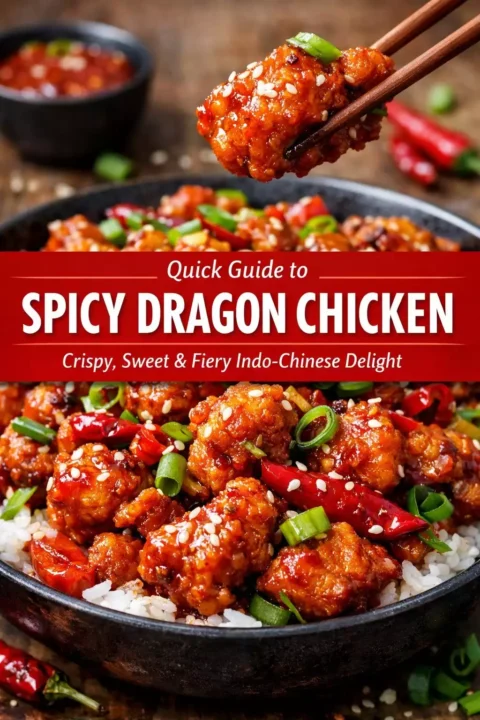
Spicy Dragon Chicken
This is the dish that made my kids say “Mom, your food is kind of fire.” I will ride that compliment into the sunset.
Ingredients
For the Crispy Chicken
- 1.5 pounds boneless chicken thighs, cut into bite-sized pieces
- 1/3 cup cornstarch
- 1/3 cup all-purpose flour
- 1 egg
- Salt and pepper
- Vegetable oil for frying
For the Dragon Sauce
- 3 tablespoons soy sauce
- 2 tablespoons ketchup
- 1 tablespoon chilli sauce sambal oelek or sriracha
- 1 tablespoon rice vinegar
- 1 tablespoon honey
- 4 cloves garlic, minced
- 1 tablespoon fresh ginger, grated
- 1 green chilli, sliced optional
- 1 bell pepper, diced
- 2 green onions, sliced
- 1 tablespoon cornstarch mixed with 2 tablespoons water slurry
Method
Batter and Fry the Chicken
-
Mix cornstarch, flour, salt, and pepper in a bowl. Beat the egg and add to the dry ingredients with a splash of water — just enough to make a thick, coating batter. Toss the chicken pieces in the batter until coated. Heat about 1 inch of oil in a deep skillet or wok to 180C / 350F. Fry the chicken in batches for 4-5 minutes until golden and crispy. Drain on paper towels. The batter should be shatteringly crispy — this is essential because the sauce will soften it slightly, and you want it to maintain some crunch even after coating.
Make the Dragon Sauce
-
In the same wok (pour out all but 1 tablespoon of oil), add garlic and ginger over high heat. Cook 30 seconds. Add the bell pepper and cook 1 minute. Add soy sauce, ketchup, chilli sauce, rice vinegar, and honey. Stir. Add the cornstarch slurry and stir until the sauce thickens and becomes glossy — about 1 minute. The sauce should coat the back of a spoon and have a slightly sticky consistency.
Combine
-
Toss the crispy chicken into the sauce. Stir rapidly to coat every piece. The sauce clings to the batter and creates that signature glossy, spicy-sweet coating. Add the sliced green chilli and green onions. Toss once more. Serve immediately over steamed rice.

Kasia Polish Mom
Polish-born, Chicago-raised, feeding a family of six with babcia’s recipes and a global pantry. I grew up folding pierogi at my grandmother’s kitchen table and never stopped — 15+ years of cooking from scratch, one Sunday dinner at a time. Everything here is tested on four kids, a hungry husband, and the memory of a woman who never measured anything but always got it right.
Spicy Dragon Chicken — Crispy, Sticky, Indo-Chinese Fire
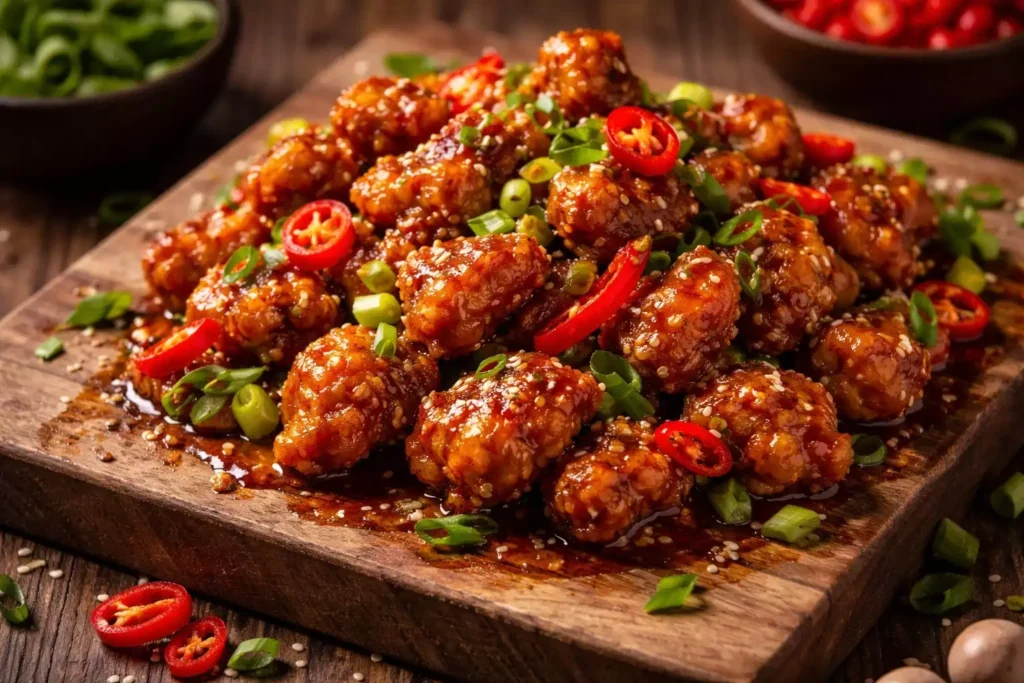
This is the dish that made my kids say “Mom, your food is kind of fire.” I will ride that compliment into the sunset.
Dragon chicken is one of those Indo-Chinese fusion dishes that’s everywhere on social media — crispy battered chicken tossed in a spicy, sweet, garlicky sauce that’s bold enough to earn its name. “Dragon” because the heat builds and builds, like a slow-burning fire that starts in the back of your throat and works its way up until your forehead is slightly sweaty and you’re reaching for more anyway. It’s addictive in a way that makes you question your life choices while simultaneously making another plate.
I’ve been refining this recipe for months — testing different batter ratios, sauce balances, and heat levels. The version below is the one that earned the “kind of fire” compliment from my thirteen-year-old, who normally communicates in grunts and one-syllable responses. Getting a full sentence AND a food compliment from a teenage boy is the culinary equivalent of winning an award. I’m putting it on my resume.
What Is Dragon Chicken
Dragon chicken originated in Indo-Chinese cuisine — a fusion style developed by the Chinese community in India, blending Chinese cooking techniques with Indian spices and bold flavours. It’s not authentically Chinese, not authentically Indian — it’s its own glorious thing. Crispy fried chicken pieces tossed in a sauce made from soy, chilli, garlic, ginger, and usually ketchup (the sweet element that balances the heat). It’s served at Indian-Chinese restaurants worldwide and has recently gone viral on TikTok, which is how I discovered it, because apparently that’s how I discover most of my cooking inspiration now. I’m 30-something years old and learning recipes from teenagers on the internet. The times, they are a-changing.
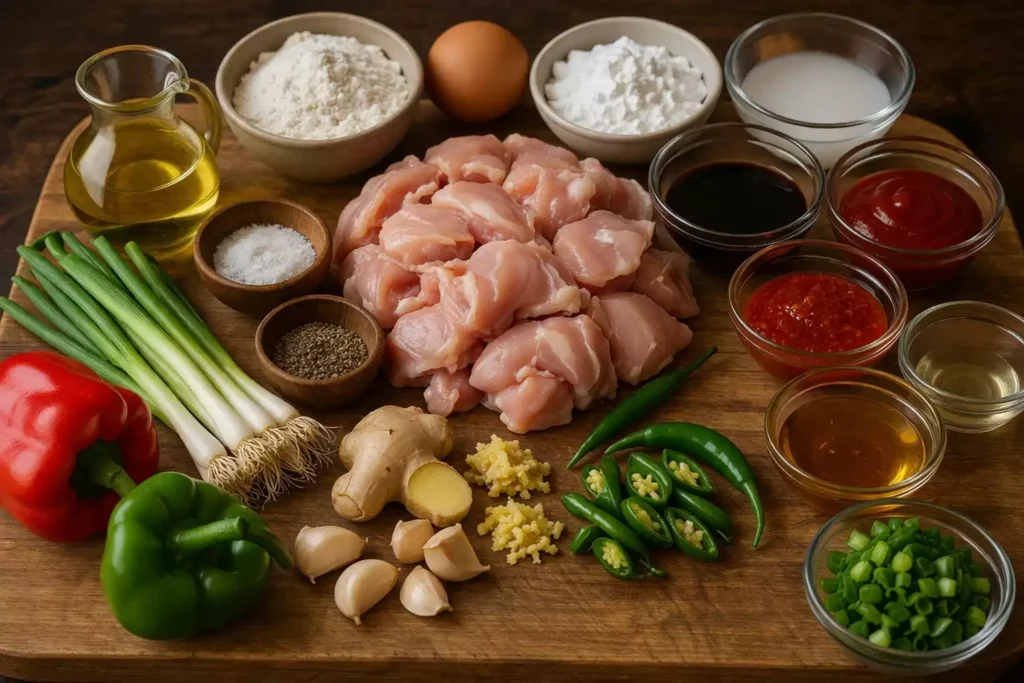
Ingredients
For the Crispy Chicken
- • 1.5 pounds boneless chicken thighs, cut into bite-sized pieces
- • 1/3 cup cornstarch
- • 1/3 cup all-purpose flour
- • 1 egg
- • Salt and pepper
- • Vegetable oil for frying
For the Dragon Sauce
- • 3 tablespoons soy sauce
- • 2 tablespoons ketchup
- • 1 tablespoon chilli sauce (sambal oelek or sriracha)
- • 1 tablespoon rice vinegar
- • 1 tablespoon honey
- • 4 cloves garlic, minced
- • 1 tablespoon fresh ginger, grated
- • 1 green chilli, sliced (optional)
- • 1 bell pepper, diced
- • 2 green onions, sliced
- • 1 tablespoon cornstarch mixed with 2 tablespoons water (slurry)
How to Make It
Batter and Fry the Chicken
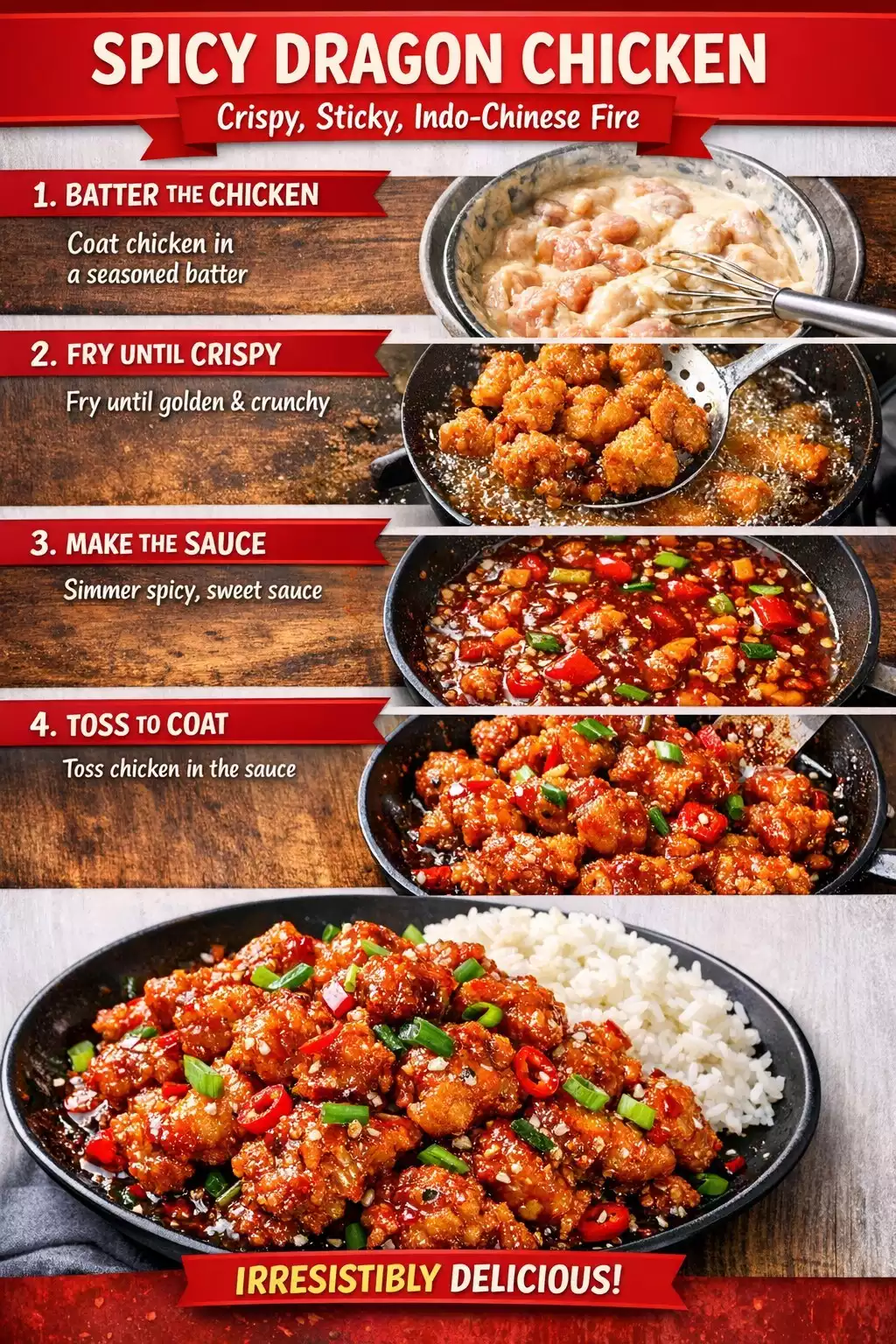
Mix cornstarch, flour, salt, and pepper in a bowl. Beat the egg and add to the dry ingredients with a splash of water — just enough to make a thick, coating batter. Toss the chicken pieces in the batter until coated. Heat about 1 inch of oil in a deep skillet or wok to 180C / 350F. Fry the chicken in batches for 4-5 minutes until golden and crispy. Drain on paper towels. The batter should be shatteringly crispy — this is essential because the sauce will soften it slightly, and you want it to maintain some crunch even after coating.
Make the Dragon Sauce
In the same wok (pour out all but 1 tablespoon of oil), add garlic and ginger over high heat. Cook 30 seconds. Add the bell pepper and cook 1 minute. Add soy sauce, ketchup, chilli sauce, rice vinegar, and honey. Stir. Add the cornstarch slurry and stir until the sauce thickens and becomes glossy — about 1 minute. The sauce should coat the back of a spoon and have a slightly sticky consistency.
Combine
Toss the crispy chicken into the sauce. Stir rapidly to coat every piece. The sauce clings to the batter and creates that signature glossy, spicy-sweet coating. Add the sliced green chilli and green onions. Toss once more. Serve immediately over steamed rice.
Adjusting the Heat
The recipe as written is medium-spicy — noticeable heat that builds but doesn’t overwhelm. For kids or spice-sensitive eaters, reduce the chilli sauce to 1 teaspoon and skip the fresh green chilli. For the Polish Mom experience: double the chilli sauce, add a teaspoon of gochujang (crossing cuisines because that’s what I do), and top with extra sliced chillies. My version makes my husband’s ears turn red. He keeps eating anyway. I consider this a successful marriage dynamic.
Tips
💡 Pro Tips
✓ Double-fry for extra crunch. Fry the chicken once, let it rest 5 minutes, then fry again for 2 minutes. The double fry creates a crust that stays crispy even under the sauce. This is the technique used in Korean fried chicken and it’s a game-changer.
✓ Sauce goes on right before serving. The longer the chicken sits in the sauce, the softer the coating gets. Toss and serve immediately for maximum crunch.
✓ Cornstarch slurry thickens the sauce. Without it, the sauce is too thin and slides off. The slurry creates that sticky, glossy coating that defines dragon chicken.
Variations
• Air fryer version: Coat the chicken in batter, spray with oil, air fry at 200C / 400F for 12-15 minutes. Less crispy than deep-fried but significantly less oil.
• Cauliflower dragon: Replace chicken with cauliflower florets. Same batter, same sauce, completely vegetarian. My daughter prefers this version, which I’m secretly thrilled about.
• With noodles: Toss the dragon chicken with chilli crisp noodles for an absurdly flavourful one-bowl meal.
How to Store
Best eaten fresh for maximum crunch. Leftovers keep 3 days in the fridge — reheat in a hot oven (200C / 400F, 8-10 minutes) to attempt to re-crisp the coating. The microwave will make it soggy. Sauce separately is fine to freeze; the fried chicken should be eaten within a few days.
Frequently Asked Questions
What does dragon chicken taste like?
Imagine crispy fried chicken meets sweet chilli sauce meets soy-garlic-ginger. It’s bold, slightly sweet, deeply savoury, and spicy — all layered together. The ketchup sounds odd but adds a familiar sweetness that makes the Asian flavours accessible. My kids who were initially suspicious were converted within two bites.
Is this Chinese or Indian?
It’s Indo-Chinese — a fusion cuisine created by Chinese immigrants in India. It blends Chinese techniques (stir-fry, deep-fry) with Indian flavour profiles (bold spice, heat, sweet-sour). It exists in its own beautiful category, like how my cooking exists somewhere between Polish, American, and “whatever looked good at the grocery store.”
Kasia Polish Mom
Polish-born, Chicago-raised, feeding a family of six with babcia’s recipes and a global pantry. I grew up folding pierogi at my grandmother’s kitchen table and never stopped — 15+ years of cooking from scratch, one Sunday dinner at a time. Everything here is tested on four kids, a hungry husband, and the memory of a woman who never measured anything but always got it right.