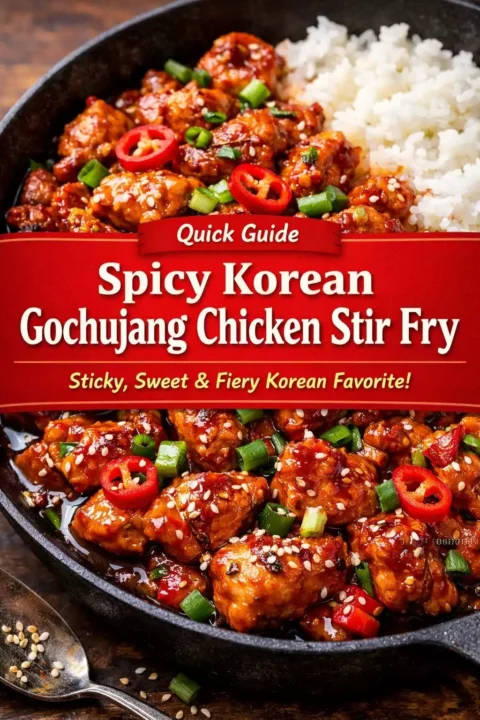
Spicy Korean Chicken Stir Fry (Gochujang)
The day I discovered gochujang, my spice cabinet filed a noise complaint.
Ingredients
- 2 pounds chicken thighs, boneless skinless, cut into bite-sized pieces
- 3 tablespoons gochujang
- 2 tablespoons soy sauce
- 2 tablespoons honey
- 1 tablespoon sesame oil
- 3 cloves garlic, minced
- 1 tablespoon rice vinegar
- 1 tablespoon cornstarch for coating
- 2 tablespoons vegetable oil for cooking
- Sesame seeds and sliced green onions for serving
- Optional: fresh chilli slices for extra heat
Method
Mix the Sauce
-
Whisk together gochujang, soy sauce, honey, sesame oil, garlic, and rice vinegar in a bowl. Taste it. It should be spicy, sweet, tangy, and savoury. If it’s too spicy for your crew, add more honey. If it’s not spicy enough (unlikely, but I respect the ambition), add more gochujang. Set aside.
Cook the Chicken
-
Toss the chicken pieces with cornstarch, salt, and pepper. The cornstarch creates a light coating that crisps in the pan and helps the sauce cling. Heat vegetable oil in a large skillet or wok over high heat. Add the chicken in a single layer — don’t crowd or it’ll steam. Cook 3-4 minutes per side until golden and crispy. Work in batches if needed. Crispy chicken is non-negotiable. It’s what gives the final dish that contrast between crunchy coating and sticky sauce.
Glaze
-
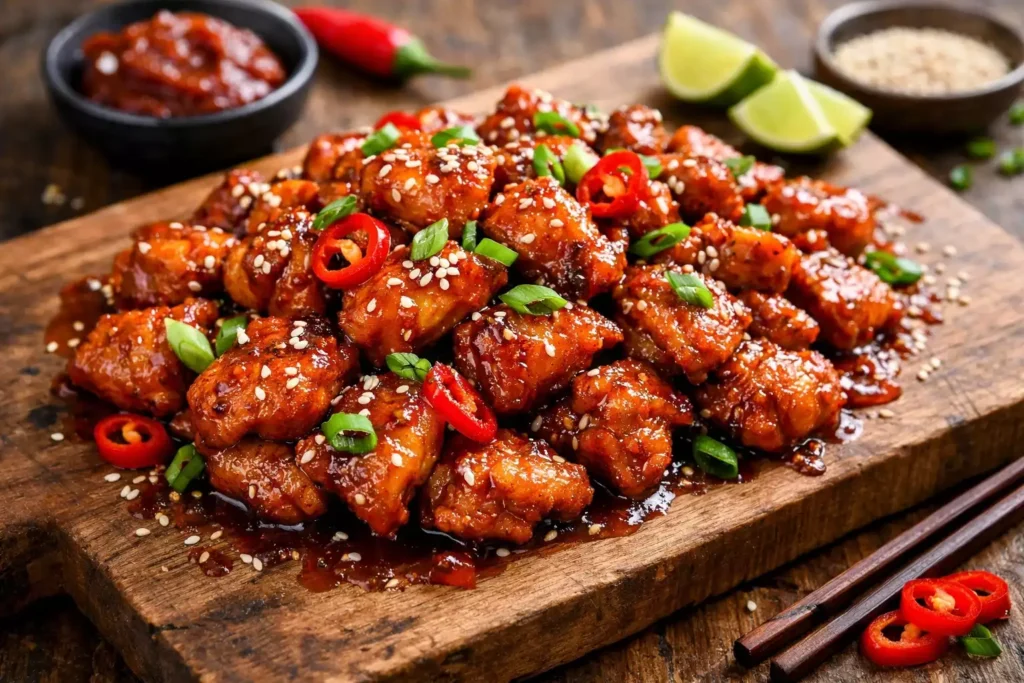
Pour the gochujang sauce over the crispy chicken. Toss constantly for 1-2 minutes until the sauce thickens and coats every piece in a glossy, sticky lacquer. The sauce reduces fast over high heat, so keep everything moving. Remove from heat. Top with sesame seeds, sliced green onions, and fresh chilli if you’re feeling brave.
Serve
-
Over steamed jasmine rice is the classic way. The rice absorbs the extra sauce and every grain turns slightly pink and flavourful. I also love this over kopytka — Polish potato dumplings with Korean gochujang chicken is a fusion combination that sounds insane and tastes incredible. My babcia would have questions. My taste buds have answers.

Kasia Polish Mom
Polish-born, Chicago-raised, feeding a family of six with babcia’s recipes and a global pantry. I grew up folding pierogi at my grandmother’s kitchen table and never stopped — 15+ years of cooking from scratch, one Sunday dinner at a time. Everything here is tested on four kids, a hungry husband, and the memory of a woman who never measured anything but always got it right.
Spicy Korean Gochujang Chicken Stir Fry — Sticky, Sweet, and Fiery
The day I discovered gochujang, my spice cabinet filed a noise complaint.
Gochujang (go-choo-JAHNG) is Korean red chilli paste, and it changed my cooking life more than any single ingredient since smoked paprika. It’s sweet, spicy, funky, and deeply savoury all at once — like sriracha’s sophisticated older sibling who studied abroad and came back with depth and complexity. The first time I tasted it, at a Korean restaurant in Chicago, I turned to my husband and said “I need this in my house immediately.” He said “you say that about every condiment.” He wasn’t wrong. But this time I really meant it.
Spicy Korean chicken is gochujang’s greatest showcase. You coat chicken pieces in a sticky, spicy-sweet sauce made from gochujang, soy sauce, honey, garlic, and sesame oil, then cook until the sauce caramelises into a glossy lacquer that clings to every piece. It’s the kind of dish that makes you close your eyes when you eat it because your brain needs to focus entirely on what’s happening in your mouth. My kids eat the mild version. I eat mine with double gochujang and fresh chilli slices. Everyone’s happy.
What Is Gochujang
Gochujang is a fermented Korean chilli paste made from red chilli flakes, glutinous rice, fermented soybeans, and salt. It’s been a staple of Korean cooking for centuries. The fermentation gives it a deep umami quality that regular hot sauce doesn’t have — it’s not just spicy, it’s complex. Think of it like Polish sauerkraut versus raw cabbage: fermentation adds dimension that the raw ingredient can’t provide on its own.
You can find gochujang in the Asian section of most grocery stores now. It usually comes in a red tub. The most common brand is CJ Haechandle. One tub lasts months and opens up dozens of recipes — I put it in marinades, stir-fries, soups, even on buttered toast (don’t judge me until you’ve tried it). This Korean chicken recipe is the gateway. Once you have gochujang in your fridge, you’ll find excuses to use it everywhere.
Ingredients
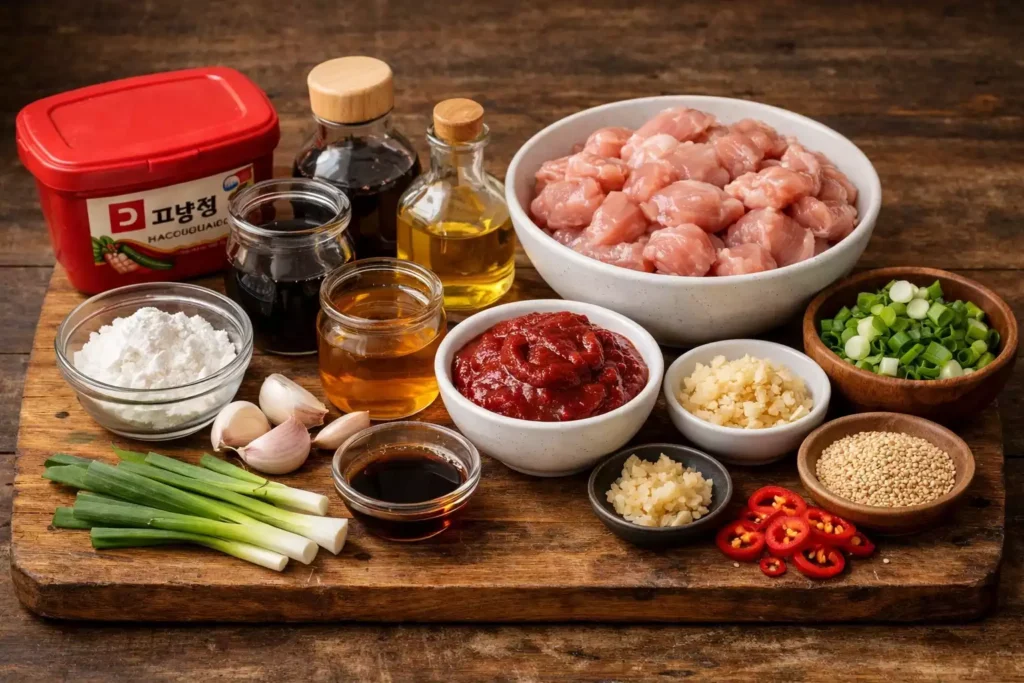
- • 2 pounds chicken thighs, boneless skinless, cut into bite-sized pieces
- • 3 tablespoons gochujang
- • 2 tablespoons soy sauce
- • 2 tablespoons honey
- • 1 tablespoon sesame oil
- • 3 cloves garlic, minced
- • 1 tablespoon rice vinegar
- • 1 tablespoon cornstarch (for coating)
- • 2 tablespoons vegetable oil for cooking
- • Sesame seeds and sliced green onions for serving
- • Optional: fresh chilli slices for extra heat
How to Make It
Mix the Sauce
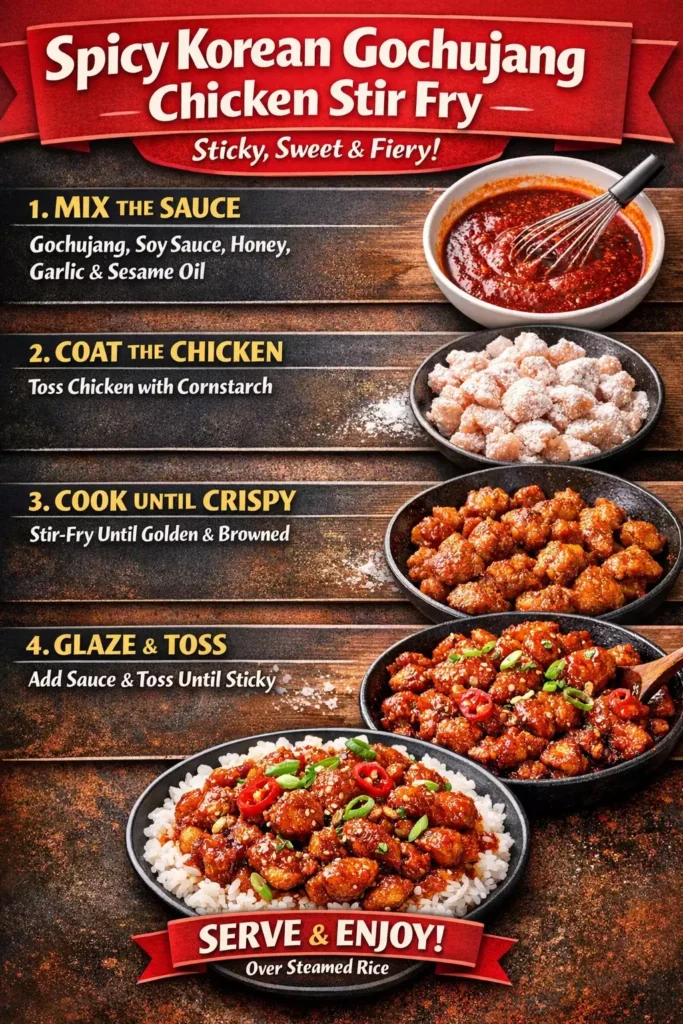
Whisk together gochujang, soy sauce, honey, sesame oil, garlic, and rice vinegar in a bowl. Taste it. It should be spicy, sweet, tangy, and savoury. If it’s too spicy for your crew, add more honey. If it’s not spicy enough (unlikely, but I respect the ambition), add more gochujang. Set aside.
Cook the Chicken
Toss the chicken pieces with cornstarch, salt, and pepper. The cornstarch creates a light coating that crisps in the pan and helps the sauce cling. Heat vegetable oil in a large skillet or wok over high heat. Add the chicken in a single layer — don’t crowd or it’ll steam. Cook 3-4 minutes per side until golden and crispy. Work in batches if needed. Crispy chicken is non-negotiable. It’s what gives the final dish that contrast between crunchy coating and sticky sauce.
Glaze
Pour the gochujang sauce over the crispy chicken. Toss constantly for 1-2 minutes until the sauce thickens and coats every piece in a glossy, sticky lacquer. The sauce reduces fast over high heat, so keep everything moving. Remove from heat. Top with sesame seeds, sliced green onions, and fresh chilli if you’re feeling brave.
Serve
Over steamed jasmine rice is the classic way. The rice absorbs the extra sauce and every grain turns slightly pink and flavourful. I also love this over kopytka — Polish potato dumplings with Korean gochujang chicken is a fusion combination that sounds insane and tastes incredible. My babcia would have questions. My taste buds have answers.
Adjusting the Heat
• Mild (for kids): Use 1.5 tablespoons gochujang instead of 3, and increase honey to 3 tablespoons. Still flavourful, barely any heat.
• Medium (crowd-pleasing): The recipe as written. Noticeable warmth but not painful.
• Hot (Polish Mom level): 4 tablespoons gochujang, add 1 teaspoon gochugaru (Korean chilli flakes), and top with fresh chillies. This is how I eat mine when the kids aren’t watching.
Tips
💡 Pro Tips
✓ Chicken thighs over breasts. Thighs stay juicier and more flavourful. Breasts dry out fast, especially when cut into small pieces and cooked over high heat.
✓ Cornstarch coating is the secret. It creates a thin crust that gives the sauce something to grip. Without it, the sauce slides off and pools at the bottom of the pan.
✓ High heat, fast cooking. The sauce needs to caramelise, not simmer. High heat turns the sugars in the honey and gochujang into that sticky, glossy coating. Low heat just makes it wet.
Variations
• With tofu: Press extra-firm tofu, cube, coat in cornstarch, and fry until golden. Toss in the same sauce. The best vegetarian version.
• Korean chicken tacos: Put the gochujang chicken in corn tortillas with pickled cabbage and a drizzle of sriracha mayo. Korean-Mexican fusion that belongs in a food truck and also in your kitchen.
• Oven-baked: Bake the cornstarch-coated chicken at 220C / 425F for 20 minutes, then toss with the sauce. Less crispy than pan-fried but easier for a big batch.
How to Store
Fridge for 3-4 days. The sauce thickens as it cools — add a splash of water when reheating in a skillet. Not ideal for freezing because the cornstarch coating gets soggy after thawing. Best eaten fresh.
Frequently Asked Questions
Is gochujang very spicy?
It’s medium — less spicy than sriracha, more spicy than ketchup. The sweetness and fermented flavour balance the heat. Even my pickiest kid eats the mild version of this recipe without complaint. Start with less and work up. That’s been my spice-training strategy since day one and it hasn’t failed me yet.
Where do I buy gochujang?
Asian grocery stores (always), the international aisle of most large supermarkets (usually), and Amazon (definitely). The red tub is hard to miss. Once you buy it, you’ll wonder how you cooked without it.
More From Polish Mom
Polish Sausage and Sauerkraut Skillet · Marry Me Chicken · Creamy Tomato Garlic Pasta · Cowboy Butter Chicken Pasta
Kasia Polish Mom
Polish-born, Chicago-raised, feeding a family of six with babcia’s recipes and a global pantry. I grew up folding pierogi at my grandmother’s kitchen table and never stopped — 15+ years of cooking from scratch, one Sunday dinner at a time. Everything here is tested on four kids, a hungry husband, and the memory of a woman who never measured anything but always got it right.