
Spicy Miso Ramen (Shortcut)
I used to think real ramen required a 12-hour broth. Then I learned the miso shortcut and my weeknight dinner options expanded dramatically.
Ingredients
- 6 cups chicken broth 1.5L; good quality, rich
- 3 tablespoons white or yellow miso paste
- 1 tablespoon soy sauce
- 1 tablespoon sesame oil
- 1 tablespoon chilli garlic sauce or sambal oelek
- 2 cloves garlic, minced
- 1 tablespoon fresh ginger, grated
- 2 packs ramen noodles fresh or instant — discard the seasoning packets
- Soft-boiled eggs 6.5 minutes in boiling water, immediate ice bath
- Toppings: corn, nori sheets, sliced green onions, bean sprouts, sesame seeds, chilli crisp
Method
Build the Broth
-
Heat a splash of sesame oil in a pot over medium heat. Add garlic and ginger — 30 seconds until fragrant. Pour in the chicken broth. Bring to a gentle simmer. Ladle out about 1/2 cup of hot broth into a small bowl and whisk in the miso paste until dissolved. Don’t add miso directly to boiling broth — high heat kills the beneficial enzymes and dulls the flavour. Pour the miso mixture back into the pot. Add soy sauce and chilli garlic sauce. Stir. Taste. Adjust: more miso for depth, more chilli for heat, more soy for salt.
Cook the Noodles
-
Cook the ramen noodles separately per package directions — usually 2-3 minutes. Drain. Divide between bowls.
Assemble
-
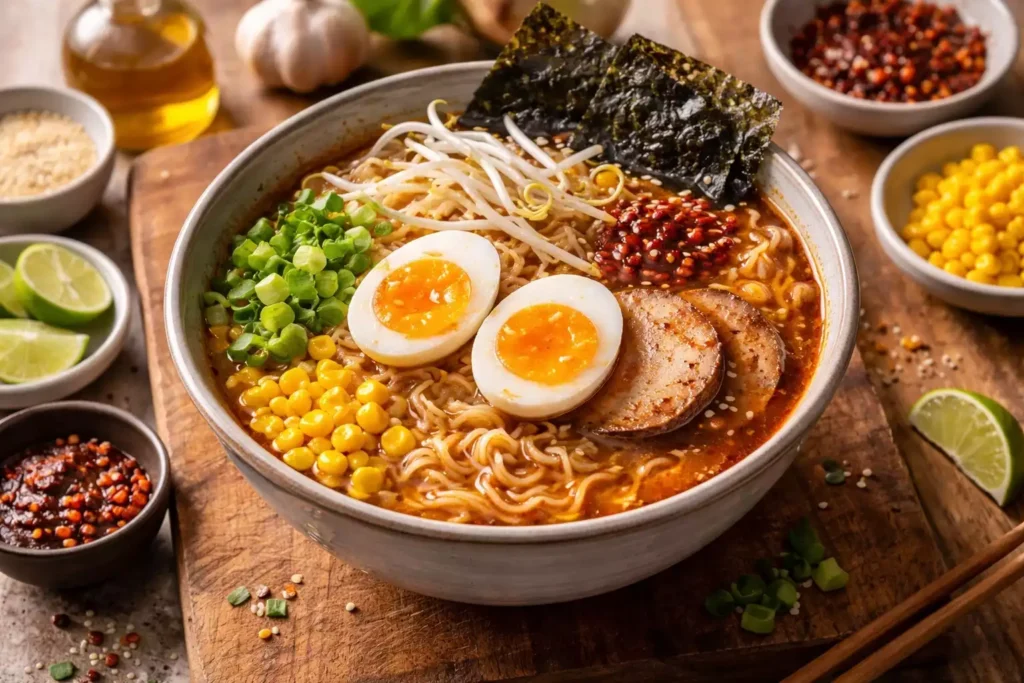
Ladle the hot miso broth over the noodles. Arrange your toppings: halved soft-boiled egg, corn kernels, sliced green onions, a sheet of nori, bean sprouts, sesame seeds, and a spoonful of chilli crisp if you want heat. The assembly is where ramen becomes personal — everyone loads their bowl differently. My husband goes heavy on the egg and nori. My daughter wants corn and nothing else. My boys want “everything plus more noodles.” I add chilli crisp and eat in meditative silence.




Kasia Polish Mom
Polish-born, Chicago-raised, feeding a family of six with babcia’s recipes and a global pantry. I grew up folding pierogi at my grandmother’s kitchen table and never stopped — 15+ years of cooking from scratch, one Sunday dinner at a time. Everything here is tested on four kids, a hungry husband, and the memory of a woman who never measured anything but always got it right.
Shortcut Spicy Miso Ramen — 20 Minutes
I used to think real ramen required a 12-hour broth. Then I learned the miso shortcut and my weeknight dinner options expanded dramatically.
Traditional ramen broth — the real deal, tonkotsu style — involves simmering pork bones for 8-12 hours until the collagen breaks down into a milky, rich, velvety liquid. It’s a beautiful process and I respect it deeply. I also have four kids, a job, and approximately zero hours available for watching bones simmer. So I learned the shortcut: miso paste. Dissolve a few tablespoons of miso into good chicken broth, add a drizzle of sesame oil and some chilli, and you have a broth that tastes like it took all day but took seven minutes. It’s not authentic Japanese ramen. It’s a Polish mom’s version — resourceful, flavourful, and done before the homework arguments peak.
Every culture has a healing broth. Poland has rosol — the golden chicken soup that fixes everything. Japan has ramen. Both serve the same emotional purpose: warmth, comfort, and the feeling that someone cared enough to make you something nourishing. When I make miso ramen for my family, I think about my babcia’s rosol and how the intent is identical even if the ingredients are different. A bowl of broth is a bowl of love, whether it’s seasoned with dill or miso.
Ingredients
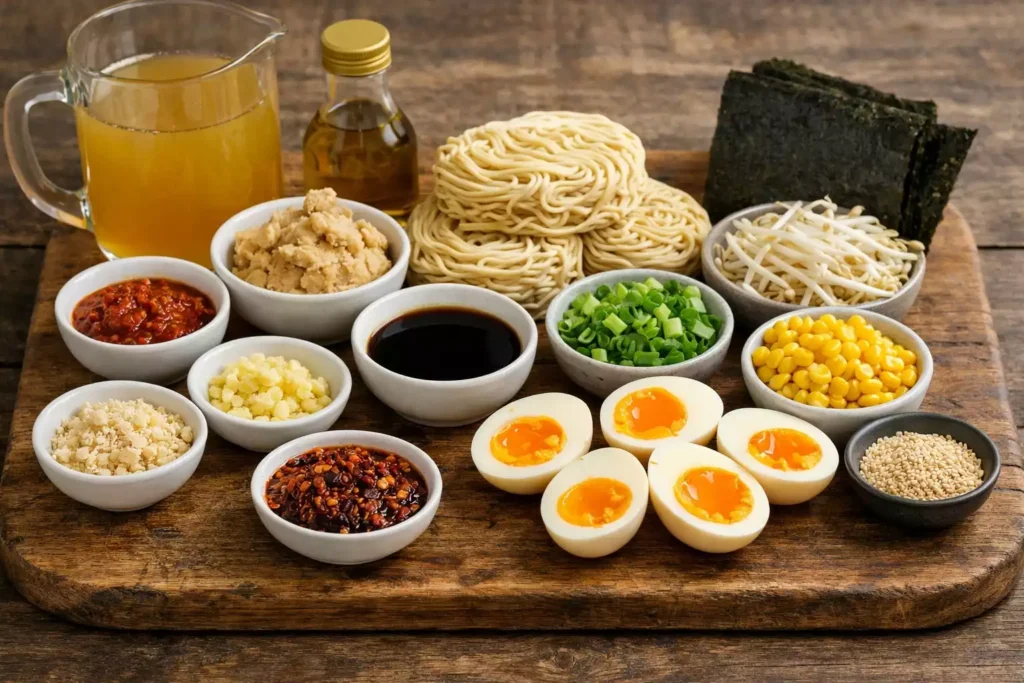
- • 6 cups (1.5L) chicken broth — good quality, rich
- • 3 tablespoons white or yellow miso paste
- • 1 tablespoon soy sauce
- • 1 tablespoon sesame oil
- • 1 tablespoon chilli garlic sauce or sambal oelek
- • 2 cloves garlic, minced
- • 1 tablespoon fresh ginger, grated
- • 2 packs ramen noodles (fresh or instant — discard the seasoning packets)
- • Soft-boiled eggs (6.5 minutes in boiling water, immediate ice bath)
- • Toppings: corn, nori sheets, sliced green onions, bean sprouts, sesame seeds, chilli crisp
How to Make It
Build the Broth
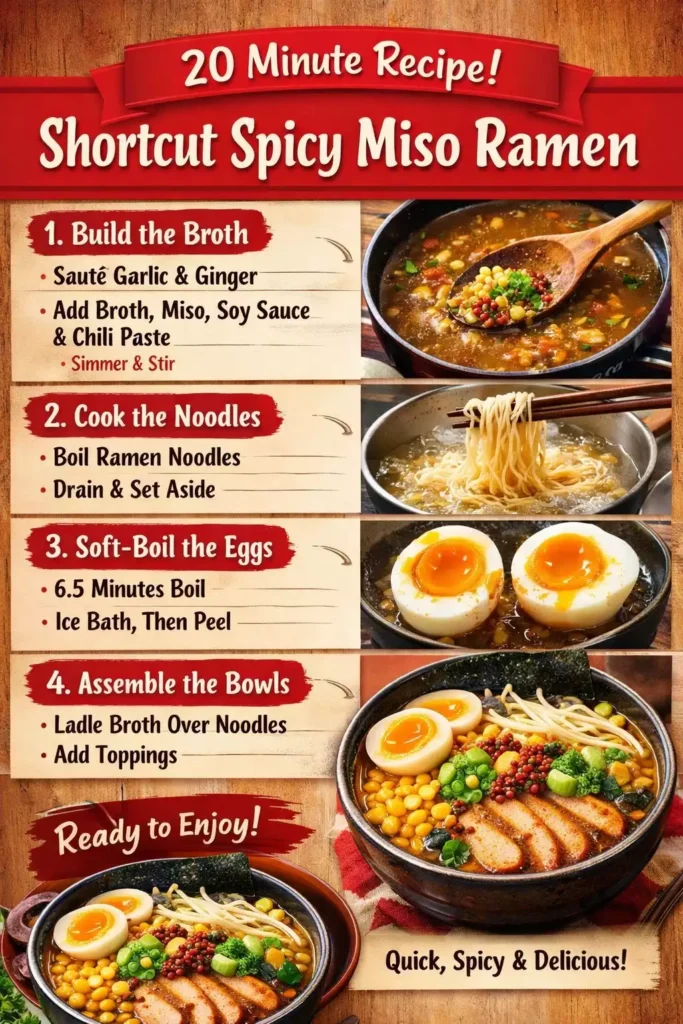
Heat a splash of sesame oil in a pot over medium heat. Add garlic and ginger — 30 seconds until fragrant. Pour in the chicken broth. Bring to a gentle simmer. Ladle out about 1/2 cup of hot broth into a small bowl and whisk in the miso paste until dissolved. Don’t add miso directly to boiling broth — high heat kills the beneficial enzymes and dulls the flavour. Pour the miso mixture back into the pot. Add soy sauce and chilli garlic sauce. Stir. Taste. Adjust: more miso for depth, more chilli for heat, more soy for salt.
Cook the Noodles
Cook the ramen noodles separately per package directions — usually 2-3 minutes. Drain. Divide between bowls.
Assemble
Ladle the hot miso broth over the noodles. Arrange your toppings: halved soft-boiled egg, corn kernels, sliced green onions, a sheet of nori, bean sprouts, sesame seeds, and a spoonful of chilli crisp if you want heat. The assembly is where ramen becomes personal — everyone loads their bowl differently. My husband goes heavy on the egg and nori. My daughter wants corn and nothing else. My boys want “everything plus more noodles.” I add chilli crisp and eat in meditative silence.
The Soft-Boiled Egg
This matters. A perfect ramen egg has a firmly set white and a jammy, slightly gooey yolk that’s somewhere between liquid and solid. The technique: lower eggs gently into boiling water, cook exactly 6.5 minutes, transfer immediately to ice water for 5 minutes. Peel carefully. Halve. The yolk should be deep orange and fudgy. Getting this right took me four attempts and a lot of overcooked eggs, but once you nail it, it becomes muscle memory. My babcia would say “practice makes pierogi” which isn’t a real saying but should be.
Tips
💡 Pro Tips
✓ Don’t boil the miso. Dissolve it in warm broth off-heat, then stir it back in. Boiling miso destroys its nuanced flavour and probiotics.
✓ Use good broth. The miso adds depth, but the base broth still matters. Homemade chicken broth or a high-quality boxed brand. Thin, watery broth will produce thin, watery ramen.
✓ Cook noodles separately. Same logic as zupa pomidorowa — noodles cooked in the broth absorb it and turn mushy, and the starch clouds the broth.
✓ Load up the toppings. Ramen without toppings is just noodle soup. The toppings — egg, nori, green onion, corn, chilli crisp — are what make it feel like a restaurant bowl.
Variations
• With pork: Add sliced chashu (braised pork belly) or thin-sliced leftover pulled pork. The richness is incredible.
• Vegetarian: Use vegetable broth and add extra miso. Top with sauteed mushrooms and tofu.
• Extra spicy: Swirl in gochujang or extra chilli garlic sauce. A spoonful of chilli crisp on top finishes it.
How to Store
Store broth and noodles separately — 4 days for broth, 2 days for noodles. Make fresh eggs each time for best texture. The broth actually develops more flavour overnight. Freezes well (without noodles or toppings) for 3 months.
Frequently Asked Questions
What is miso paste?
A Japanese seasoning made from fermented soybeans. It comes in white (mild, sweet), yellow (medium), and red (strong, salty). White or yellow work best for this ramen. Available in the Asian section of most grocery stores, usually in the refrigerated area near tofu. One tub lasts months and transforms soups, marinades, and dressings.
Can I use instant ramen noodles?
Yes — just discard the seasoning packet and use the noodles only. The noodles themselves are perfectly good; it’s the packet that’s full of sodium and MSG. Using your own miso broth gives you the flavour without the artificial stuff.
Rosol vs. Ramen: A Cross-Cultural Broth Love Letter
I’ve spent a lot of time thinking about how rosol and ramen are essentially the same concept wearing different cultural outfits. Both start with a carefully made broth — chicken-based, simmered with aromatics, rich and golden. Both feature noodles added at the end. Both are served as a complete meal in a bowl. Both are considered healing food for the sick and comforting food for the soul. The seasonings are completely different — dill and parsley in rosol, miso and sesame in ramen — but the emotional purpose is identical. When my kids are sick, I still make rosol because that’s what babcia made. But when I want comfort food for myself on a cold Tuesday night, miso ramen has earned a permanent spot in my rotation. Two cultures, one truth: there is no problem that cannot be improved by a bowl of hot broth with noodles.
More From Polish Mom
Żurek (Sour Rye Soup) · Rosół (Polish Chicken Noodle Soup) · Zupa Pomidorowa (Polish Tomato Soup) · Lasagna Soup (Crockpot)
Kasia Polish Mom
Polish-born, Chicago-raised, feeding a family of six with babcia’s recipes and a global pantry. I grew up folding pierogi at my grandmother’s kitchen table and never stopped — 15+ years of cooking from scratch, one Sunday dinner at a time. Everything here is tested on four kids, a hungry husband, and the memory of a woman who never measured anything but always got it right.