

Kasia Polish Mom
Polish-born, Chicago-raised, feeding a family of six with babcia’s recipes and a global pantry. I grew up folding pierogi at my grandmother’s kitchen table and never stopped — 15+ years of cooking from scratch, one Sunday dinner at a time. Everything here is tested on four kids, a hungry husband, and the memory of a woman who never measured anything but always got it right.
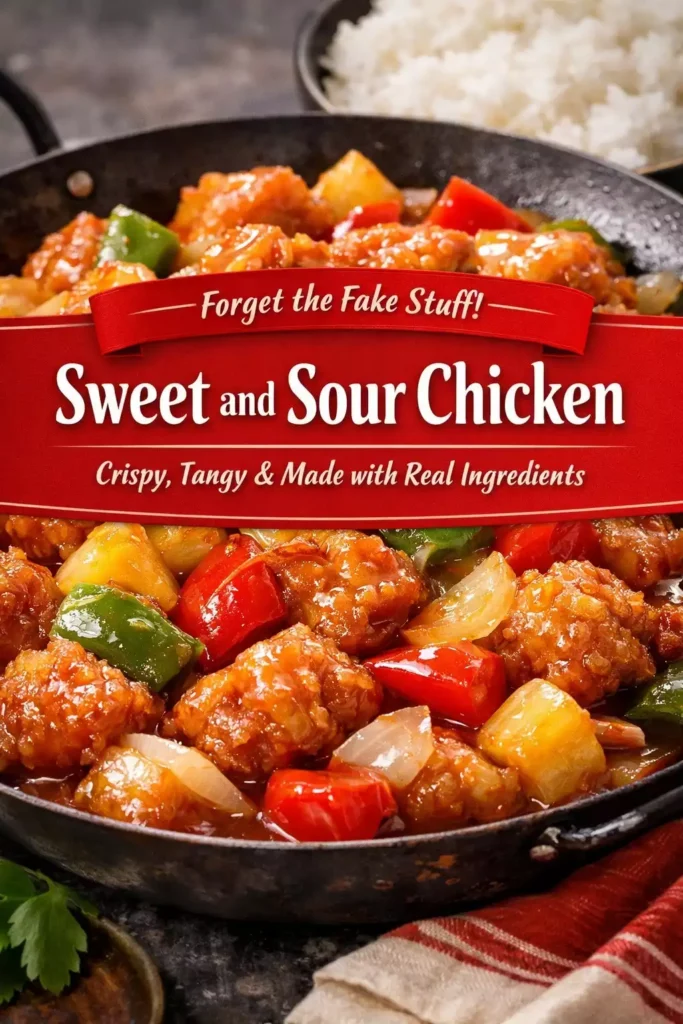
Sweet and Sour Chicken — Not the Neon Goo Version
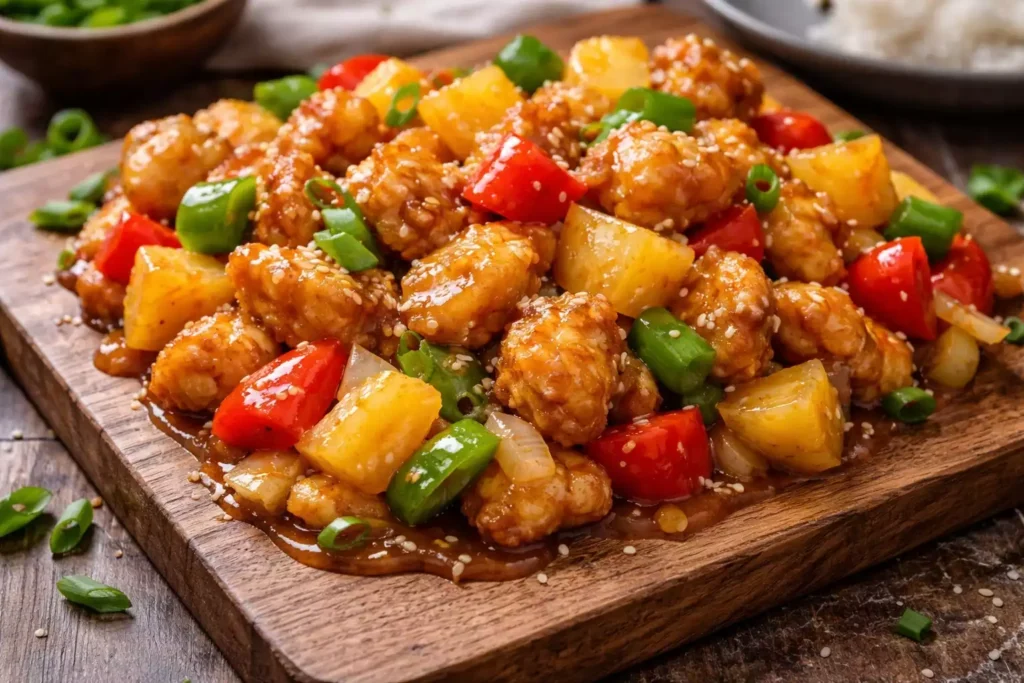
If your sweet and sour sauce glows in the dark, we need to talk. I am referring to that particular shade of neon red-orange that arrives in certain takeout containers and has never existed in nature. Real sweet and sour chicken — made with actual pineapple juice and rice vinegar — is a completely different substance. It is golden-amber, bright, tangy, genuinely sweet, and tastes like food rather than food-adjacent chemistry. This is that version.
Sweet and sour chicken is a Cantonese-American classic that deserves to be good. The components are simple: crispy fried chicken pieces, a balanced sauce of pineapple, vinegar, sugar, ketchup, and soy sauce, and colorful vegetables that provide crunch and contrast. The whole thing comes together in under 30 minutes and produces something that makes every artificial version look as sad as it actually is.
My kids eat this without skepticism, which is a significant achievement for a dish that has been maligned by its takeout reputation. Once you make the sauce from scratch, there is no going back to the neon version. This is the sweet and sour chicken that deserves to be eaten without irony.
Why Homemade Sweet and Sour Beats Takeout
The takeout version often uses artificial coloring, thickener-heavy sauces, and protein that was fried long before it arrived at your door. The homemade version uses fresh pineapple juice for natural sweetness and fruit acidity, rice vinegar for a clean tartness, and chicken that is fried immediately before serving. Timing is one of the most important advantages of cooking at home: fresh-fried crispy chicken in sauce that was made five minutes ago is an entirely different experience from delivery.
Ingredients
For the Crispy Chicken
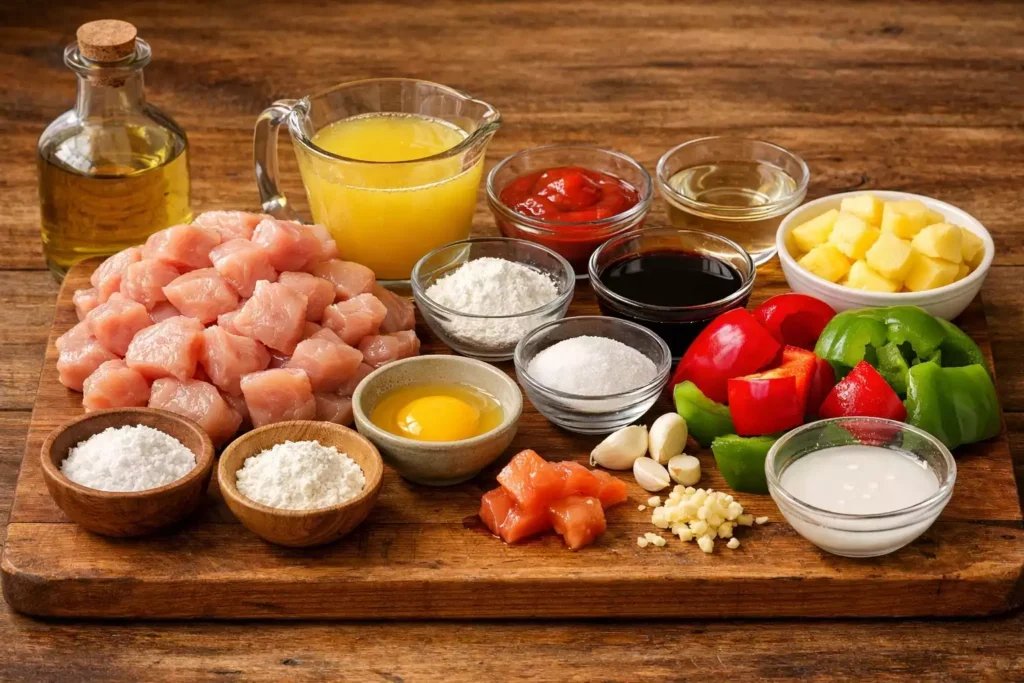
- 700g (1.5 lbs) boneless, skinless chicken thigh or breast, cubed 4cm
- 1 egg
- 3 tbsp cornstarch
- 3 tbsp plain flour
- 1 tsp salt
- Oil for deep frying
For the Sweet and Sour Sauce
- 150ml (2/3 cup) pineapple juice (from a can of pineapple chunks)
- 4 tbsp rice vinegar
- 3 tbsp ketchup
- 3 tbsp sugar
- 1 tbsp soy sauce
- 1 tbsp cornstarch dissolved in 2 tbsp water
For the Vegetables
- 1 red bell pepper, cut into 3cm pieces
- 1 green bell pepper, cut into 3cm pieces
- 1 cup pineapple chunks (canned or fresh)
- 1 medium onion, cut into wedges
- 3 cloves garlic, minced
- 2 tbsp oil for stir fry
How to Make It
1
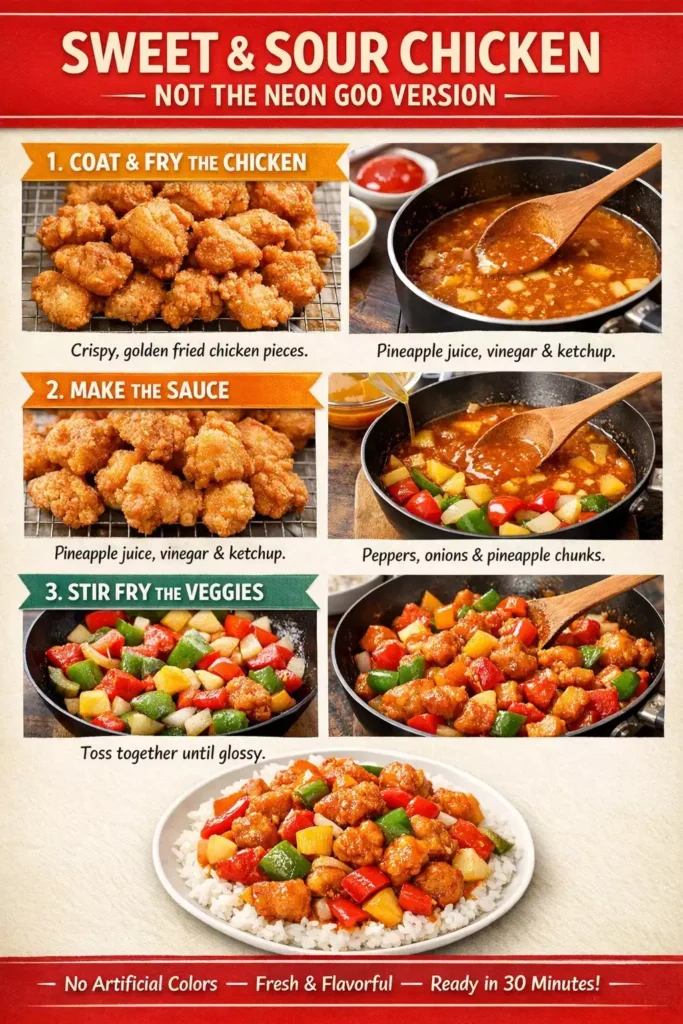
1Coat and Fry the Chicken
Beat the egg with salt. Toss the chicken in the egg mixture. Combine cornstarch and flour. Dredge each piece in the cornstarch-flour mixture. Heat oil to 180°C (350°F) and fry the chicken in batches for 4–5 minutes until golden and cooked through. Drain on wire rack. For extra crispness, fry a second time at 190°C for 60 seconds.
2
2Make the Sauce
Combine pineapple juice, rice vinegar, ketchup, sugar, and soy sauce in a small bowl. Stir until the sugar dissolves. Taste: it should be bright, tangy-sweet, and balanced. Not too sweet, not too sharp. Adjust with more sugar or vinegar as needed. The sauce will thicken when you add the cornstarch slurry.
3
3Stir Fry the Vegetables
Heat 2 tablespoons of oil in a wok over high heat. Add garlic and stir 30 seconds. Add onion and bell peppers and stir-fry for 2–3 minutes until slightly tender but still with crunch. Add pineapple chunks and toss 30 seconds.
4
4Combine and Serve
Pour the sauce into the wok with the vegetables. Add the cornstarch slurry and stir until the sauce thickens and becomes glossy — about 90 seconds. Add the fried chicken and toss to coat. Serve immediately over steamed rice before the coating softens.
Sweet and Sour Chicken Tips
Pineapple juice, not orange juice. Pineapple juice has the right combination of sweetness and tropical acidity for the authentic sweet and sour flavor. Orange juice is too assertive. Use the juice from a can of pineapple chunks — it is exactly the right concentration.
Sauce the chicken at service, not in advance. This is the same lesson as orange chicken and sesame chicken: crispy coating plus sauce plus time equals soggy. Make everything, then sauce it just before eating. Every time.
Vegetables still crunchy. The bell peppers and onion should retain some crunch. Do not overcook them — 2–3 minutes in a hot wok is enough. They continue cooking slightly when the sauce goes in. Soft vegetables in sweet and sour chicken are a texture failure.
Serving Sweet and Sour Chicken
Over steamed white or jasmine rice for the classic presentation. For a full Chinese feast at home, pair with fried rice and egg drop soup. Sweet and sour chicken is the kid-friendly centerpiece of any Chinese dinner spread.
Variations Worth Trying
Sweet and sour pork. Substitute pork shoulder or pork belly cut into pieces. Pork pairs beautifully with the sweet and sour sauce — this is actually the original Cantonese preparation (goo lou yuk) from which the chicken version derives. Use the same technique with pork cut slightly larger than the chicken cubes.
With fresh pineapple. Fresh pineapple in the sauce instead of canned produces a less sweet, more aromatic result. Fresh pineapple also contains bromelain, an enzyme that makes the sauce slightly more complex. Use fresh pineapple juice pressed from the fruit or purchased fresh-pressed.
Storage
The sauced dish keeps in the refrigerator for 2–3 days, but the coating will soften completely. Best eaten fresh on the day of cooking. For meal prep, make the sauce and stir-fry the vegetables ahead; fry the chicken fresh at serving time and sauce everything then for the best result.
FAQ
Why is my sauce not the right color?
Restaurant sweet and sour sauce is often artificially colored red or orange. Homemade sauce from pineapple juice and ketchup will be a natural golden-amber or reddish-amber color, not neon red. This is correct — it means you are using real ingredients. If you want a deeper red, add a teaspoon more ketchup.
Can I make sweet and sour sauce without ketchup?
Yes. Substitute the ketchup with 2 tablespoons of tomato paste plus an extra tablespoon of sugar. The result is slightly more intense and less sweet. Traditional Cantonese versions often use hawthorn jam (shan zha) instead, which produces a more complex, slightly floral flavor. If you can find hawthorn jam at an Asian grocery, it is worth trying.
Kasia Polish Mom
Polish-born, Chicago-raised, feeding a family of six with babcia’s recipes and a global pantry. I grew up folding pierogi at my grandmother’s kitchen table and never stopped — 15+ years of cooking from scratch, one Sunday dinner at a time. Everything here is tested on four kids, a hungry husband, and the memory of a woman who never measured anything but always got it right.