Kasia Polish Mom
Polish-born, Chicago-raised, feeding a family of six with babcia’s recipes and a global pantry. I grew up folding pierogi at my grandmother’s kitchen table and never stopped — 15+ years of cooking from scratch, one Sunday dinner at a time. Everything here is tested on four kids, a hungry husband, and the memory of a woman who never measured anything but always got it right.
Święconka — Your Complete Guide to the Polish Easter Basket
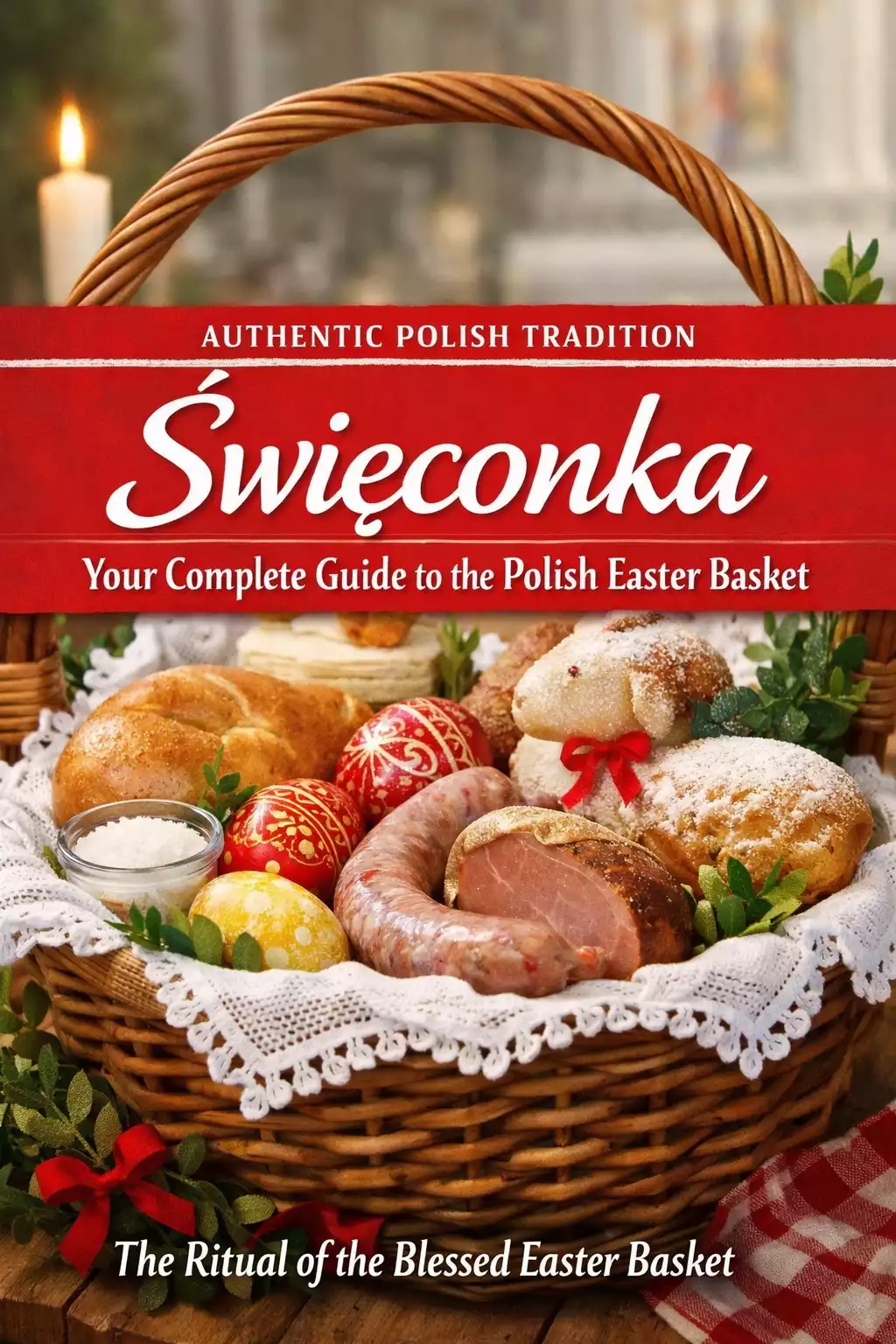
The basket goes to church on Saturday. Everything in it has a meaning. This is not a shopping list — it is a theology in food form, practiced across Poland for centuries without interruption, and it is one of the most beautiful things about the Easter tradition that my babcia passed to my mother and my mother passed to me.
Święconka — the blessed Easter basket — is the ritual at the heart of Polish Catholic Easter. On Holy Saturday, Polish families take a basket to church for the afternoon or evening blessing. The priest sprinkles holy water over it, blesses it, and the basket comes home sanctified. On Easter Sunday morning, the family gathers and the blessed foods are the first things eaten. The fast is broken with blessed food. This is the moment the Easter celebration begins.
Preparing the basket is both practical (assembling real food that will be eaten) and symbolic (selecting items that represent the Easter themes of redemption, abundance, and new life). Every item in the basket has earned its place. This guide tells you what goes in, what it means, how to pack it beautifully, and what happens with the food afterward.
What Goes in the Święconka Basket
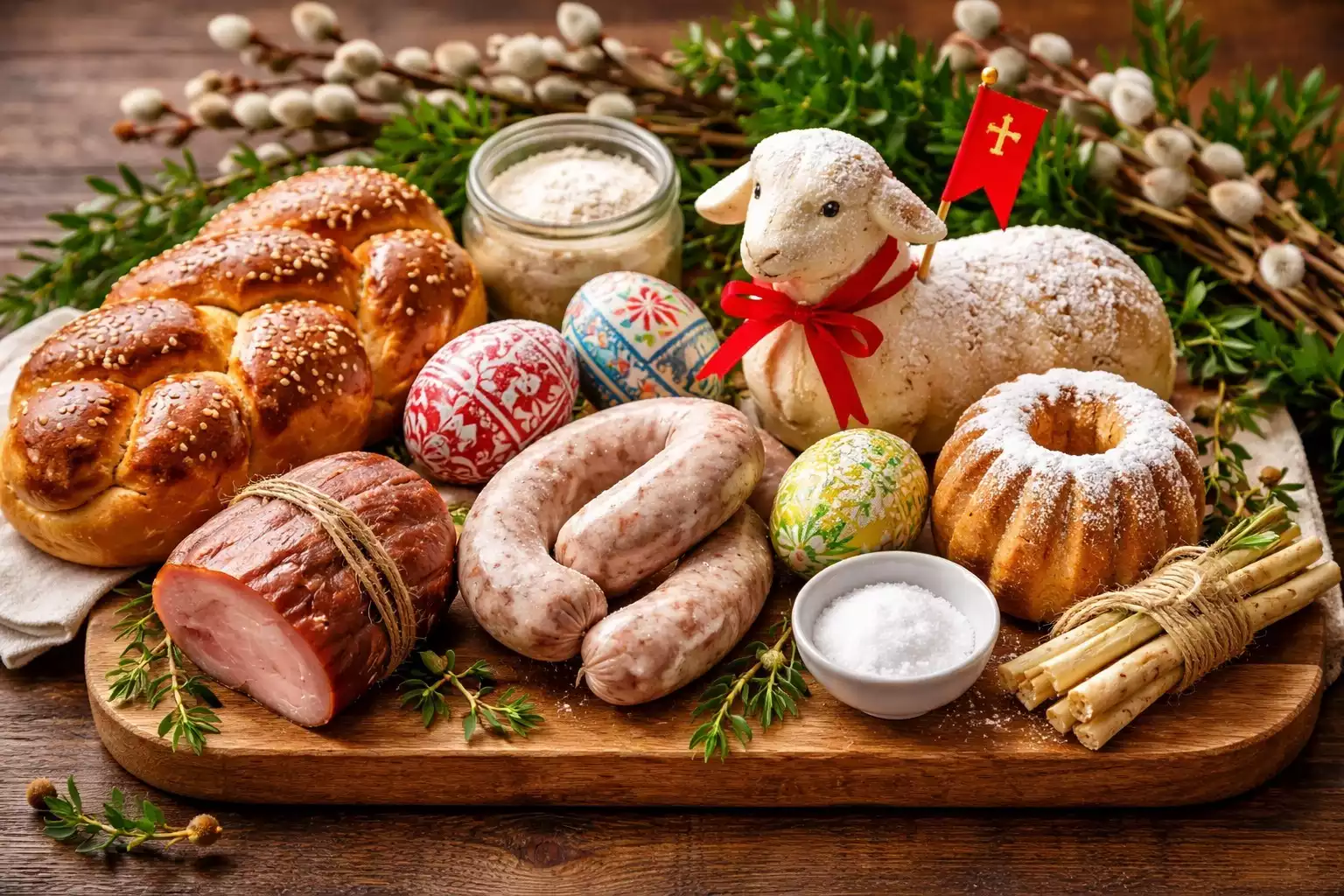
The traditional Polish Easter basket contains seven to eight items, each with specific symbolism. The complete list varies slightly by region and family tradition, but the core items are consistent across Poland.
The Seven Essential Items
1. Bread (Chleb or Chałka)
- A small decorated loaf, a braid of chałka, or a lamb-shaped bread called “baranki”
- Symbolizes: Jesus as the Bread of Life; the breaking of the Lenten fast; abundance and prosperity
- Practical note: Pack a small decorative loaf or a thick section of braid rather than an entire full-size loaf
2. Eggs (Jajka)
- Hard-boiled eggs, often decorated as pisanki (Ukrainian-style wax-resist decorated eggs) or kraszanki (single-color dyed eggs)
- Symbolizes: Resurrection, new life, the sealed tomb that opened at Easter
- Practical note: Place 3–4 eggs nestled in napkin in the basket. These become the first food eaten on Easter morning.
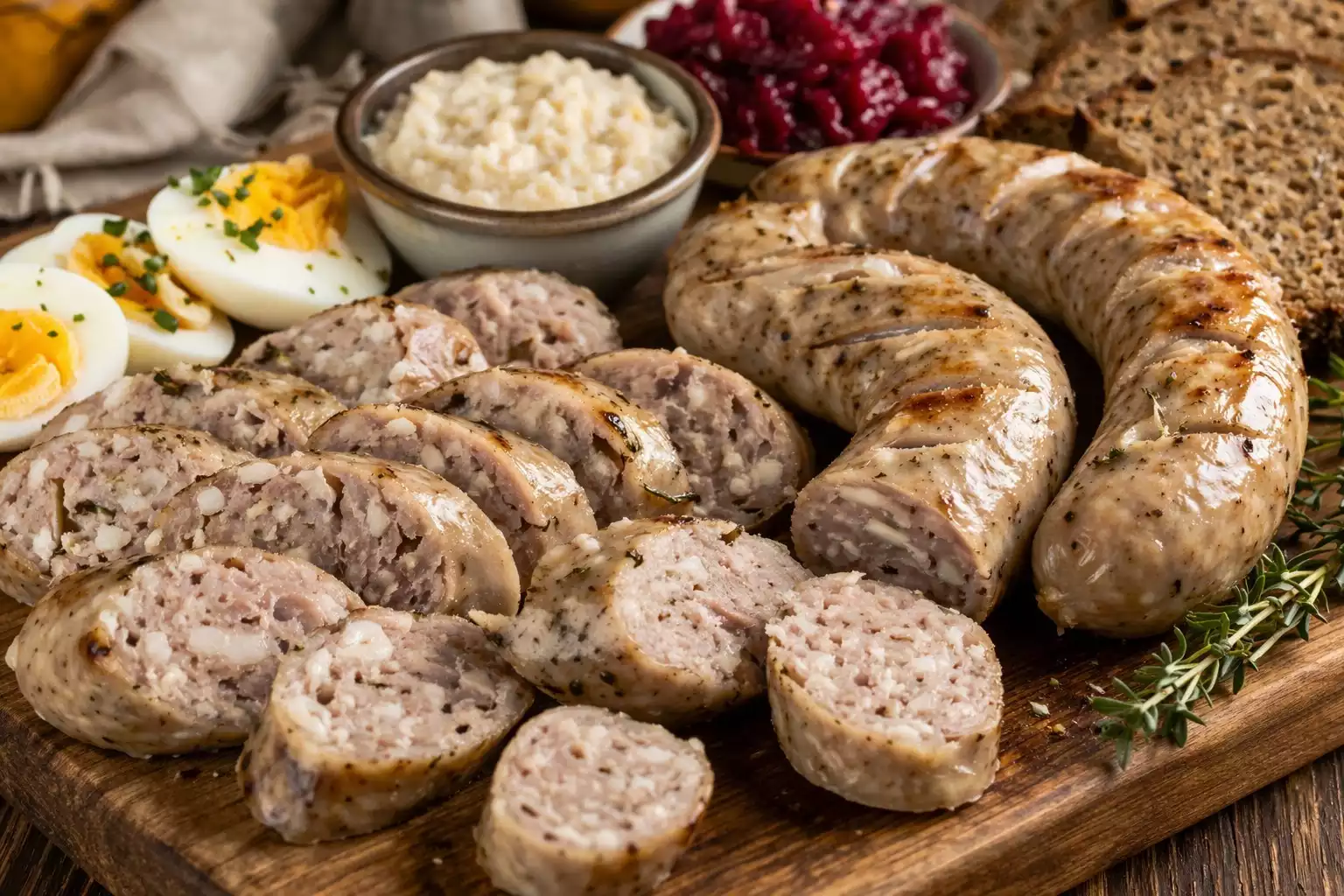
3. Sausage (Biała Kiełbasa)
- A coiled piece of biała kiełbasa (Polish white sausage)
- Symbolizes: Joy of the Easter feast; the end of the Lenten meat fast; health and strength
- Practical note: Wrap the raw sausage in parchment or a clean cloth. It will be cooked after blessing.
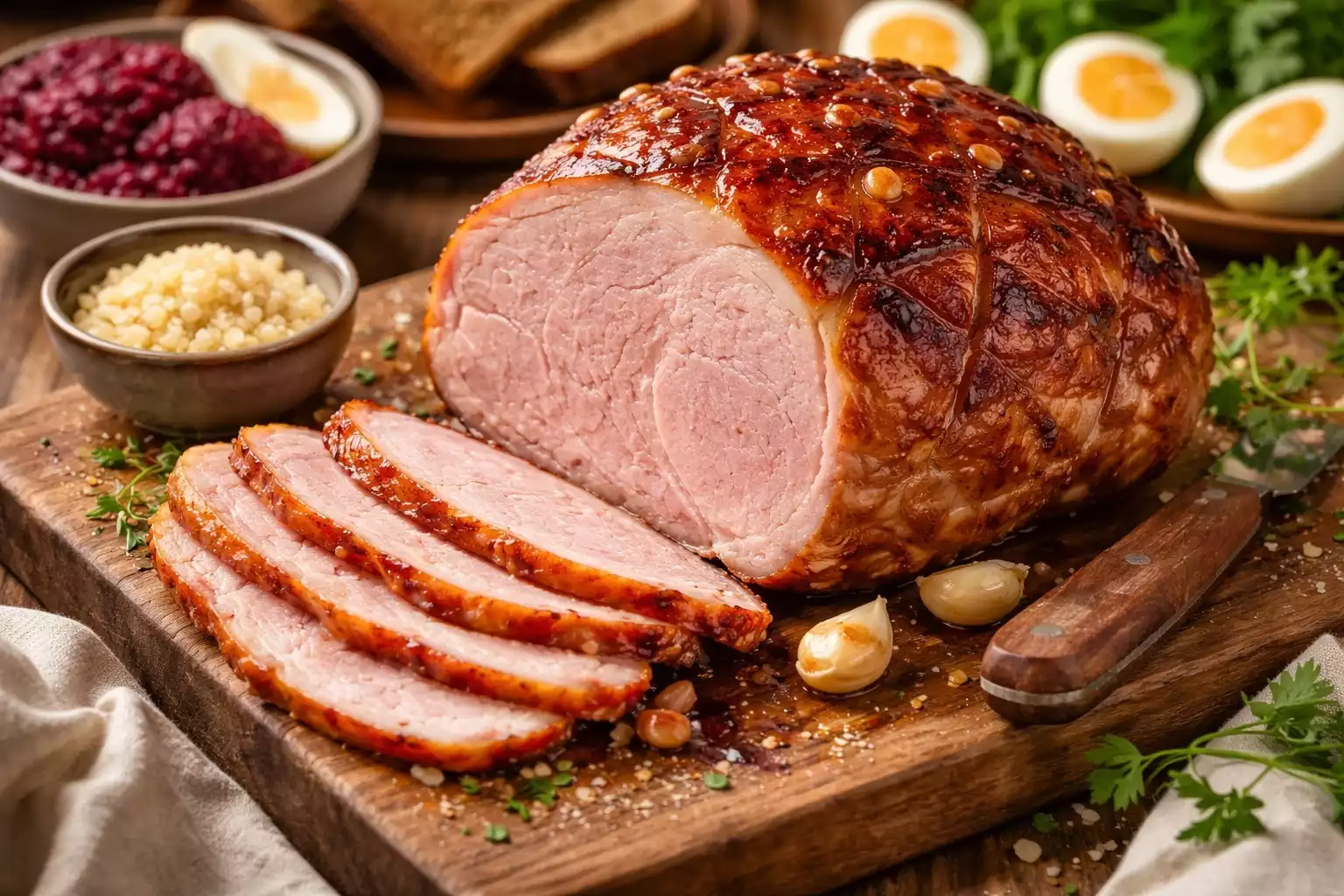
4. Ham (Szynka)
- A small piece of szynka — cooked or raw, depending on tradition
- Symbolizes: Prosperity, abundance, the feasting that follows sacrifice
- Practical note: A small wrapped piece of cooked ham or a slice of pasztet can substitute
5. Horseradish (Chrzan)
- A piece of fresh horseradish root or a small jar of prepared chrzan
- Symbolizes: The bitterness of Christ’s suffering; the hardship of Lent; the sharpness of life
- Practical note: A fresh root is traditional; a small tied bundle of root looks beautiful in the basket
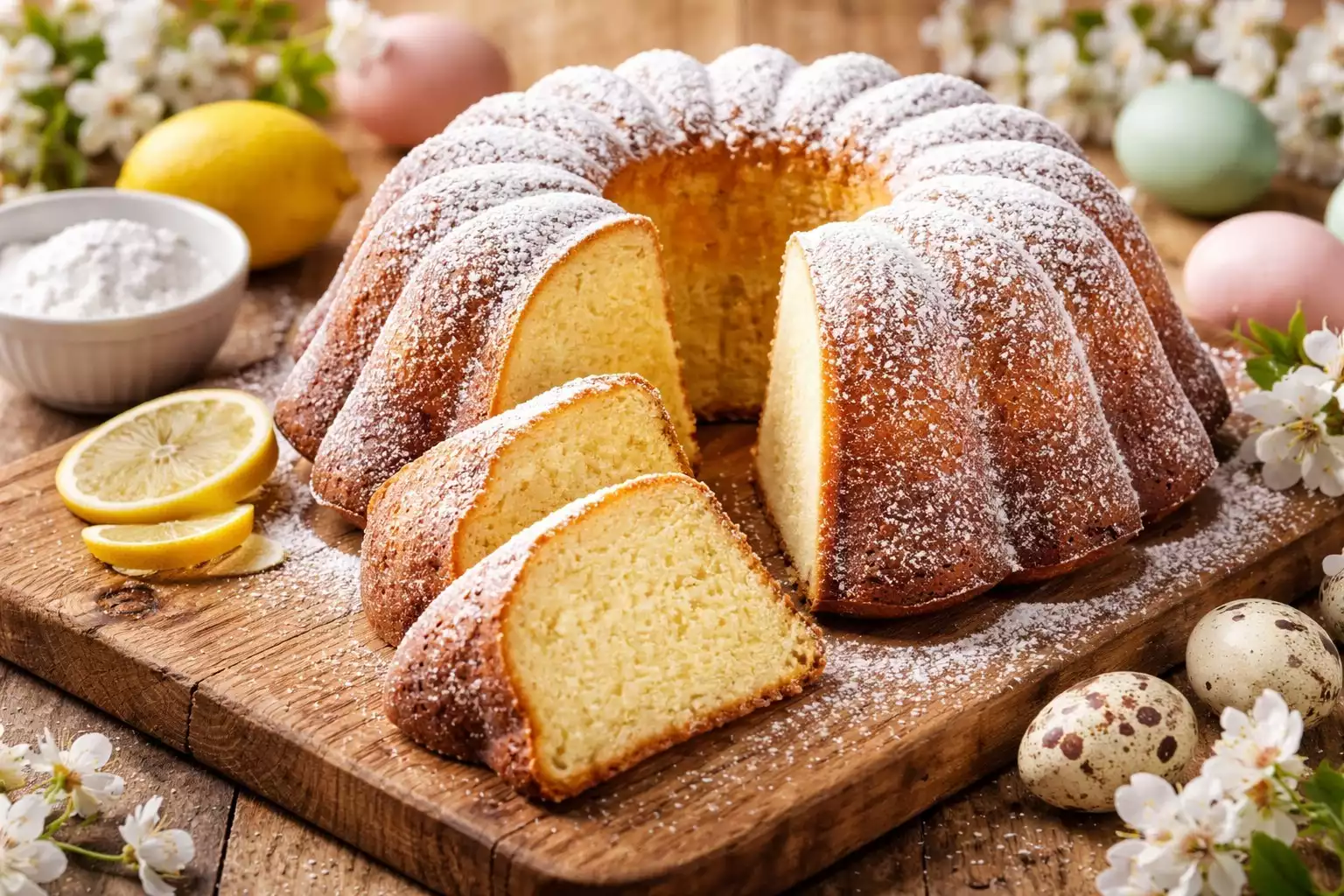
6. Easter Cake (Baba or Babka)
- A small version of baba wielkanocna or the Easter lamb cake baranek z cukru
- Symbolizes: The sweetness of the resurrection; the joy that follows sacrifice
- Practical note: The lamb cake, if included, sits upright in the basket as the centerpiece
7. Salt (Sól)
- A small twist of salt wrapped in paper or in a tiny container
- Symbolizes: Purification, preservation, wisdom; without salt nothing has flavor
- Practical note: Often overlooked but traditionally included. A small decorative salt cellar works beautifully
How to Pack the Święconka Basket
1
1Choose the Basket
The traditional basket is a handled wicker basket, medium-sized — large enough for the contents, small enough to carry to church comfortably. Polish wicker Easter baskets are traditionally oval or round, with a high handle. Any attractive wicker basket works. Line it with a clean white or embroidered linen cloth — this is both decorative and functional (the cloth is shaken out after blessing).
2
2Place Items Intentionally
The lamb or the baba goes in the center — it is the visual focal point. Eggs nestle around the centerpiece. Sausage is coiled at one side. Ham or pasztet in a wrapped bundle. Horseradish root on the other side. Salt at the edge. Every item should be visible when you look down into the basket — this is the presentation that the priest sees when blessing, and that the family sees at the table on Sunday morning.
3
3Cover with a Decorative Cloth
The basket is traditionally covered with a white embroidered cloth or napkin on top of the items — a sign of respect. The cloth is removed by the priest to reveal the contents for blessing, then replaced for the walk home. The outer cloth keeps everything contained and clean during transport.
4
4Attend the Saturday Blessing
Holy Saturday afternoon and evening services with basket blessings take place at Catholic churches with significant Polish communities across the United States. In Poland, the line of parishioners with baskets stretches out the church door. Arrive early. Bring the basket, attend the blessing, go home with something sacred.
5
5Break the Fast on Sunday Morning
Easter Sunday morning, before the main Easter breakfast feast, the family gathers at the table. The basket is opened. The father or the oldest family member cuts the egg into pieces — one for each person. Each person tastes the egg, then the bread, then the sausage, while exchanging Easter greetings: “Wesołego Alleluja!” (Happy Alleluia!) or “Christus zmartwychwstał!” (Christ is risen!). After this small shared ceremony, the full Easter breakfast begins.
Święconka Preparation Tips
Prepare on Good Friday or Holy Saturday morning. The basket should be assembled with everything fresh. For the egg items, boil them the morning of Saturday at the latest. The sausage is typically raw in the basket and cooked after blessing.
Wrap items individually. Each item should be wrapped in parchment or a small cloth if necessary — especially the sausage and ham. This keeps the basket clean and prevents flavors from transferring between items.
Add boxwood or green branches for decoration. Traditional Polish święconka baskets include small branches of boxwood (bukszpan) or dried pussy willow (bazie) as decoration, symbolizing life and spring. These are placed around the edges of the basket as a green border.
Blessed water from the basket. In some traditions, the cloth that lined the basket retains some of the blessed water. This cloth is kept and used to wipe the faces of children on Easter morning for health and blessing. Whether you follow this tradition or simply take it as a beautiful piece of folklore, it is a reminder that every element of święconka carries meaning beyond the food itself.
After the Blessing: How the Foods Are Used
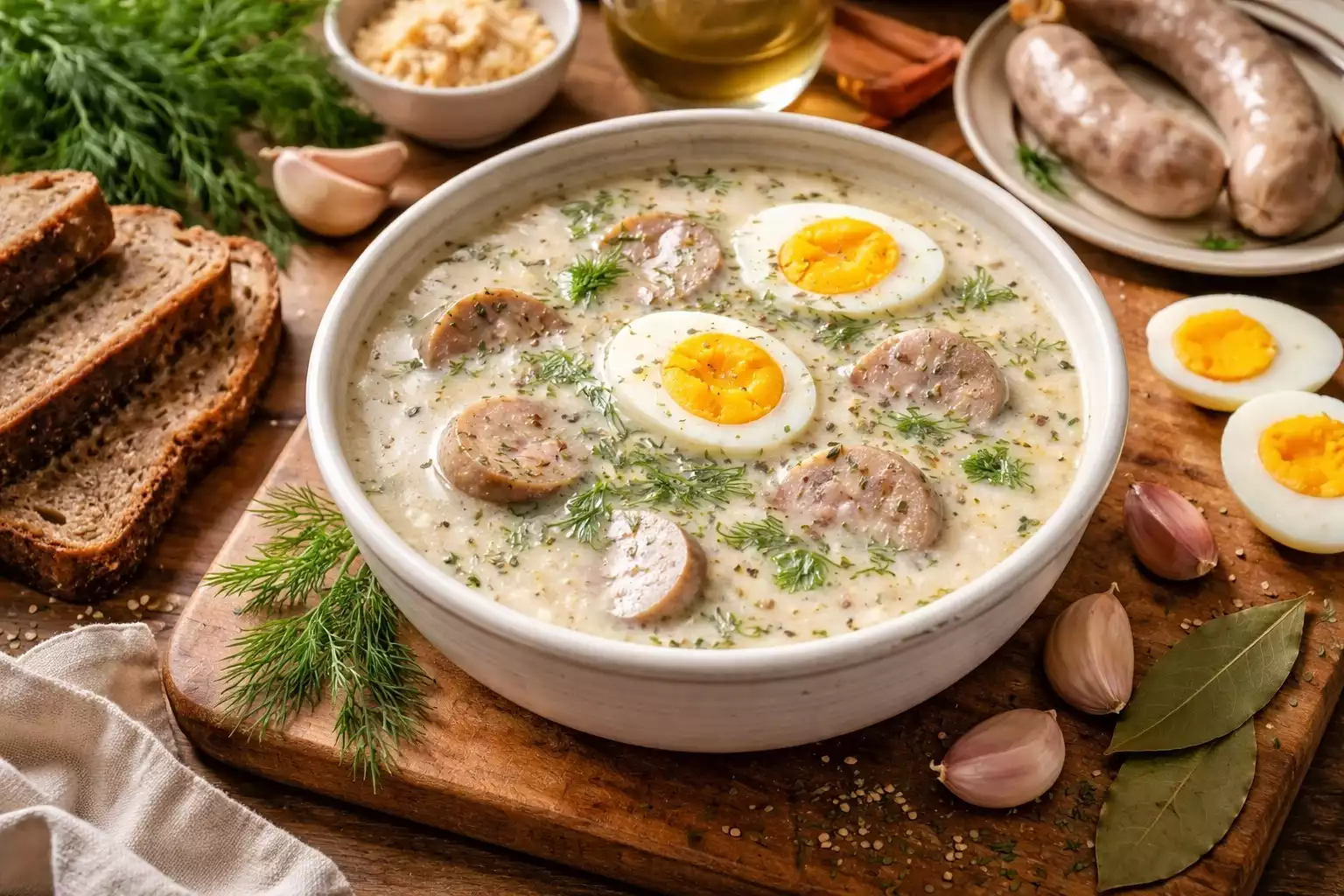
The blessed foods from the święconka basket are distributed across the Easter Sunday feast. The eggs — cracked open ceremonially first — become jajka faszerowane and egg salad. The white sausage goes into the żurek or onto the cold meats platter. The ham joins the feast centerpiece. The bread appears at the breakfast table. The horseradish is grated into fresh chrzan or placed whole on the condiment table. Nothing from the basket is wasted. Everything from the basket is honored.
Regional Polish Basket Variations
Silesian święconka. In Silesia (southwestern Poland), smoked meats and a larger selection of sausages are traditional additions. Silesian families often include smoked kielbasa alongside the white sausage.
Highlander (Podhale) tradition. In the mountain regions of southern Poland, the Easter basket sometimes includes bundz (fresh mountain sheep’s cheese) alongside the standard items. A beautiful regional variation for those with access to sheep’s milk cheese.
Contemporary minimalist basket. Some younger Polish families create a smaller, more symbolic basket with just three or four items — egg, bread, sausage, and salt — focusing on the ceremony rather than the abundance. Both approaches are entirely valid. The ceremony is the heart of it, not the contents.
Practical Notes on Timing and Storage
Assemble the basket Saturday morning for a Saturday afternoon or evening blessing. Refrigerate the basket after returning from church if the ambient temperature is warm — raw sausage and meat should not sit at room temperature for more than two hours. On Easter Sunday morning, remove the basket from the fridge 30 minutes before the shared breakfast ceremony so the food is not ice-cold.
FAQ
Does the basket have to be blessed at church, or can it be done at home?
Traditionally, the basket is taken to church for the communal blessing on Holy Saturday. In some circumstances (illness, distance, pandemic-era adaptations), priests have blessed baskets at home during Easter visits. A blessing at home with prayer is a meaningful alternative when church attendance is not possible. The tradition’s spirit is more important than the exact logistics.
What if I am not Catholic or not Polish? Can I still observe święconka?
Absolutely. The tradition welcomes everyone. Many non-Polish Catholic families in predominantly Polish communities participate in basket blessings. And many secular families have adopted the food symbolism of święconka as a family ritual separate from the church blessing — gathering around the basket, sharing the first symbolic bites of Easter food together, and beginning the feast. The meaning can be carried forward in whatever form is meaningful to your family.
Do I need a special Polish Easter basket, or can I use any basket?
Any attractive wicker basket with a handle works. The traditional Polish form is oval, medium-sized, with a high central handle. The linen lining cloth is important — a simple white napkin or embroidered cloth makes any basket look appropriate for the occasion. Polish import shops sell traditional baskets if you want the authentic version, but function matters more than form here.
Kasia Polish Mom
Polish-born, Chicago-raised, feeding a family of six with babcia’s recipes and a global pantry. I grew up folding pierogi at my grandmother’s kitchen table and never stopped — 15+ years of cooking from scratch, one Sunday dinner at a time. Everything here is tested on four kids, a hungry husband, and the memory of a woman who never measured anything but always got it right.