
Kasia Polish Mom
Polish-born, Chicago-raised, feeding a family of six with babcia’s recipes and a global pantry. I grew up folding pierogi at my grandmother’s kitchen table and never stopped — 15+ years of cooking from scratch, one Sunday dinner at a time. Everything here is tested on four kids, a hungry husband, and the memory of a woman who never measured anything but always got it right.
Szechuan Beef — For When You Want Your Lips to Tingle
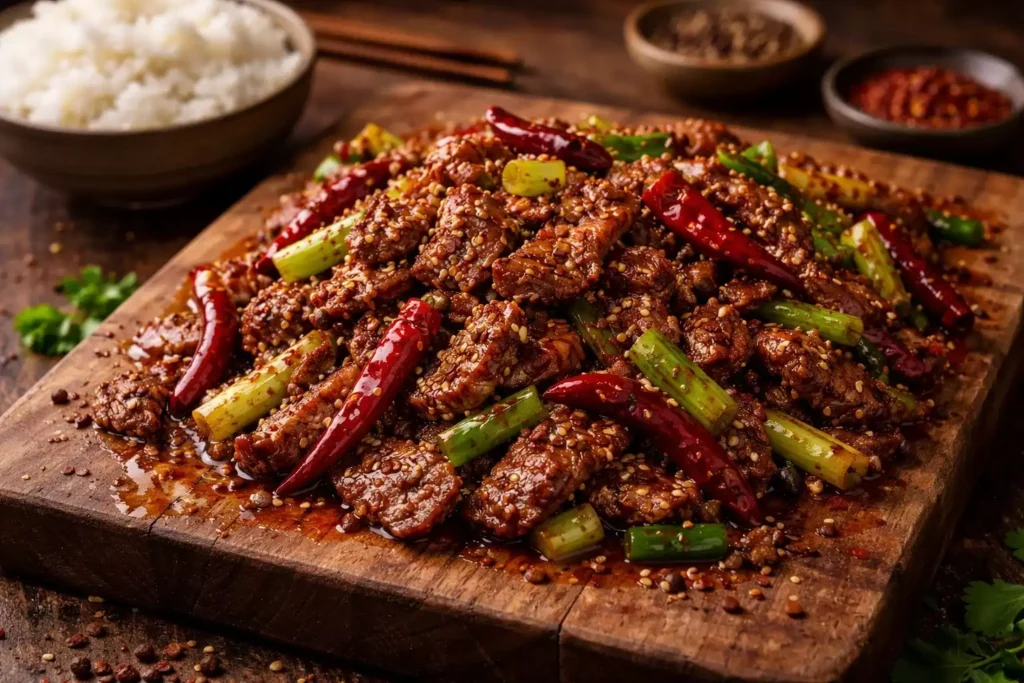
My husband says this is too spicy. I say he needs to build character. This conversation has been happening in our kitchen for three years and the outcome is always the same: he finishes his plate, sometimes goes back for more, and then says “not bad but still too spicy.” I choose to interpret this as a compliment to the dish and a character-building journey for my husband. Both interpretations are available.
Szechuan beef stir fry is the dish you make when you want your lips to tingle. The ma la combination — numbing Szechuan peppercorns plus the heat of dried chilies and doubanjiang — creates the signature sensation of Szechuan cuisine: first the assertive heat, then the spreading, electric tingle of the peppercorns. It is genuinely addictive once you experience it. People who think they do not like spicy food discover that the numbing quality of Szechuan peppercorns changes how the heat is perceived. The tingle is an entirely different sensation from straight chili heat.
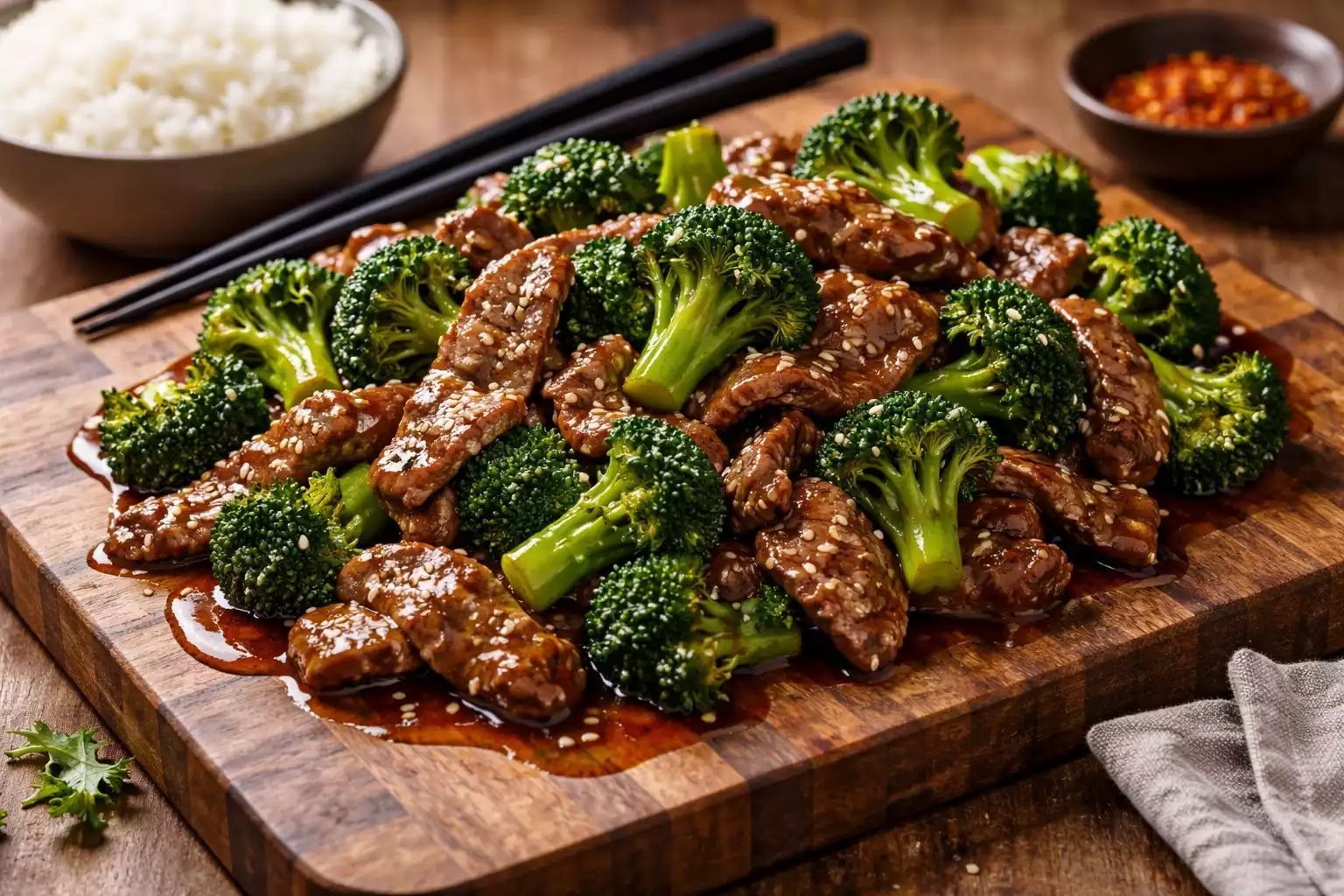
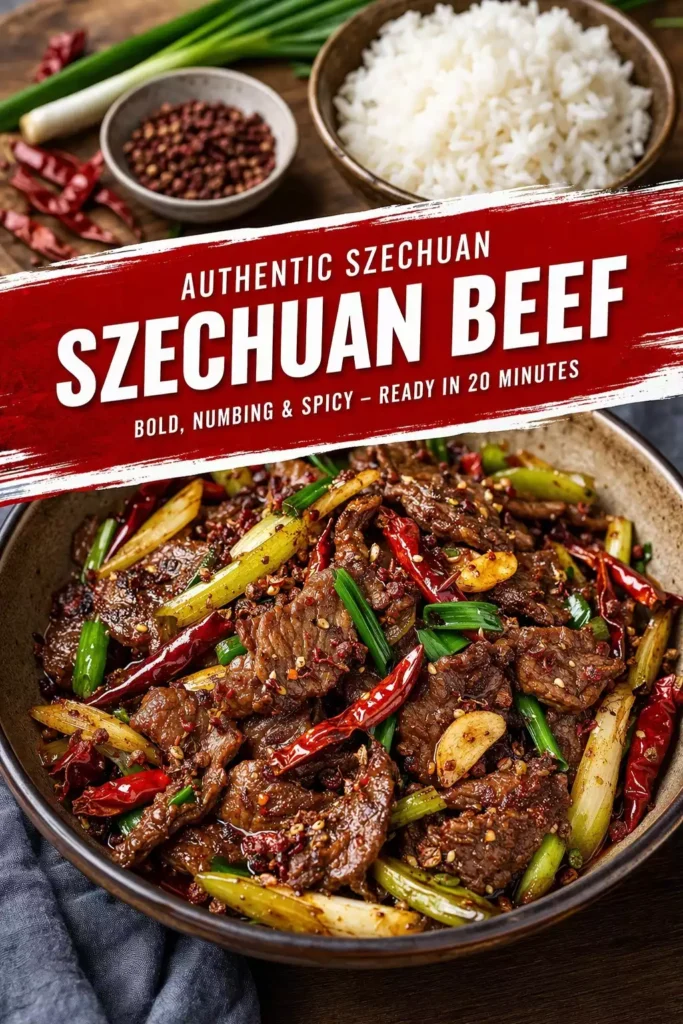
The beef is quickly stir-fried, crispy at the edges, and coated in a deeply savory, slightly fiery sauce. The whole thing takes 20 minutes. It is extraordinary over steamed white rice, which does the important job of tempering the heat between bites.
Szechuan Peppercorns: A Quick Introduction
Szechuan peppercorns (hua jiao, 花椒) are the dried husks of the prickly ash berry and are unrelated to black pepper. They contain the compound hydroxy-alpha-sanshool, which creates a tingling, numbing sensation on the palate — the “ma” (numbing) in ma la. The flavor is floral and citrusy with an almost electronic tingle. They must be freshly toasted and ground for maximum effect. Find them at any Asian grocery or online. Once you have them, many Szechuan dishes become possible.
Ingredients
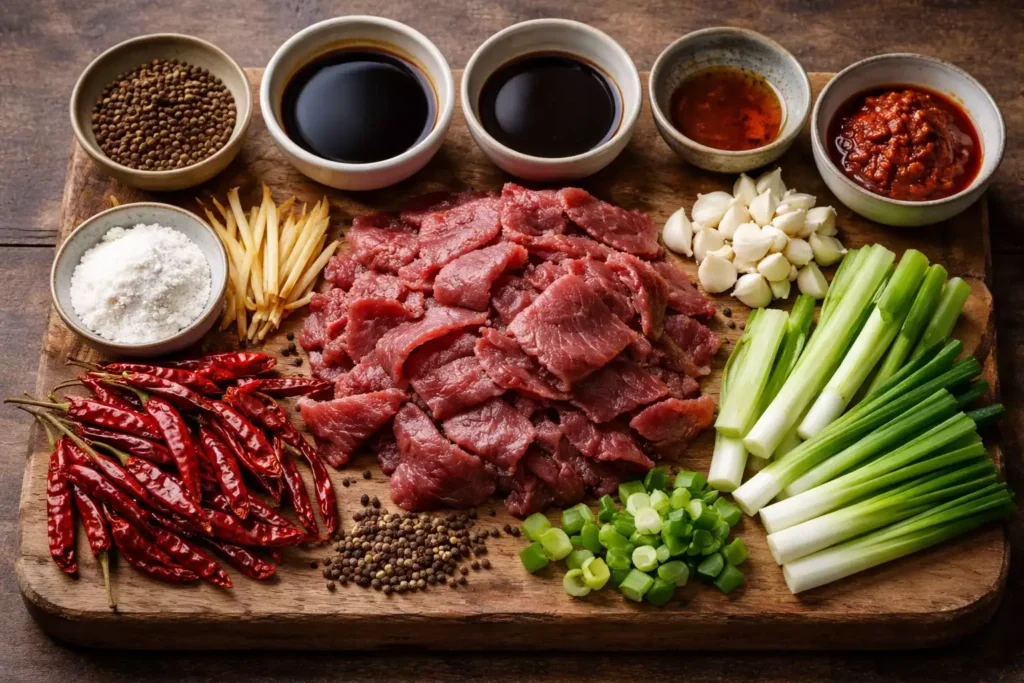
For the Beef and Marinade
- 500g (1.1 lbs) flank steak or sirloin, very thinly sliced
- 1 tbsp soy sauce
- 1 tbsp cornstarch
- 1 tsp Shaoxing rice wine
For the Szechuan Sauce
- 2 tbsp doubanjiang (Pi Xian chili bean paste)
- 1 tbsp soy sauce
- 1 tbsp dark soy sauce
- 1 tsp sugar
- 8–10 dried whole red chilies
- 2 tsp Szechuan peppercorns, toasted and coarsely ground
- 4 cloves garlic, sliced
- 1 tbsp ginger, matchstick-cut
- 2 stalks celery, diagonally sliced (optional but classic)
- 3 spring onions, cut into pieces
- 3 tbsp oil for cooking
How to Make It
1
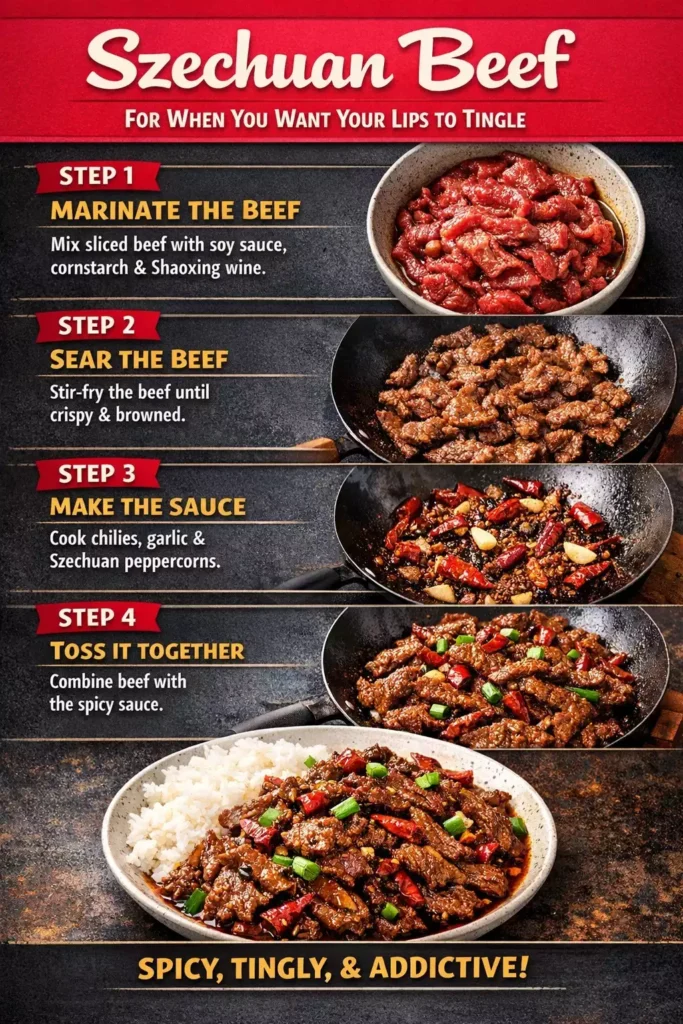
1Marinate and Fry the Beef
Toss the sliced beef with soy sauce, cornstarch, and Shaoxing wine. Marinate 10–15 minutes. Heat 2 tablespoons of oil in a wok over highest heat. Fry the beef in batches over very high heat, leaving it undisturbed for 45–60 seconds per side to develop seared, slightly crispy edges. Remove and set aside. The beef should be seared but slightly undercooked — it will finish in the sauce.
2
2Build the Szechuan Base
In the same wok with remaining oil, add the whole dried chilies and half the Szechuan peppercorn. Fry 30 seconds until the chilies darken and become aromatic — the oil will smell deeply smoky and spicy. Add the doubanjiang and stir-fry until the oil turns red and fragrant, about 60 seconds. Add garlic and ginger and stir 30 more seconds.
3
3Finish the Stir Fry
Add celery if using and toss for 60 seconds. Return the beef to the wok. Add soy sauce, dark soy, and sugar. Toss everything together over high heat for 90 seconds until the sauce coats the beef and the celery is just tender. Add spring onions and toss 30 more seconds. Plate and dust with the remaining ground Szechuan peppercorn.
Szechuan Beef Tips
Toast the Szechuan peppercorns fresh. Szechuan peppercorns have volatile flavor compounds that degrade over time. Toast them in a dry pan over medium heat for 2 minutes until fragrant, then grind immediately. Pre-ground Szechuan pepper from a jar six months old has a fraction of the tingle of freshly ground. For this dish, fresh grinding is the difference between a dish that tingles and one that just tastes peppery.
The dried chilies are for flavor, not extreme heat. The whole dried chilies are fried in oil to release their smoky, fruity character — they are flavor vehicles, not primarily heat sources. Do not eat a whole dried chili in one bite. They are meant to infuse the oil and give background smokiness. The doubanjiang provides most of the heat.
Very high heat throughout. Szechuan stir fry at home requires the maximum heat your stove can produce. High heat creates the slight char notes and wok aroma (wok hei) that is characteristic of the dish. Low heat produces stewed rather than stir-fried results.
Adjust heat to your tolerance. The recipe as written is genuinely spicy. For a milder version, reduce doubanjiang to 1 tablespoon and use 5–6 dried chilies instead of 8–10. For maximum Szechuan experience, increase both. The dish scales in heat very directly with the amount of these two ingredients.
Serving Szechuan Beef
Over steamed white rice — the rice is essential for tempering the heat between bites. This is non-negotiable. Alongside mapo tofu for a full Szechuan-focused dinner. Cool, non-spicy sides like a cucumber salad or blanched greens provide important balance. Do not serve alongside other spicy dishes without providing significant starchy tempering.
Variations Worth Trying
Szechuan chicken. Substitute chicken thigh, sliced and marinated the same way. The lighter protein takes the Szechuan sauce very well. Less aggressive than the beef version but still fully flavored.
Szechuan green beans (Gan Bian Si Ji Dou). Dry-fry green beans in a hot wok until blistered and charred, then toss with the same Szechuan sauce base. One of the great Chinese vegetable dishes and a natural companion to this beef. The blistered green beans with doubanjiang and Szechuan pepper are extraordinary.
With wood ear mushrooms and bamboo shoots. Add rehydrated wood ear mushrooms and canned bamboo shoots to the stir fry for a version with more textural complexity. Both vegetables absorb the spicy sauce beautifully and provide the chewy-crunchy contrast that Szechuan cooking does so well.
Storage
Refrigerate for up to 3 days. Reheats very well in a hot pan — the flavors deepen overnight and the reheated version may taste even better than fresh, which is a welcome quality in a weeknight meal. Add a splash of water when reheating to loosen the sauce.
FAQ
Can I make Szechuan beef without doubanjiang?
Doubanjiang is the defining ingredient and there is no true substitute. The closest approximation is Korean gochujang (1 tablespoon) plus black bean sauce (1 teaspoon), which approximates the fermented-chili character. The result will be good but different. If this dish matters to you, find doubanjiang. It transforms many Chinese recipes and is worth having in your pantry.
What does Szechuan peppercorn taste like?
Floral, citrusy, and then electric-tingling. The initial aroma is bright and almost lemony. The flavor has a warm, woody quality. And then the tingle begins — a spreading numbness across the tongue and lips that is completely unlike black pepper heat. The scientific explanation is that the compound sanshool activates touch receptors rather than heat or pain receptors, producing the unique tingly-numbness. It is genuinely strange the first time. It is addictive after that.
Kasia Polish Mom
Polish-born, Chicago-raised, feeding a family of six with babcia’s recipes and a global pantry. I grew up folding pierogi at my grandmother’s kitchen table and never stopped — 15+ years of cooking from scratch, one Sunday dinner at a time. Everything here is tested on four kids, a hungry husband, and the memory of a woman who never measured anything but always got it right.