
Thai Coconut Curry (Chicken)
This is the smell I want my house to have permanently. Coconut, lemongrass, chilli, warmth. If they made this scent as a candle, I’d buy twelve.
Ingredients
- 1.5 pounds chicken thighs, cut into bite-sized pieces
- 1 can full-fat coconut milk 400ml
- 2-3 tablespoons Thai red curry paste adjust to heat preference
- 1 tablespoon fish sauce
- 1 tablespoon brown sugar
- Juice of 1 lime
- 1 red bell pepper, sliced
- 1 cup bamboo shoots or baby corn optional
- 1 cup baby spinach or Thai basil
- 1 tablespoon vegetable oil
- Steamed jasmine rice for serving
- Fresh cilantro and lime wedges
Method
Bloom the Curry Paste
-
Heat oil in a large pot or deep skillet over medium heat. Scoop the thick cream from the top of the coconut milk can (it separates — the thick part rises to the top). Add this coconut cream to the pot along with the curry paste. Stir and cook for 2-3 minutes until the paste is fragrant and the oil starts to separate from the coconut cream. This step — called “cracking” the coconut cream — is what develops the curry paste’s full flavour. It should smell incredible. If your kitchen doesn’t smell like a Thai restaurant at this point, cook it longer.
Cook the Chicken
-
Add the chicken pieces and stir to coat in the curry paste. Cook for 3-4 minutes until the outside of the chicken is sealed and coated in the red paste.
Add Coconut Milk
-
Pour in the remaining coconut milk, fish sauce, and brown sugar. Stir. Bring to a gentle simmer and cook 12-15 minutes until the chicken is cooked through and the sauce has thickened slightly. Add the bell pepper and any other vegetables. Cook 3-4 more minutes until vegetables are tender-crisp.
Finish
-
Remove from heat. Stir in lime juice and fresh basil or spinach (it wilts in 30 seconds from the residual heat). Taste the sauce: it should be creamy, rich, slightly sweet, and spicy. More fish sauce for salt, more sugar for sweetness, more lime for brightness. Serve over steamed jasmine rice with fresh cilantro and extra lime wedges.


Kasia Polish Mom
Polish-born, Chicago-raised, feeding a family of six with babcia’s recipes and a global pantry. I grew up folding pierogi at my grandmother’s kitchen table and never stopped — 15+ years of cooking from scratch, one Sunday dinner at a time. Everything here is tested on four kids, a hungry husband, and the memory of a woman who never measured anything but always got it right.
Thai Coconut Curry With Chicken — 25 Minutes
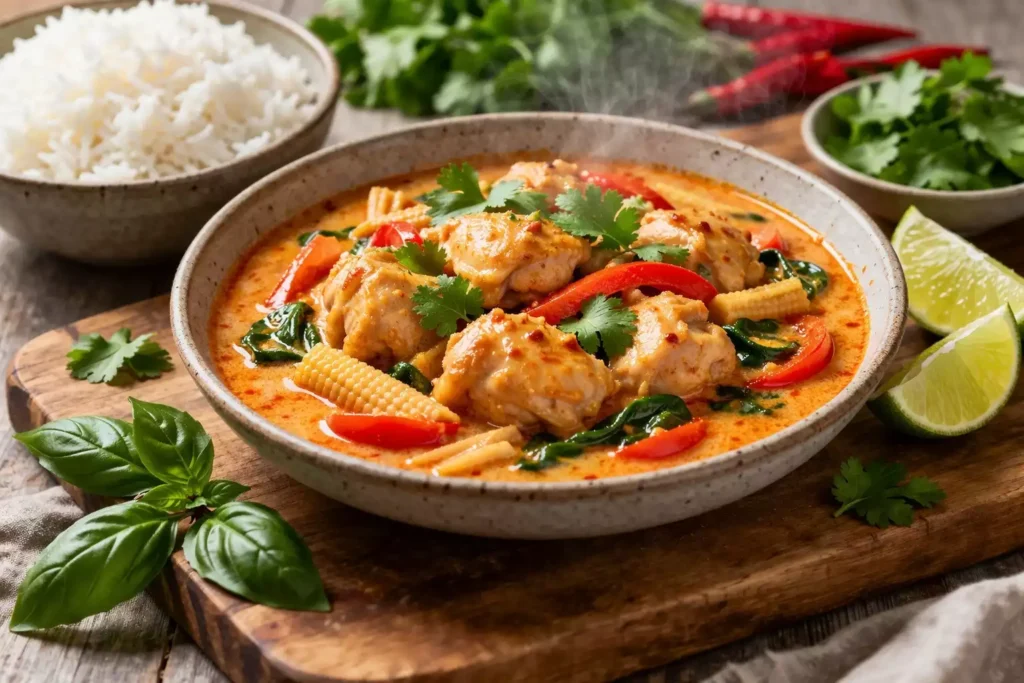
This is the smell I want my house to have permanently. Coconut, lemongrass, chilli, warmth. If they made this scent as a candle, I’d buy twelve.
Thai coconut curry is the recipe that taught me to trust a cuisine I didn’t grow up with. Polish cooking is butter, dill, and root vegetables. Thai cooking is coconut milk, lemongrass, and chilli paste. On paper, they have nothing in common. In practice, both are about building layers of flavour from simple ingredients and turning them into something greater than the sum of their parts. The first time I made Thai red curry at home — the coconut milk bubbling, the paste blooming in the oil, the chicken simmering until tender — I felt that same kitchen magic I feel when making bigos. Different spice cabinet, same soul.
This is a one-pot, 30-minute dinner that tastes like a Thai restaurant but costs a fraction and lets me control the spice level — critical when you’re feeding two kids who think black pepper is “too much” and two who are developing respectable heat tolerance. Everyone eats from the same pot. The spice-lovers add extra chilli paste to their bowls. The mild crew eats it as-is. Peace is maintained.
Ingredients
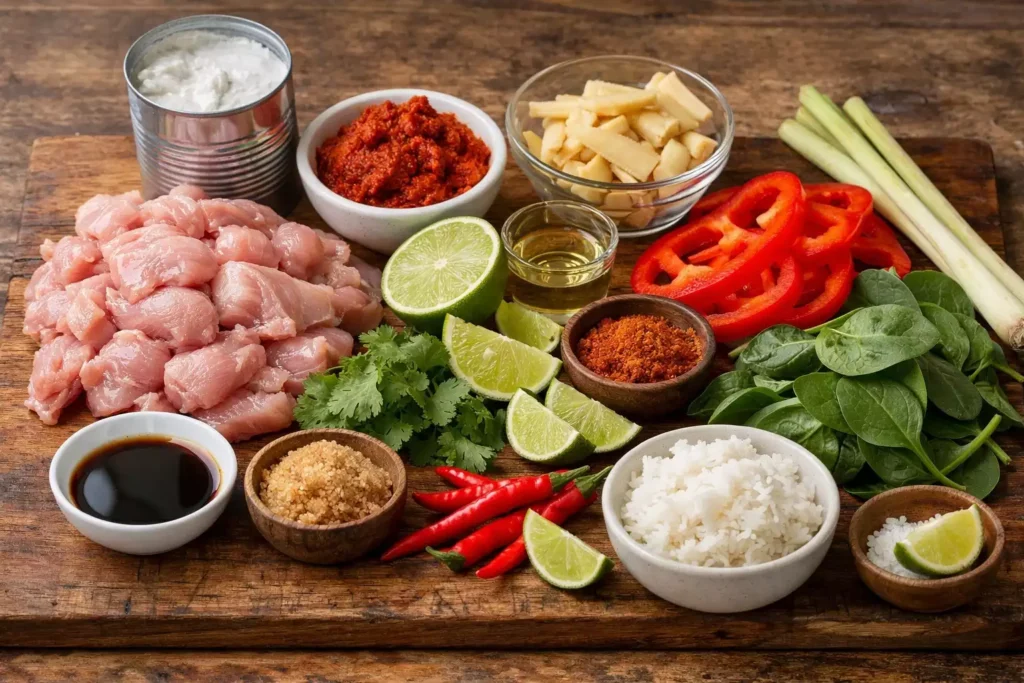
- • 1.5 pounds chicken thighs, cut into bite-sized pieces
- • 1 can (400ml) full-fat coconut milk
- • 2-3 tablespoons Thai red curry paste (adjust to heat preference)
- • 1 tablespoon fish sauce
- • 1 tablespoon brown sugar
- • Juice of 1 lime
- • 1 red bell pepper, sliced
- • 1 cup bamboo shoots or baby corn (optional)
- • 1 cup baby spinach or Thai basil
- • 1 tablespoon vegetable oil
- • Steamed jasmine rice for serving
- • Fresh cilantro and lime wedges
How to Make It
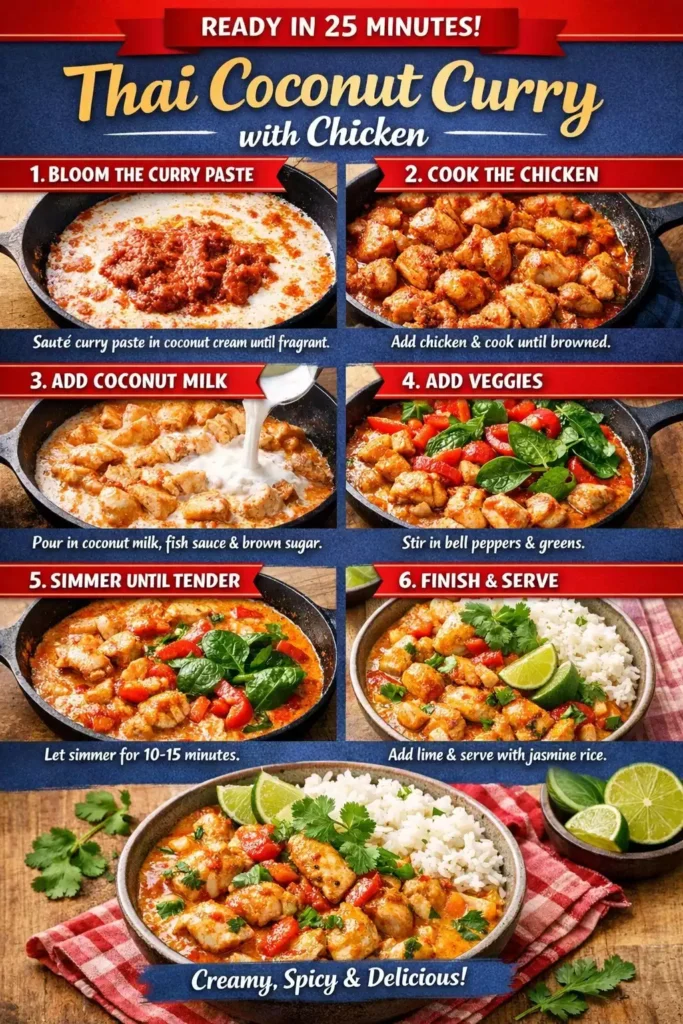
Bloom the Curry Paste
Heat oil in a large pot or deep skillet over medium heat. Scoop the thick cream from the top of the coconut milk can (it separates — the thick part rises to the top). Add this coconut cream to the pot along with the curry paste. Stir and cook for 2-3 minutes until the paste is fragrant and the oil starts to separate from the coconut cream. This step — called “cracking” the coconut cream — is what develops the curry paste’s full flavour. It should smell incredible. If your kitchen doesn’t smell like a Thai restaurant at this point, cook it longer.
Cook the Chicken
Add the chicken pieces and stir to coat in the curry paste. Cook for 3-4 minutes until the outside of the chicken is sealed and coated in the red paste.
Add Coconut Milk
Pour in the remaining coconut milk, fish sauce, and brown sugar. Stir. Bring to a gentle simmer and cook 12-15 minutes until the chicken is cooked through and the sauce has thickened slightly. Add the bell pepper and any other vegetables. Cook 3-4 more minutes until vegetables are tender-crisp.
Finish
Remove from heat. Stir in lime juice and fresh basil or spinach (it wilts in 30 seconds from the residual heat). Taste the sauce: it should be creamy, rich, slightly sweet, and spicy. More fish sauce for salt, more sugar for sweetness, more lime for brightness. Serve over steamed jasmine rice with fresh cilantro and extra lime wedges.
Red Curry vs. Green Curry
Both use coconut milk as a base. Red curry paste is made from dried red chillies — it’s mildly spicy with an earthy, warm flavour. Green curry paste uses fresh green chillies — it’s typically spicier with a brighter, more herbaceous flavour. For families with kids, I recommend starting with red — it’s gentler and the flavour is more approachable. Green curry can pack serious heat depending on the brand. My kids eat red curry happily. Green curry requires negotiations.
Tips
💡 Pro Tips
✓ Bloom the curry paste. Don’t just dump everything in together. Frying the paste in coconut cream first develops layers of flavour that cold-mixing can’t achieve.
✓ Full-fat coconut milk only. Light coconut milk makes a thin, watery curry. The fat is what creates the creamy, rich sauce. This is not the place for low-fat anything.
✓ Fish sauce is essential. It smells terrible in the bottle. It tastes incredible in the curry. It adds a savoury depth (umami) that salt alone can’t provide. Trust it.
✓ Lime juice at the end. Heat destroys the bright, fresh acidity of lime. Add it after removing from heat for maximum impact.
Variations
• Shrimp curry: Add large shrimp in the last 5 minutes. They cook fast and overcook easily.
• Vegetable curry: Skip the chicken. Use sweet potato, chickpeas, broccoli, and snap peas. Just as satisfying, completely plant-based (swap fish sauce for soy sauce).
• With kopytka: I served Thai curry over kopytka once as an experiment. The potato dumplings absorbed the coconut curry sauce and it was genuinely one of the best fusion accidents I’ve ever had. My babcia would question my judgment. My taste buds would defend me in court.
How to Store
Fridge for 4-5 days. The curry develops more flavour overnight — it’s often better the next day. Reheat gently on the stovetop with a splash of coconut milk if it’s thickened. Freezes well for 3 months (without rice). One of the best meal prep options in this entire blog.
Frequently Asked Questions
What brand of curry paste should I use?
Mae Ploy and Maesri are both excellent and widely available. Avoid the watery pastes in squeeze tubes — the canned or jarred versions have better flavour and concentration. One can of Mae Ploy lasts multiple batches.
Is this kid-friendly?
With 1-2 tablespoons of paste, it’s mild enough for most kids. The coconut milk makes it creamy and approachable. Start mild, add paste to adult portions for more heat. My kids have been eating this since they were toddlers — the sweetness of coconut milk makes it one of the most kid-friendly introductions to Thai food.
Can I use curry powder instead of curry paste?
They’re different products. Curry powder is a dry Indian spice blend. Curry paste is a wet Thai blend of chillies, lemongrass, galangal, and aromatics. Using curry powder will give you a completely different (still good, but different) dish — more Indian-style than Thai. For authentic Thai coconut curry flavour, use paste. It’s worth the trip to the Asian aisle. One can opens up an entire cuisine of weeknight possibilities, and at $2-3 per can, it’s one of the best investments in your spice collection.
More From Polish Mom
Marry Me Chicken · Creamy Tuscan Chicken · Spicy Korean Chicken Stir Fry (Gochujang) · Easy Chicken Pad Thai
Kasia Polish Mom
Polish-born, Chicago-raised, feeding a family of six with babcia’s recipes and a global pantry. I grew up folding pierogi at my grandmother’s kitchen table and never stopped — 15+ years of cooking from scratch, one Sunday dinner at a time. Everything here is tested on four kids, a hungry husband, and the memory of a woman who never measured anything but always got it right.