Zupa Pomidorowa (Polish Tomato Soup)
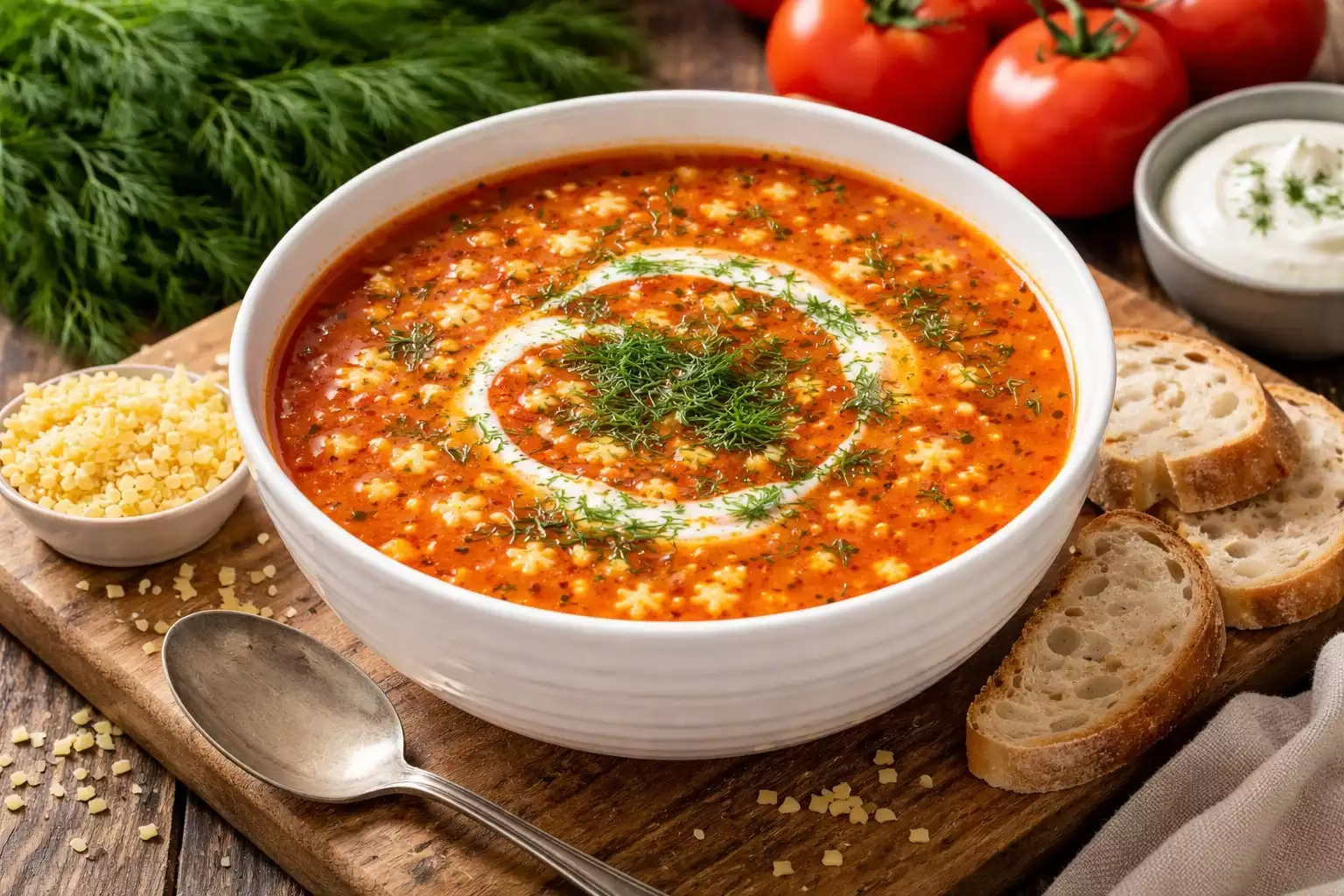
Every Polish kid grew up on zupa pomidorowa with little star pasta swimming in it. If you only know Campbell’s, your tomato soup life is about to change. Polish tomato soup is nothing like the stuff from a can — it’s brothy, not thick. It’s made with real tomatoes and a chicken or vegetable base. And it has tiny pasta shapes floating in it that made me unreasonably happy as a five-year-old and still make me unreasonably happy now.
Ingredients
- 6 cups chicken broth 1.5L; homemade rosół is ideal, but good quality store-bought works
- 1 can crushed tomatoes 400g / 14oz; in summer, use fresh; or 1 pound fresh tomatoes, peeled and chopped
- 2 tablespoons tomato paste
- 1 medium onion, diced
- 2 cloves garlic, minced
- 1 tablespoon butter
- 1 bay leaf
- ½ teaspoon sugar takes the edge off the tomato acidity
- 2-3 tablespoons heavy cream or sour cream optional but highly recommended
- Fresh dill, generously chopped
- Salt and pepper to taste
- 1 cup small pasta gwiazdki; stars , orzo, small shells, or thin egg noodles
Method
Build the Base
-
Melt the butter in a large pot over medium heat. Add the onion and cook for 4-5 minutes until soft and translucent. Add the garlic and cook for another minute. Don’t let the garlic brown — burnt garlic is bitter garlic and bitter garlic ruins soup.
Add the Tomatoes
-
Stir in the crushed tomatoes, tomato paste, sugar, and bay leaf. Cook for 3-4 minutes, stirring occasionally, until the tomato mixture darkens slightly and smells concentrated and sweet. This step builds the tomato flavour — don’t skip it.
Add the Broth and Simmer
-
Pour in the chicken broth. Bring to a boil, then reduce heat and simmer for 15-20 minutes. The flavours need time to marry. Taste and adjust salt — the amount depends on how salty your broth is. Remove the bay leaf.
-
At this point, you have a choice: leave the soup chunky (rustic, the way my mama made it) or blend it until smooth (the way my babcia preferred). I usually do a half-blend — hit it with an immersion blender for a few seconds so it’s partly smooth with some chunks remaining. Best of both worlds.
Add the Pasta
-
Cook the pasta separately in salted water. This is important — don’t cook the pasta directly in the soup. I know it seems like extra work, but pasta cooked in soup absorbs the broth, gets mushy, and turns the whole pot into a thick starchy mess by the next day. Cook it on the side, add it to each bowl when serving. Trust me on this. I learned the hard way approximately seven times before I accepted reality.
Finish and Serve
-
Stir in the cream if using — heavy cream or sour cream both work. The cream adds richness and mellows the tomato acidity. Some people skip cream entirely and that’s valid too, but my family likes it creamy. Ladle into bowls over the cooked pasta. Top with a generous pile of fresh dill. Serve with good bread for dunking.

Kasia Polish Mom
Polish-born, Chicago-raised, feeding a family of six with babcia’s recipes and a global pantry. I grew up folding pierogi at my grandmother’s kitchen table and never stopped — 15+ years of cooking from scratch, one Sunday dinner at a time. Everything here is tested on four kids, a hungry husband, and the memory of a woman who never measured anything but always got it right.
Zupa Pomidorowa — Poland’s Monday Tomato Soup (Made From Sunday’s Rosół)
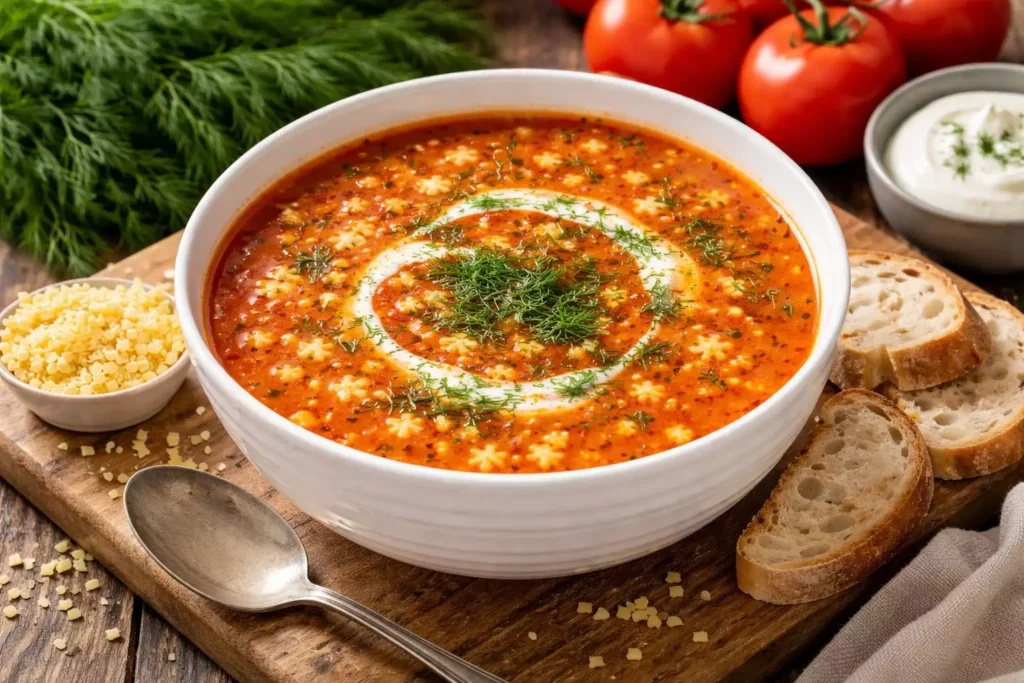
Every Polish kid grew up on zupa pomidorowa with little star pasta swimming in it. If you only know Campbell’s, your tomato soup life is about to change. Polish tomato soup is nothing like the stuff from a can — it’s brothy, not thick. It’s made with real tomatoes and a chicken or vegetable base. And it has tiny pasta shapes floating in it that made me unreasonably happy as a five-year-old and still make me unreasonably happy now.
Zupa pomidorowa (zoo-pah poh-mee-doh-ROH-vah) literally means “tomato soup” in Polish, but calling it just tomato soup doesn’t do it justice. It’s the soup that every mama and babcia (grandma) makes, that every Polish kid eats on a weekly rotation, and that somehow tastes different in every household even though the ingredients are basically the same. My babcia’s version was light and brothy with tons of dill. My mama made hers richer with a spoonful of cream stirred in at the end. I make mine somewhere in between and my kids declare it “the best one” which I hope they also say to babcia when they eat hers. (They probably do. Kids are diplomatic when food is involved.)
What Makes Polish Tomato Soup Different
American tomato soup is typically thick, creamy, and served with grilled cheese. Polish tomato soup is the opposite in almost every way. It’s thin and brothy, built on a meat or vegetable stock base, and served with small pasta, rice, or boiled potatoes. The tomato flavour is bright and fresh, not heavy and concentrated. There’s usually fresh dill in it, which Americans never put in tomato soup but absolutely should.
The biggest difference? Polish tomato soup starts with a proper broth — usually rosół (Polish chicken broth) that’s been simmering with vegetables. Then you add tomatoes to the broth. The tomato is a flavour layer, not the whole show. This gives the soup a depth and complexity that cream-of-tomato just can’t match. It tastes like someone actually cooked it, not like someone opened a can.
Ingredients
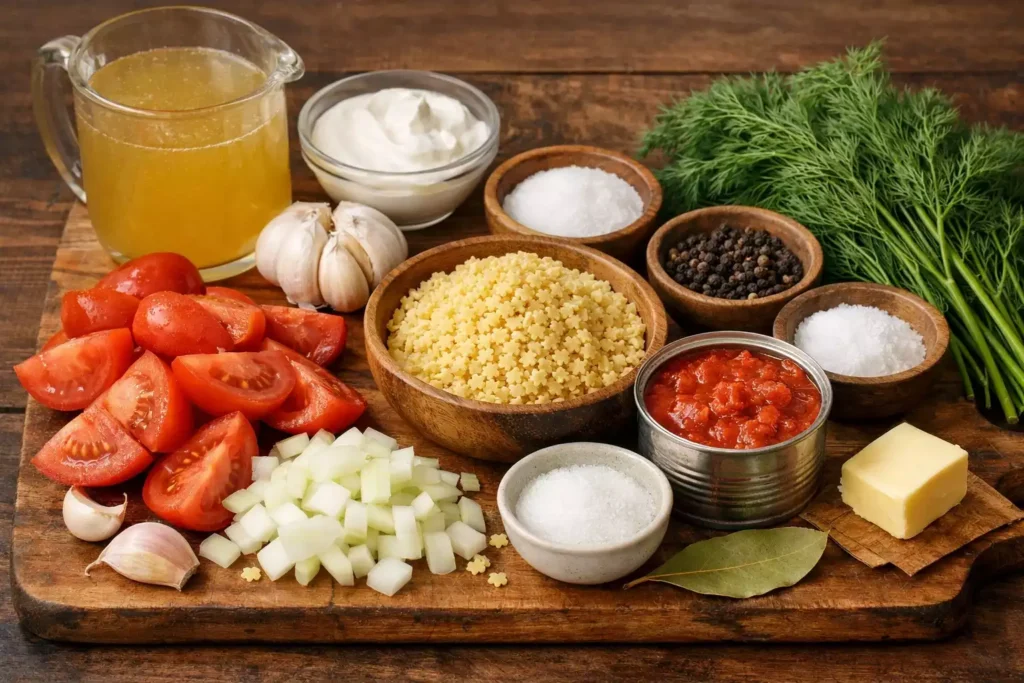
- • 6 cups (1.5L) chicken broth — homemade rosół is ideal, but good quality store-bought works
- • 1 can (400g / 14oz) crushed tomatoes — or 1 pound fresh tomatoes, peeled and chopped (in summer, use fresh)
- • 2 tablespoons tomato paste
- • 1 medium onion, diced
- • 2 cloves garlic, minced
- • 1 tablespoon butter
- • 1 bay leaf
- • ½ teaspoon sugar (takes the edge off the tomato acidity)
- • 2-3 tablespoons heavy cream or sour cream (optional but highly recommended)
- • Fresh dill, generously chopped
- • Salt and pepper to taste
- • 1 cup small pasta — stars (gwiazdki), orzo, small shells, or thin egg noodles
How to Make Zupa Pomidorowa
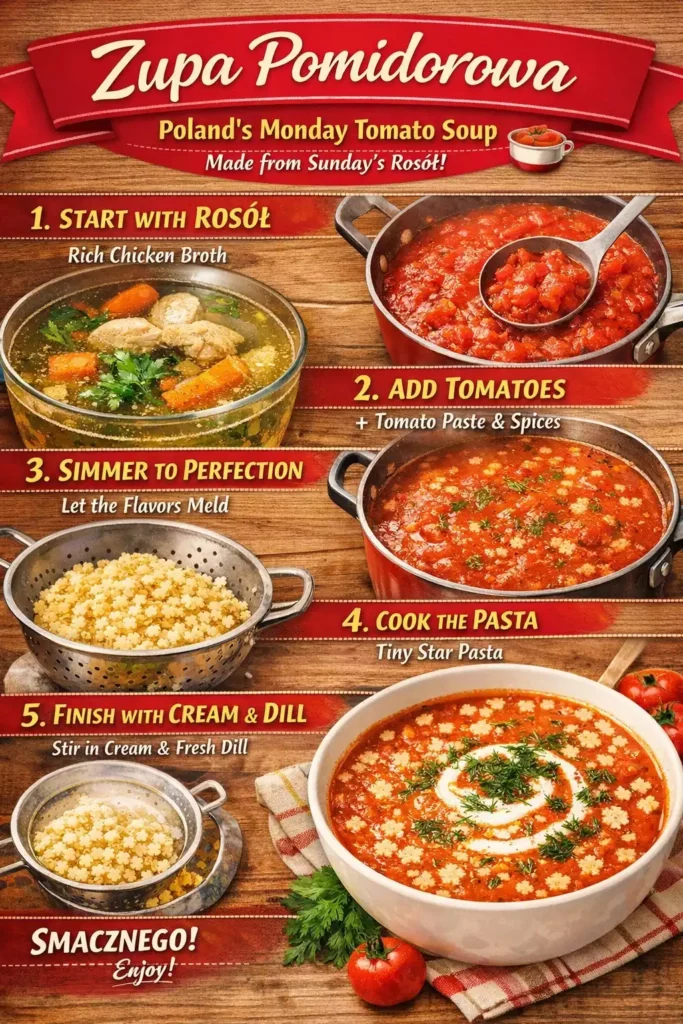
Build the Base
Melt the butter in a large pot over medium heat. Add the onion and cook for 4-5 minutes until soft and translucent. Add the garlic and cook for another minute. Don’t let the garlic brown — burnt garlic is bitter garlic and bitter garlic ruins soup.
Add the Tomatoes
Stir in the crushed tomatoes, tomato paste, sugar, and bay leaf. Cook for 3-4 minutes, stirring occasionally, until the tomato mixture darkens slightly and smells concentrated and sweet. This step builds the tomato flavour — don’t skip it.
Add the Broth and Simmer
Pour in the chicken broth. Bring to a boil, then reduce heat and simmer for 15-20 minutes. The flavours need time to marry. Taste and adjust salt — the amount depends on how salty your broth is. Remove the bay leaf.
At this point, you have a choice: leave the soup chunky (rustic, the way my mama made it) or blend it until smooth (the way my babcia preferred). I usually do a half-blend — hit it with an immersion blender for a few seconds so it’s partly smooth with some chunks remaining. Best of both worlds.
Add the Pasta
Cook the pasta separately in salted water. This is important — don’t cook the pasta directly in the soup. I know it seems like extra work, but pasta cooked in soup absorbs the broth, gets mushy, and turns the whole pot into a thick starchy mess by the next day. Cook it on the side, add it to each bowl when serving. Trust me on this. I learned the hard way approximately seven times before I accepted reality.
Finish and Serve
Stir in the cream if using — heavy cream or sour cream both work. The cream adds richness and mellows the tomato acidity. Some people skip cream entirely and that’s valid too, but my family likes it creamy. Ladle into bowls over the cooked pasta. Top with a generous pile of fresh dill. Serve with good bread for dunking.
The Star Pasta Situation
In Poland, the classic pasta for zupa pomidorowa is gwiazdki — tiny star-shaped pasta. If you grew up Polish, seeing little stars in tomato soup triggers an immediate nostalgia response that science hasn’t fully explained yet. My kids feel the same way about it — if I make this soup with orzo instead of stars, they look at me like I’ve betrayed the family.
Star pasta can be hard to find in regular American grocery stores. Check the international aisle or a Polish deli if you have one nearby. Alternatively, acini di pepe, orzo, small shells, or broken vermicelli all work. The soup doesn’t care about the pasta shape. Only your childhood memories care.
Tips
💡 Pro Tips
✓ Use the best broth you have. Homemade rosół makes this soup extraordinary. But even good store-bought chicken broth produces great results.
✓ Cook pasta separately. I’ve said this twice now because it’s that important. Pasta in the soup pot = starchy soup tomorrow.
✓ Fresh dill is non-negotiable. It’s the signature flavour of Polish tomato soup. Without dill, it’s just… tomato soup. With dill, it’s zupa pomidorowa.
✓ A pinch of sugar helps. Canned tomatoes can be acidic. Half a teaspoon of sugar smooths that out without making the soup sweet.
✓ Cream is optional but wonderful. Even a single tablespoon stirred into the pot changes the colour to a beautiful orange-pink and rounds out the flavour.
Variations
• With rice instead of pasta: Some regions in Poland serve this with rice instead of pasta. Cook it separately and add to the bowl.
• Spicy version: Add ½ teaspoon red pepper flakes with the garlic. Not traditional, but this is Polish Mom and I put chilli flakes in everything. The heat works beautifully with the tomato and cream.
• Roasted tomato version: In summer, roast fresh tomatoes with garlic at 200°C / 400°F for 30 minutes before adding to the broth. The roasted flavour is incredible.
• Vegetarian: Use vegetable broth instead of chicken. Add extra tomato paste for depth since you’re losing the richness of the chicken base.
How to Store
Store the soup (without pasta) in the fridge for 4-5 days or freeze for up to 3 months. Reheat on the stovetop, cook fresh pasta, and add it to each bowl when serving. Adding pasta to the storage container is the number one mistake people make with leftover soup — the pasta absorbs everything and you’re left with tomato-flavoured pasta mush. Store them separately. Always.
Frequently Asked Questions
Can I use fresh tomatoes?
Absolutely — and in summer you should. Use about 1 pound of ripe tomatoes. Score the bottom with an X, blanch in boiling water for 30 seconds, then peel. Chop and use in place of the canned tomatoes. You might need a touch more tomato paste to deepen the colour.
Why is there dill in tomato soup?
Because this is Polish tomato soup and Poles put dill in everything. Seriously though — dill adds a bright, herbaceous flavour that complements tomato beautifully. It’s one of the things that makes this soup taste distinctly Polish. Try it before you judge. Every person I’ve served this to who was skeptical about the dill has been converted.
Is this soup good for kids?
This is THE kid soup in Poland. My four kids have been eating it since they were toddlers. The mild tomato flavour, the fun pasta shapes, and the creamy broth make it a guaranteed hit. If your kid eats spaghetti with tomato sauce, they’ll eat zupa pomidorowa. It’s the same flavours in liquid form with tiny stars in it. What kid says no to tiny stars?
Kasia Polish Mom
Polish-born, Chicago-raised, feeding a family of six with babcia’s recipes and a global pantry. I grew up folding pierogi at my grandmother’s kitchen table and never stopped — 15+ years of cooking from scratch, one Sunday dinner at a time. Everything here is tested on four kids, a hungry husband, and the memory of a woman who never measured anything but always got it right.
Beef and Broccoli — The 20-Minute Weeknight Hero
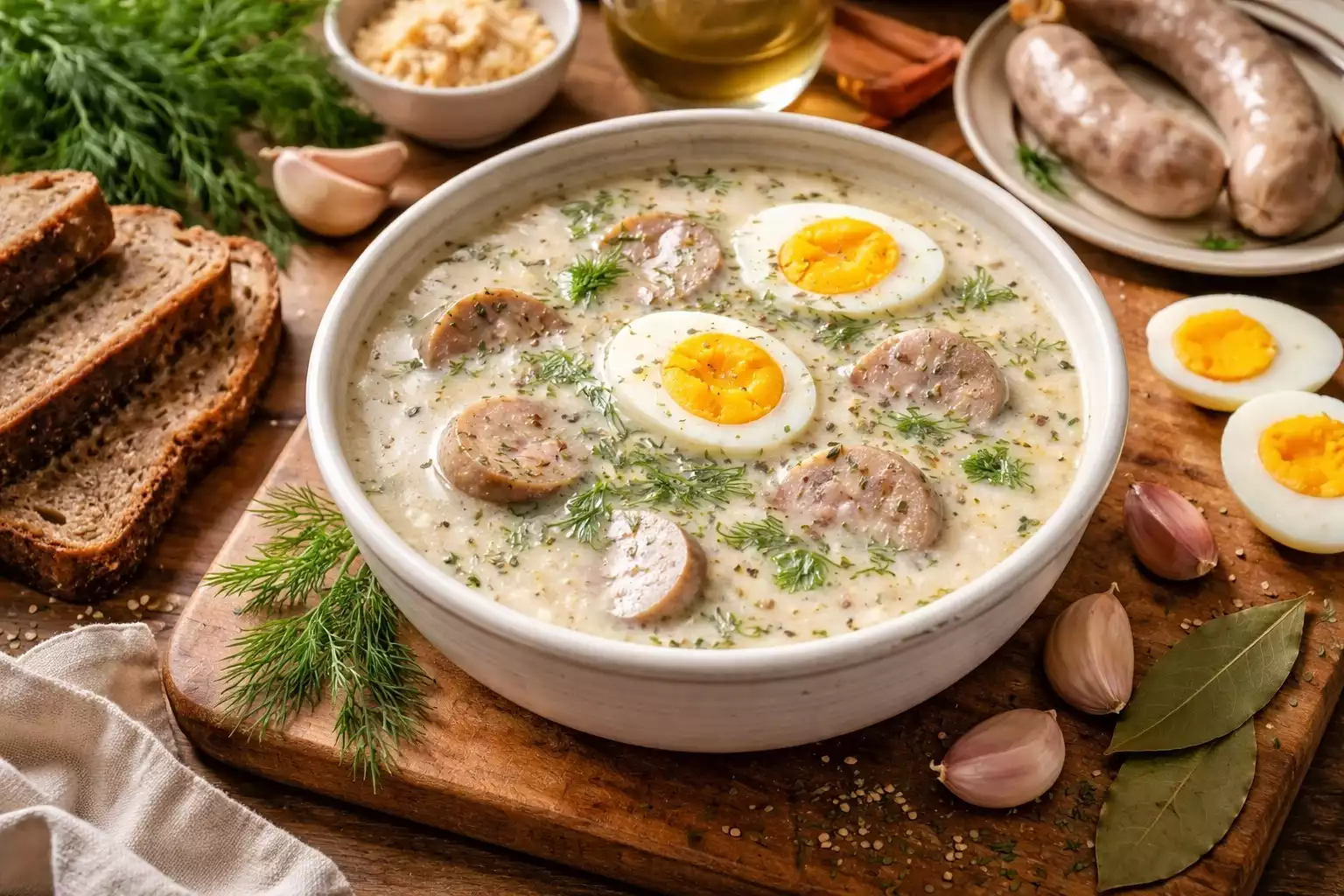
Biały Barszcz — Poland’s Other Easter Soup
Biała Kiełbasa — The Easter Sausage Every Polish Table Needs
Szynka Wielkanocna — Polish Easter Ham Done Right
Babka Piaskowa — The Foolproof Polish Easter Cake